Last updated: November 2026
This guide is part of our full map of wedge pillows for acid reflux, GERD, and better sleep.
Wedge pillow vs nasal strips vs mouth tape: it depends on where your snore starts. A wedge pillow changes back-sleeping snoring, nasal strips target a blocked nose, and mouth tape has the weakest evidence and a real risk if your nose is blocked.
None of the three treats sleep apnoea. This guide sets out what each aid changes, what the studies measured, and how to test them one at a time.
Key takeaways
- Match the aid to the source of the sound. The NHS snoring page pairs nasal strips and dilators with a blocked nose, a chin strap with a mouth that falls open, and a mouth device with a tongue blocking the throat.
- A wedge pillow addresses position. In a 2022 home study of 25 snorers, a 12° incline gave a 7% relative reduction in snoring duration.
- Elevation works on the soft palate, not the tongue. At 30°, a 2022 airway study of 45 patients found less collapse at the soft palate and throat walls, with no difference at the tongue base.
- Nasal strips change how often you snore more than how loud. In a placebo-controlled trial of 12 people with chronic rhinitis, snoring fell from 258 to 173 snores per hour, with no change in loudness.
- Mouth tape has the thinnest evidence. A 2025 systematic review rated all 10 included studies poor quality and warned of asphyxiation risk with a blocked nose.
- The tennis ball trick is cheap but hard to live with: fewer than 10% of patients were still using it about 30 months later, most saying it was too uncomfortable.
- Gasping, choking or pauses in breathing are a reason to see a GP, not to buy another aid.
Which works best: a wedge pillow, nasal strips or mouth tape?
The one that matches the part of your airway making the noise. Snoring is soft tissue in the nose, mouth or throat vibrating as you breathe, and the NHS lists treatments by cause, not one best product.
That is why the same aid gets glowing and useless reviews. A nasal strip has little to change in a clear nose, a wedge pillow little to change for a side sleeper, and mouth tape nothing to act on if you breathe through your nose.
So the useful question is “which kind of snorer am I”. The checks below help, and our page on whether a wedge pillow helps with snoring goes deeper into elevation alone.
What does each snoring aid actually change?
Each one acts on a different place, and that sets both who it suits and what it cannot do.
| Aid | What it changes | Suits | Does not address | Main drawback |
|---|---|---|---|---|
| Wedge pillow | Raises the head and upper body on a foam ramp | Snoring that is worse on your back | Snoring from the base of the tongue; a blocked nose | Sliding down the slope during the night |
| Nasal strips | Hold the sides of the nose open from outside | Snoring with a blocked or narrow nose | Throat or tongue snoring | Skin irritation; a new strip each night |
| Mouth tape | Holds the lips shut | Confirmed mouth breathers with a clear nose | Snoring with the mouth closed | Asphyxiation risk if the nose blocks |
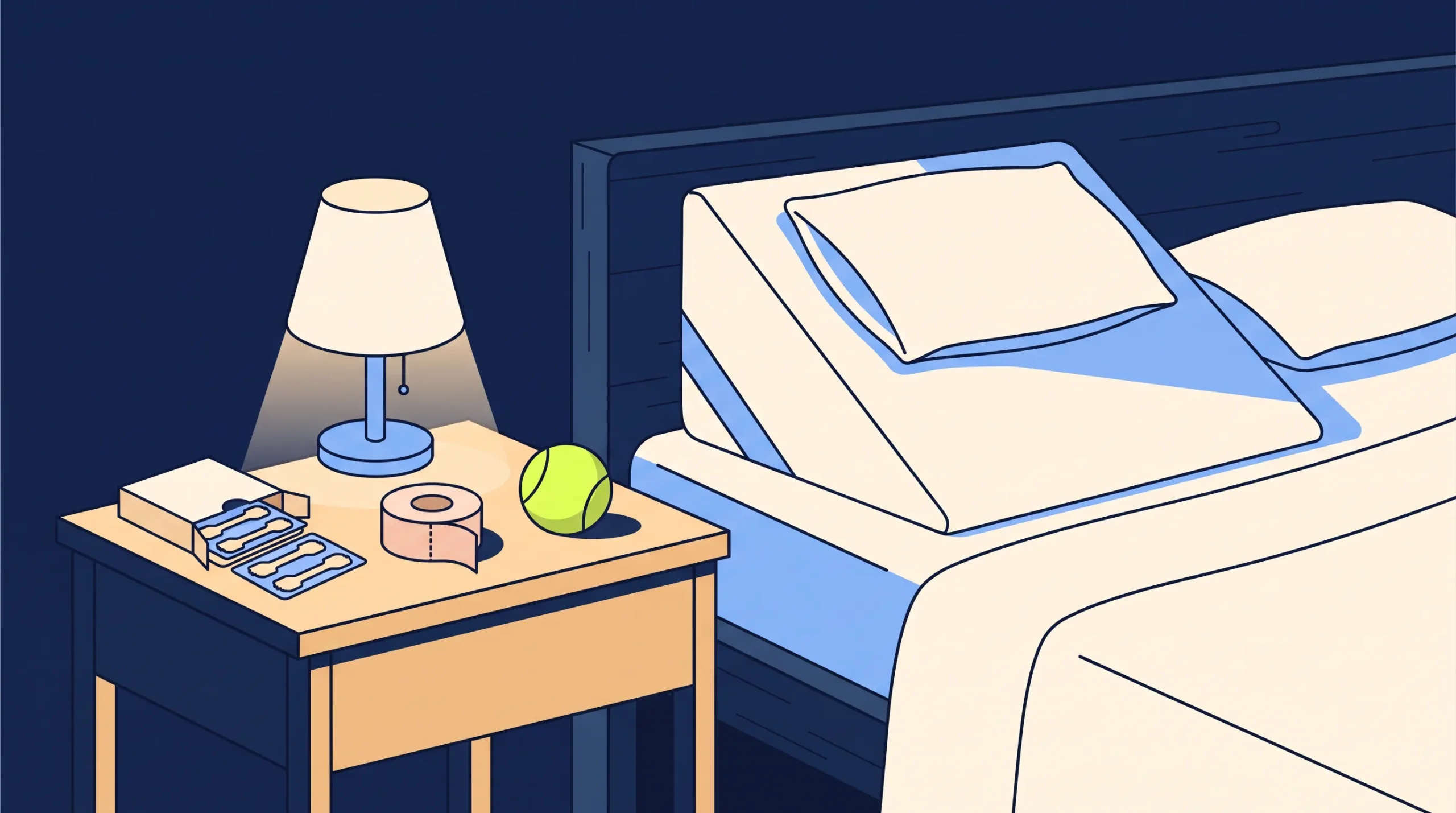
| Tennis ball on the back | Makes lying on your back uncomfortable | Snoring only when on your back | Snoring on your side | Discomfort; low long-term use |
Trying two or three aids at once leaves you unable to tell which one helped. One change per week makes the answer readable, as our guide to telling whether your wedge pillow is working sets out as a simple two-week log.
What did the studies measure for each aid?
Small groups, short periods and different measures, so these numbers show what each aid changed, not a ranking.
| Aid | Study | People | What was measured | Result |
|---|---|---|---|---|
| Incline (12°) | Danoff-Burg 2022 | 25 self-reported snorers, at home | Snoring duration, 4 weeks flat vs 4 weeks inclined | 7% relative reduction |
| Incline (30°) | Iannella 2022 | 45 patients with sleep apnoea | Where the airway collapsed, 0° vs 30° | Less collapse at soft palate and throat walls; none at tongue base |
| External nasal strip | Pevernagie 2000 | 12 people with chronic rhinitis | Snores per hour vs a placebo strip | 258 → 173 per hour; loudness unchanged |
| Nasal dilators (strips and internal) | Camacho 2016 review | 14 studies, people with sleep apnoea | Apnoea index, oxygen, snoring index | No significant change in snoring index |
| Mouth tape or chin strap | Rhee 2025 review | 10 studies, all rated poor quality | Apnoea markers, snoring index | Mixed; 3 studies reported a lower snoring index |
| Tennis ball | Bignold 2009 | 67 of 108 patients replied | Still using it after about 2.5 years | 4 of 67 (6%) |
Nose aids looked better in people whose nose was the problem — the strip trial only enrolled people with chronic rhinitis — and flat in a broader sleep apnoea group. Every study is small, so a group result may not hold for you.
Who are nasal strips for?
People whose snoring comes with a stuffy, narrow or blocked nose. The NHS lists nasal dilators and strips, along with decongestants or nasal sprays, for “blocked or narrow airways in your nose”.
The best trial result fits that picture. In 12 non-obese people with chronic rhinitis, a strip cut snoring frequency by about a third against a placebo strip, but it did not change how loud the snoring was, sleep quality or arousals. In a review of people with sleep apnoea, nasal dilators improved nasal breathing but showed no significant change in the snoring index. A strip can reduce how often a nose-driven snorer snores; it is not designed to change throat snoring.
When a cold or allergies are the trigger, our page on a wedge pillow for congestion and sinus pressure covers the elevation side.
Is mouth taping safe for snoring?
Not for everyone, and the evidence for it is weak. The 2025 review of mouth taping concluded that the existing data “does not support mouth taping or oral occlusion as a sound clinical intervention” for people with sleep-disordered breathing.
The risk it flags is specific: taping the mouth shut can pose a risk of asphyxiation when the nose is blocked, and many of the studies simply excluded people with nasal obstruction. A 1999 paper quoted in the review advised against taping “for indiscriminate long-term home use” because of that risk, along with regurgitation.
Two of the 10 studies showed a significant improvement in apnoea markers and three reported a lower snoring index, all from poor-quality data. For a snorer with a clear nose who sleeps with the mouth open, the NHS route is a chin strap or a mouth device that encourages nose breathing — discussed with a doctor, not improvised with tape.
Wedge pillow or tennis ball: which is better for back-only snoring?
Both aim at the same thing — the back-sleeping position — but they act differently. A tennis ball pushes you off your back; a wedge pillow lets you stay on your back with the head and upper body raised. The NHS mentions both: stitch a tennis ball to the back of your sleepwear, or use a special pillow or bed wedge to help keep you on your side.
The tennis ball’s weakness is long-term use. In the Adelaide follow-up of 108 patients prescribed it for back-dependent sleep apnoea, only 4 of the 67 who replied were still using it after about 2.5 years, and 34 of the 54 who had stopped without changing position said it was too uncomfortable. Nine had learned to avoid their back without it.
A wedge pillow’s weakness is a different one: elevation acts on the soft palate and throat walls, not on a tongue that falls back. In the 30° airway study, tongue-base collapse showed no statistical difference. The Aeris Wedge Pillow measures 22 cm at the apex over a 65 cm base, about 18.7°, which sits between the 12° home study and the 30° clinic study; our wedge pillow height guide explains how apex height and base length set the angle. If you share a bed, our guide to using a wedge pillow in a shared bed covers one partner sleeping raised.
4 checks to work out which kind of snorer you are
These are rough sorting checks to choose what to test first, not a diagnosis.
- Does it happen only on your back? Ask a partner, or record a few nights and note your position. Back-only snoring points to a position aid: a wedge pillow or something that keeps you on your side.
- Is your nose blocked at night? If one or both nostrils feel tight lying down, or the snoring is worse with a cold or allergies, a nasal strip is the more logical first test.
- Does your mouth fall open? A dry mouth on waking or a partner seeing your mouth open points to mouth breathing — a reason to discuss a chin strap or mouth device, and to check your nose is clear before anything goes over your lips.
- Is it worse after alcohol or a heavy evening meal? The NHS lists drinking too much alcohol and being overweight among the things that make snoring more likely; changes there can matter as much as any aid.
Then test one aid per week and keep the rest of the routine the same.
When is snoring a reason to see a doctor?
When it comes with signs of sleep apnoea. The NHS advises seeing a GP if you feel sleepy during the day, your breathing pauses and restarts while you sleep, or you make gasping or choking noises, and also if lifestyle changes are not helping or the snoring is having a big impact on your or your partner’s life.
None of the three aids treats sleep apnoea. If you have been diagnosed and use CPAP, a wedge pillow can sit alongside it for comfort — our page on using a wedge pillow with CPAP covers mask and hose positioning — and our wedge pillow for sleep apnoea page sets out what the elevation studies did and did not show.
Frequently asked questions
Do nasal strips work better than a wedge pillow for snoring?
Only if your nose is the source. In a small trial of people with chronic rhinitis, strips cut how often they snored by about a third, but not how loudly. A wedge pillow acts on back-sleeping position and the soft palate instead. For back-only snoring with a clear nose, a strip has little to change.
Is mouth tape safe to use every night?
A 2025 review of 10 studies found the evidence poor quality and warned that taping the mouth can pose an asphyxiation risk when the nose is blocked. It concluded the data does not support mouth taping as a clinical intervention for sleep-disordered breathing. Talk to a doctor before using it, especially with any nasal blockage.
Can I use a wedge pillow, nasal strips and mouth tape at the same time?
You can combine a wedge pillow and nasal strips, since they work on different parts of the airway. Adding mouth tape on top is the riskiest step, because a strip falling off or a blocked nose leaves you with less airflow. Whatever you combine, add one aid at a time so you know which one changed anything.
How long should I test each snoring aid?
At least a week each, with the rest of your routine unchanged — same bedtime, same evening drinks, same dinner time. Snoring varies from night to night, so compare weekly notes or recordings, not single nights.
Is the tennis ball trick better than a wedge pillow?
It is cheaper, but people rarely keep using it. In one follow-up of patients prescribed it, fewer than 10% were still using it about 30 months later, mostly because it was too uncomfortable. A wedge pillow keeps you on your back with the head raised instead.
What angle should a wedge pillow be for snoring?
The studies used 7.5° to 30°. A 12° incline at home gave a 7% relative reduction in snoring duration, and 30° reduced soft-palate collapse in a clinic. An ordinary sleeping wedge pillow of about 22 cm over 65 cm sits near 19°, inside that range.
Choosing a wedge pillow for back-sleeping snoring
If the checks point to position, a wedge pillow is the aid to test first, and what matters is that it holds one angle all night so the test is fair. A long, firm base keeps the slope from flattening; our walkthrough on how to choose a wedge pillow works through height, length and firmness, and the adjustment period guide covers the first week on a slope.
The three below cover a gentle slope on a firm core, a mid slope on a square base, and a taller wedge pillow for more lift. Methodology note: dimensions come from the makers’ production specifications and the published research cited above, with angles calculated as the arctangent of apex over base.
Advertisement
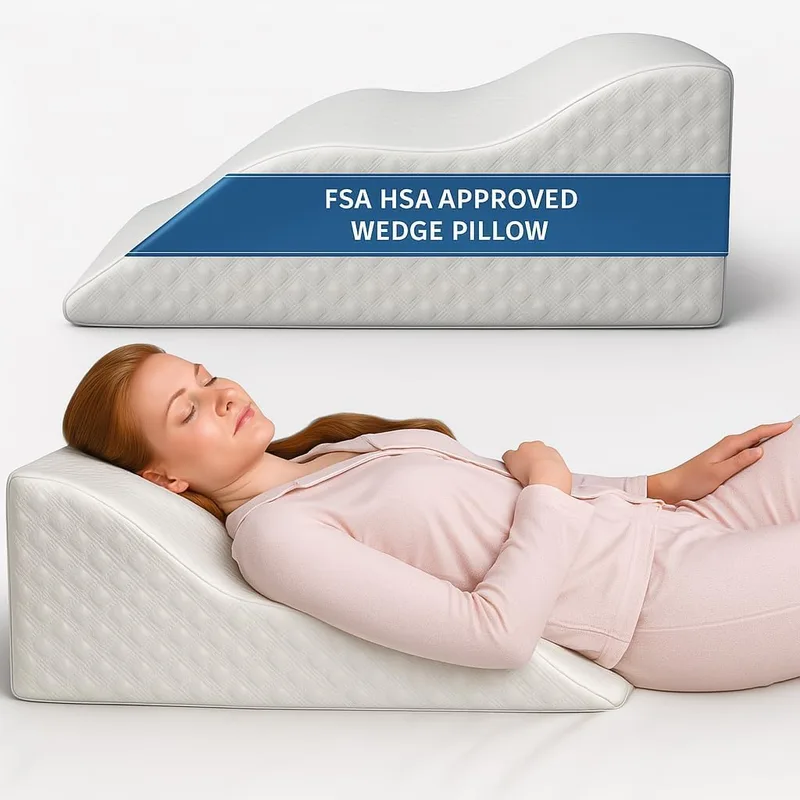
Aeris Wedge Pillow
65 × 65 cm base, 22 cm apex, 3.1 kg.
See the Aeris Wedge product details on AmazonProducts mentioned in this guide
- FirmNest Extra Firm Wedge Pillow — 61 × 61 cm base, 19 cm apex, about 17.3°
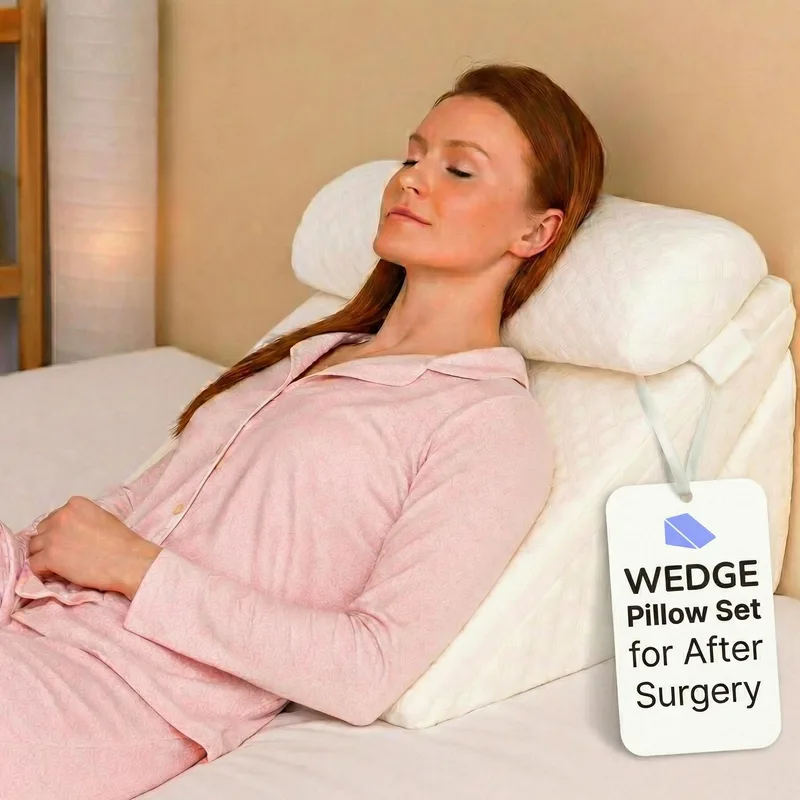 Flexicomfort Wedge Pillow — 60 × 56 × 28 cm