Last updated: October 2026
This guide is part of our full map of wedge pillows for acid reflux, GERD, and better sleep.
Yes. A wedge pillow and a CPAP machine are used together, not instead of each other, and elevation is an add-on to prescribed therapy. The practical limits are mask clearance, keeping your shoulders on the slope, and sliding.
This guide covers what the elevation studies actually tilted, what changes when a mask and hose join a sloped surface, and which wedge dimensions matter when you sleep with a CPAP.
Key takeaways
- Elevation and positive airway pressure address the airway differently, which is why the 2026 review in Pathophysiology places positional therapy as an adjunctive intervention with modest, phenotype-dependent benefits while CPAP stays first-line.
- Mild elevation has measured effects of its own: in 52 patients at 7.5° of bed tilt, the apnea-hypopnea index fell from 15.7 to 10.7 events per hour and minimum oxygen saturation rose from 83.5% to 87%.
- Steeper has not meant proportionally better. At 30° of head-and-trunk elevation the average index moved from 23.8 to 17.7 events per hour — four times the angle, a similar size of change, though in a different group of patients.
- Almost none of that evidence used a wedge pillow. One study in the group used a shoulder–head elevation pillow in 14 patients and reported a 22% reduction; the rest raised the entire bed.
- Adherence is the quiet argument for combining them: the Cochrane review summarised for AFP found CPAP lowered the index more than positional therapy, yet patients used positional therapy about 2.5 hours a night more, and up to two-thirds of CPAP users do not adhere.
- A sloped surface touches two things your machine measures: leaks, which the American Sleep Apnea Association links to sleeping-position changes, and aerophagia, which its separate guide ties to lying on your back and to high pressure.
- The Aeris Wedge Pillow’s 22 cm apex on a 65 cm base works out at about 19°, inside the band the studies used, and that base is built to carry a whole torso rather than the head alone.
Can you use a wedge pillow with a CPAP machine at the same time?
Yes — the two are not mutually exclusive: one changes the geometry of your head and torso, the other pushes pressurised air into the airway. The wedge pillow is furniture; the machine is prescribed treatment that belongs to a clinician.
What combining them does not do is change your prescription. Pressure settings, mask type and ramp behaviour belong to whoever prescribed the device, and the 2026 review in Pathophysiology keeps positional measures in the adjunctive column for that reason. If elevation makes the night more comfortable and you therefore keep the mask on, that is the benefit worth having.
Our wider page on wedge pillows and sleep apnea sets out what elevation alone has and has not been shown to do. This page takes the narrower question it leaves open: you own both, so how do they sit together?
What did the elevation studies actually tilt?
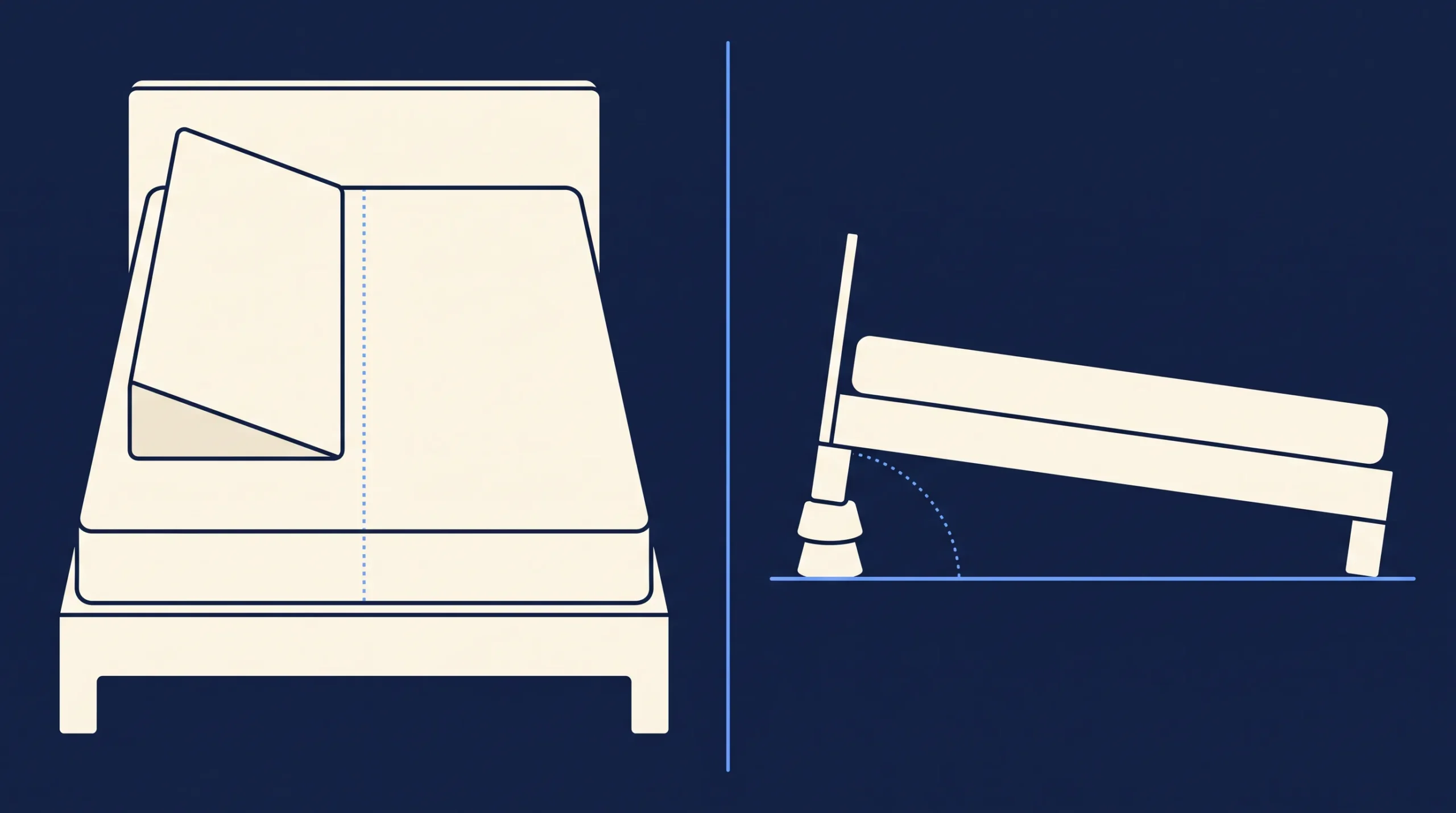
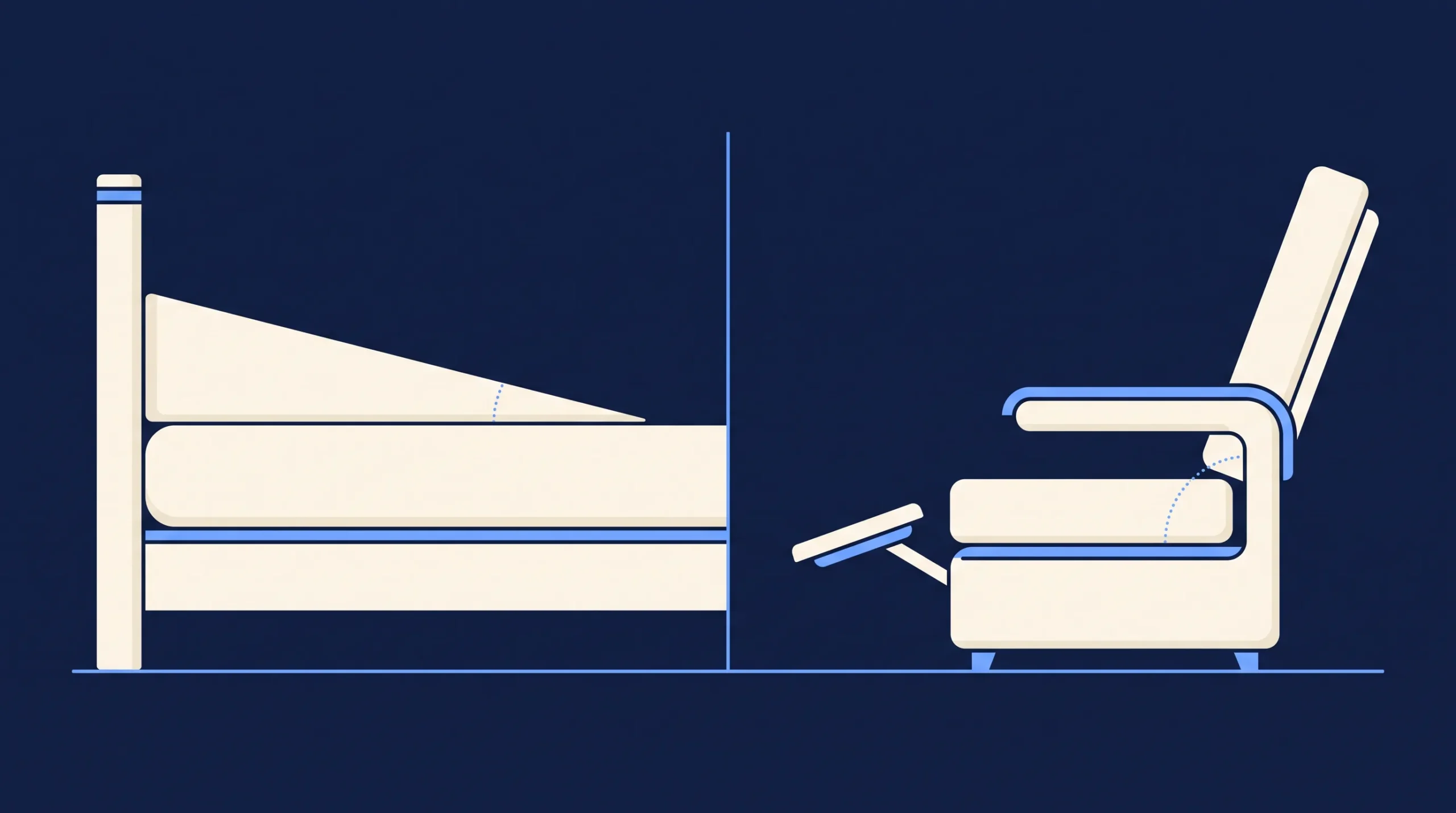
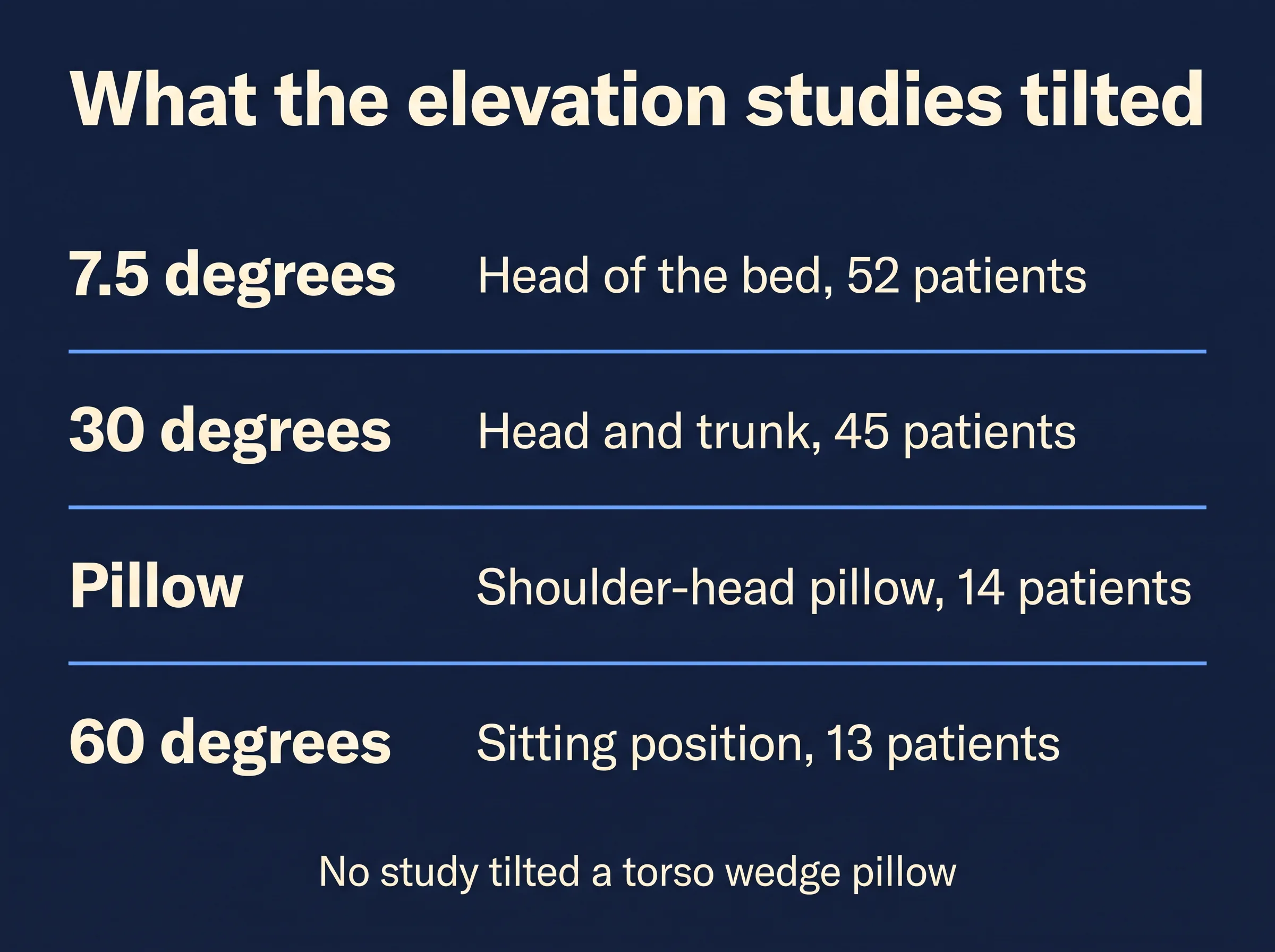
Almost always the whole bed, not a pillow. That matters: a wedge pillow raises your torso while the mattress under your hips stays flat, a different shape from a bed tilted as one plane.
| Study | What was elevated | Angle | Patients | Apnea-hypopnea index |
|---|---|---|---|---|
| Souza 2017 | Head of the bed | 7.5° | 52 | 15.7 → 10.7 events/h |
| HOBE/POSA 2022 | Head and trunk | 30° | 45 | 23.8 → 17.7 events/h |
| Skinner, as reported in the 2022 paper | Shoulder–head elevation pillow | not stated | 14 | 22% reduction |
| McEvoy, as reported in the 2022 paper | Sitting position | 60° | 13 | 49 → 20 events/h |
Two details there are worth more than the headline numbers. First, the 7.5° study also measured what happened when the tilt was removed: seven patients had a third sleep study on a flat bed and their index returned to baseline, so the effect tracks the angle rather than persisting. Second, the same study recorded minimum oxygen saturation rising from 83.5% to 87% and sleep efficiency improving slightly, from 87.2% to 88.8%, without disturbing sleep architecture.
The 30° study measured a similar shape of change — the oxygen desaturation index moved from 21.2 to 16.1 and the proportion of the night spent snoring from 17.3% to 12.5%. Four times the angle did not produce four times the benefit — in a different cohort, so not a controlled comparison, but the same direction our wedge pillow height guide reaches from the product side.
4 things to check before you put a CPAP mask on a slope
These are geometry and equipment checks, not clinical ones — each can be looked at tonight.
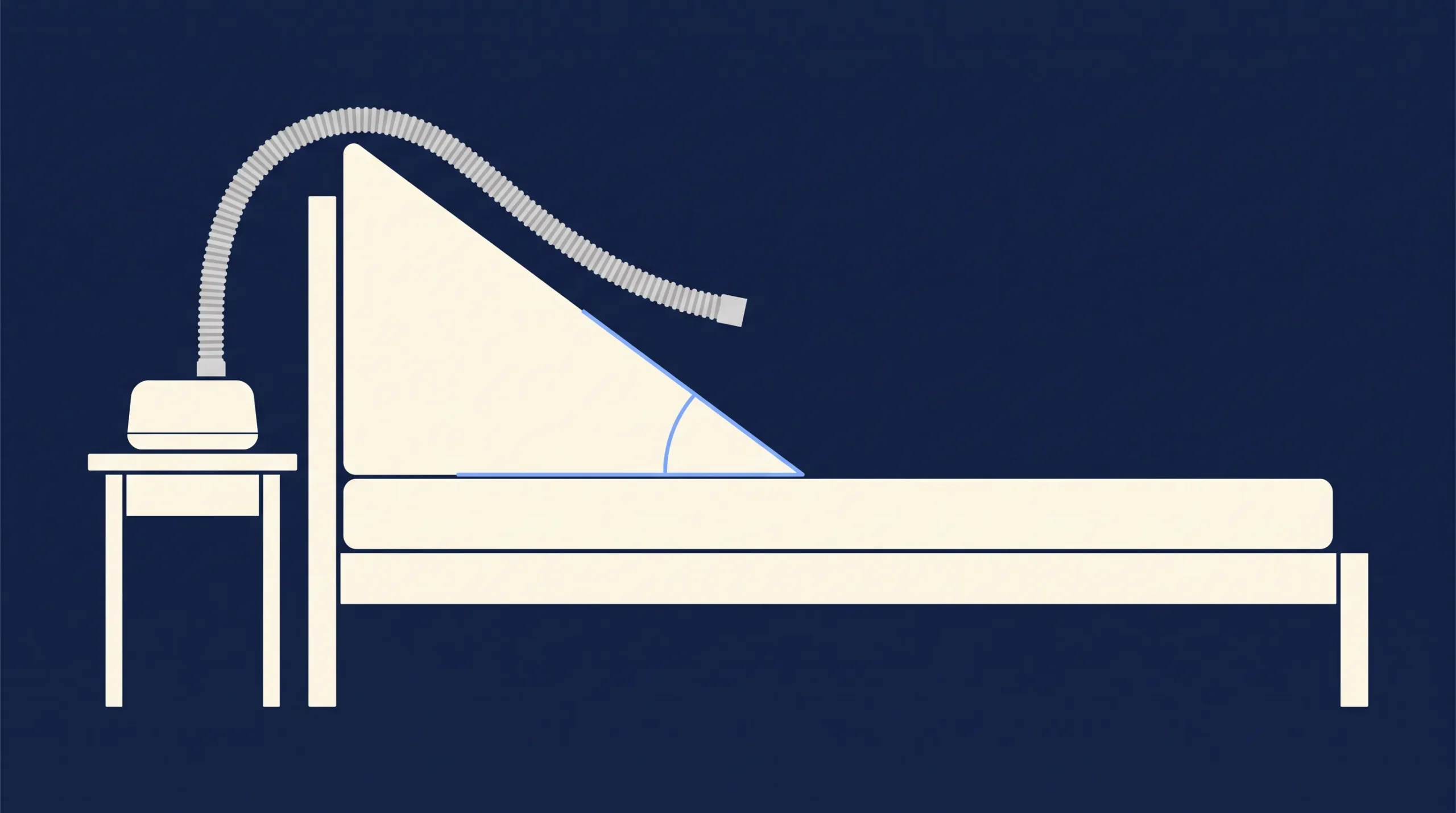
- Hose path over the apex. A wedge raises your head several inches, so a hose that used to run along a flat surface now crosses a ridge. Routing it over the apex behind your head, rather than across your chest, keeps its weight off the mask frame.
- Shoulders on the slope, not past it. A wedge whose base is shorter than your torso leaves your head cantilevered over the apex, which tilts the chin and pulls on the headgear. Base length decides this, not apex height.
- Head support on top of the wedge. Many CPAP users already have a contoured or cut-away pillow chosen around their mask. Whether it still belongs on top of a slope is the question our page on what to put on top of a wedge pillow works through.
- Your machine’s own leak number. Most machines report a leak rate in litres per minute, and the American Sleep Apnea Association suggests reviewing that data to locate a problem. One week of readings before the wedge and one week after turns an impression into a measurement.
Does a wedge pillow change your CPAP mask seal?
It can, because anything that changes how your head meets the surface can change the seal. The American Sleep Apnea Association lists sleeping-position changes alongside poor fit, worn cushions and too-high pressure as causes of mask leaks, and notes that leaks reduce the amount of therapeutic air pressure that reaches you.
No study has measured mask seal on a wedge pillow specifically, so treat this as a design question rather than a finding. The mechanical variables are the ones above: how much of the mask frame touches the surface, how much the headgear is pulled by hose weight, and whether you end the night in the position you started in. A firm core that holds its shape keeps those stable, which is part of why foam density runs through our guide to choosing a wedge pillow.
Side sleeping complicates it further, because a mask that clears the surface on your back may press into it on your side — that setup has its own page, sleeping on your side on a wedge pillow.
Can a wedge pillow help with CPAP aerophagia and morning bloating?
Possibly, though the reasoning is about position rather than about the pillow. Aerophagia is swallowed air collecting in the stomach and gut; the American Sleep Apnea Association’s list of contributing factors includes lying on your back and high continuous positive airway pressure, and its guidance suggests that side sleeping may reduce it.
Elevation is a second way to move away from flat-on-your-back, and it is the one a wedge pillow provides. No trial has tested a wedge pillow against morning bloating, so this sits in the “worth trying, then measuring” column rather than the evidence column. Persistent bloating is a conversation with your prescriber, who can look at pressure and ramp settings.
Which wedge dimensions matter when you sleep with a CPAP?
Base length first, apex second. The base decides whether your shoulders stay supported, the apex decides the angle, and the studies cluster between 7.5° and 30°.
| Wedge | Base | Apex | Approximate angle |
|---|---|---|---|
| Aeris Wedge Pillow | 65 cm (25.6 in) | 22 cm (8.7 in) | about 19° |
| Flexicomfort Wedge Pillow | 56 cm (22.0 in) | 28 cm (11.0 in) | about 27° |
As the maker of both, we can state their geometry rather than estimate it. The Aeris Wedge Pillow is 65 × 65 cm with a 22 cm apex, which puts it near the middle of the studied range on a base sized for a whole torso. The Flexicomfort Wedge Pillow reaches 28 cm over a shorter 56 cm run, so it sits steeper — closer to the 30° study, and a bigger adjustment if you are adding it to an established mask routine.
Sliding is the failure mode people report most, and a mask makes it worse, because recovering your position means resetting the headgear too. The remedies are collected in our acid reflux and GERD guide, and the first two weeks of any new slope in how long it takes to get used to a wedge pillow.
Can a wedge pillow replace your CPAP machine?
No. The Cochrane evidence summarised for American Family Physician found CPAP reduced the apnea-hypopnea index more than positional therapy, by a mean difference of 6.4 events per hour, and the 2026 Pathophysiology review keeps positional measures as adjunctive. If a clinician has prescribed a device, the pillow sits underneath it in every sense.
The honest nuance is adherence, not efficacy. The same Cochrane review found patients used positional therapy about 2.5 hours a night more than CPAP, and up to two-thirds of CPAP users do not adhere. That is an argument for making the mask easier to tolerate, which is where a comfortable position earns its place — and a conversation for your prescriber, who can change mask, pressure or device type.
Frequently asked questions
Will a wedge pillow interfere with my CPAP mask?
It can, because the American Sleep Apnea Association lists sleeping-position changes among the causes of mask leaks. Whether it does in your case is measurable: most machines report a leak rate in litres per minute, so compare a week before the wedge with a week after.
What angle should a wedge pillow be if I use CPAP?
The elevation studies used between 7.5° and 30°, and the smallest angle produced a change comparable to the largest, so there is no case for going as steep as you can tolerate. A 19° to 20° wedge sits inside the studied band. Our height guide works through the rise-to-angle arithmetic in inches.
Can a wedge pillow lower the pressure my machine needs?
That is not something to assume or to act on yourself. Pressure is set by your prescriber, and the American Sleep Apnea Association notes that side sleeping may reduce the pressure an automatic machine calls for — a reason to report a position change to your clinician, not to adjust a setting.
I slide off my wedge pillow with the mask on. What changes that?
Base length and surface friction, mainly, plus something under the knees to hold the hips. A wedge shorter than your torso leaves you balanced on the apex, which is the position you slide out of. Our acid reflux guide works through the remedies in detail, and resetting headgear mid-night is a reason to solve sliding first rather than last.
Does elevation help with the bloating I get from CPAP?
It may, by moving you away from flat-on-your-back, which the American Sleep Apnea Association lists as a contributing factor to swallowed air. No trial has tested a wedge pillow for it. High pressure is the other listed factor, so persistent bloating should go to your prescriber.
My wedge pillow stopped my snoring. Do I still need a sleep study?
Yes. Quieter snoring is not evidence that breathing pauses stopped, and the 30° study measured snoring and apnea separately — snoring time fell by about a third while the apnea-hypopnea index remained in the moderate range. If someone has seen you stop breathing, or you gasp awake or feel unrefreshed, that belongs with a doctor.
Can I use a wedge pillow during the sleep study itself?
Ask the lab beforehand, because they are measuring your usual sleep and an unfamiliar surface changes it. The 7.5° study shows how sensitive the measurement is to position: when seven patients repeated it on a flat bed, their index returned to baseline.
Choosing a wedge that works around a CPAP setup
If you already own the machine, the wedge decision narrows to two numbers and one material question: a base long enough to carry your shoulders, an apex inside the studied 7.5° to 30° band, and a core firm enough to hold that shape all night rather than sagging into a position your mask was not fitted for. Everything else — cover texture, a pillow on top, something under the knees — is first-fortnight adjustment.
Methodology: the dimensions above come from our own production records for the two wedges we make, and every clinical figure comes from the papers linked in the table. Nothing here rests on trying a mask on a slope ourselves. If your current setup is already working, change one variable at a time and use your machine’s leak and event data as the scoreboard.
Advertisement
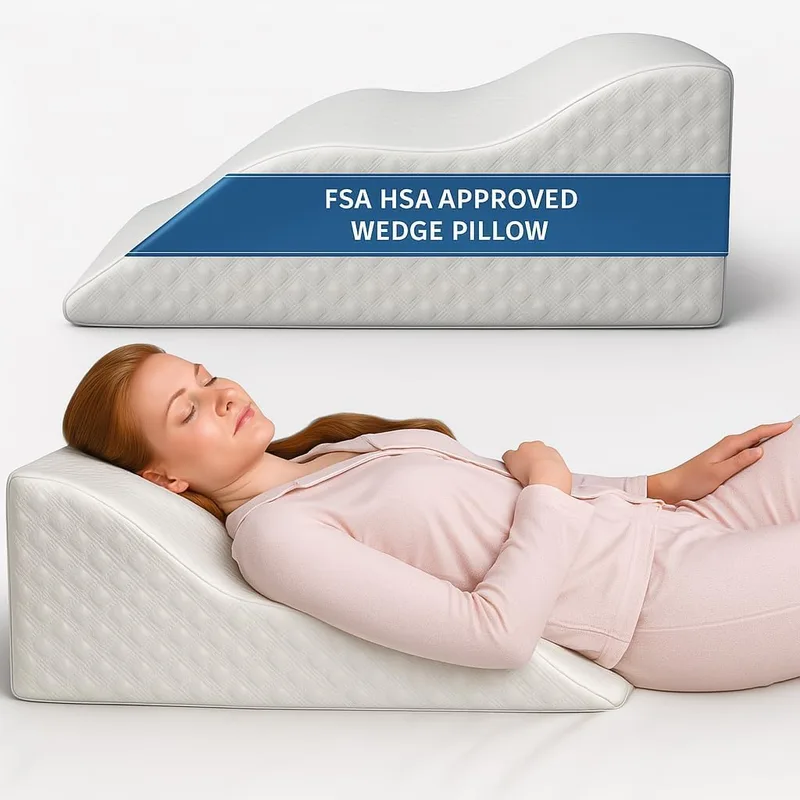
Aeris Wedge Pillow
65 × 65 cm base, 22 cm apex, 3.1 kg.
See the Aeris Wedge product details on AmazonProducts mentioned in this guide
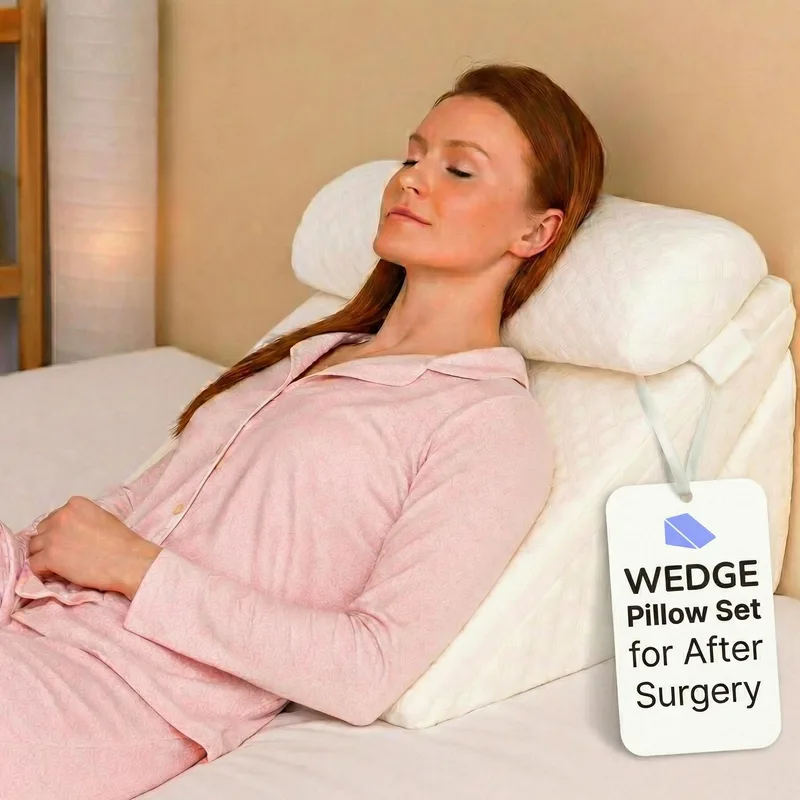 Flexicomfort Wedge Pillow — 60 × 56 cm base, 28 cm apex, about 27°