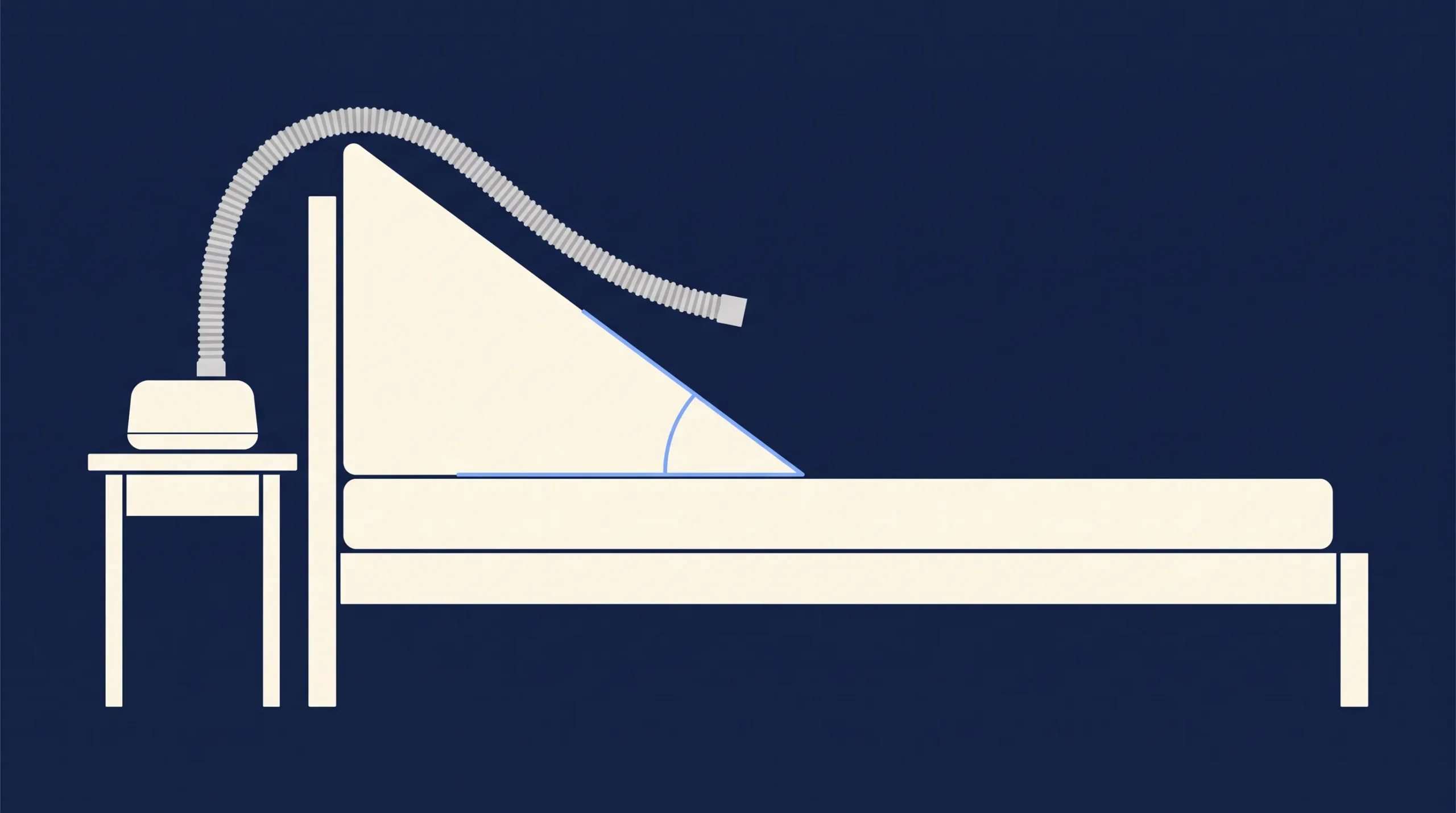
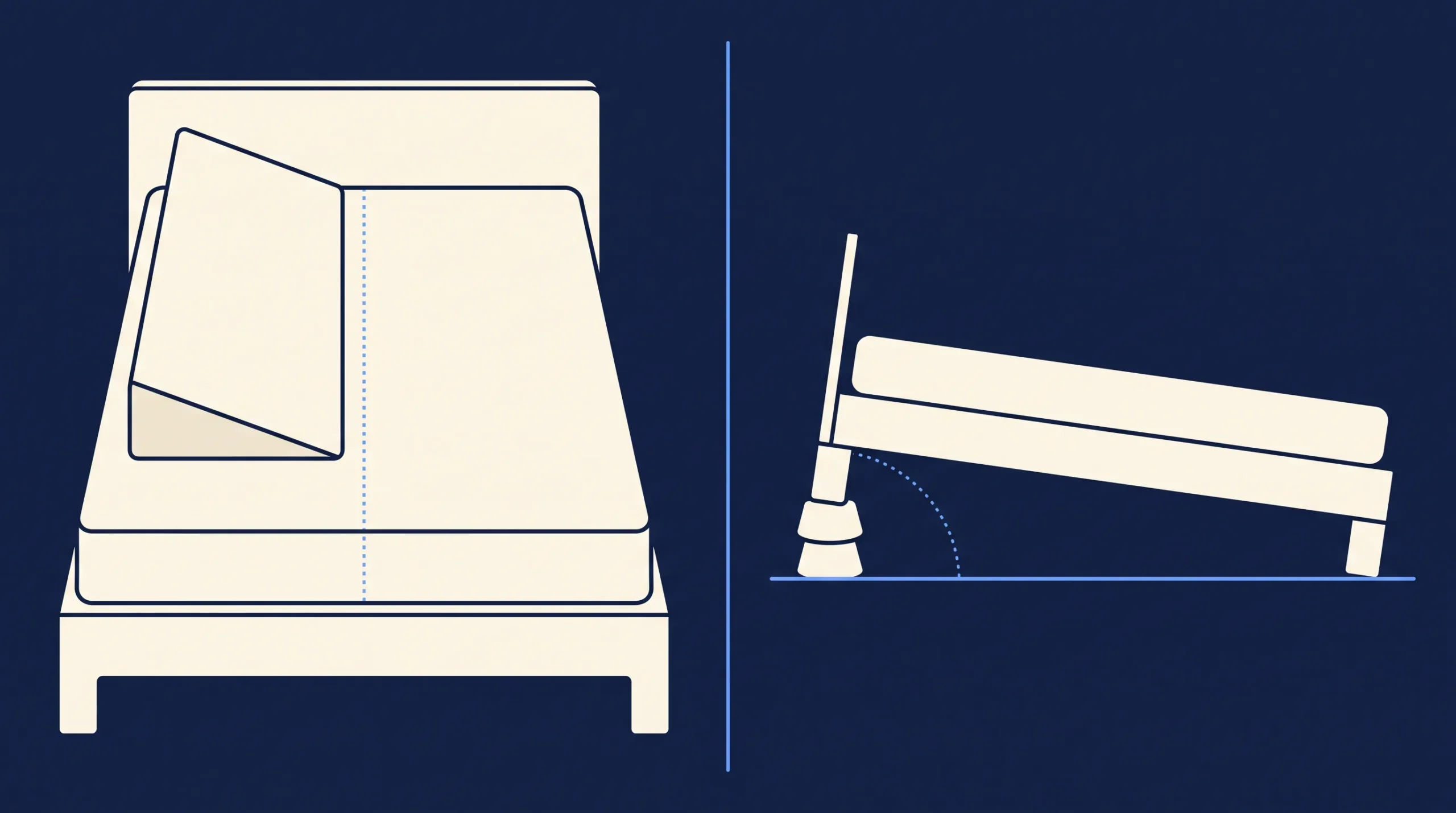
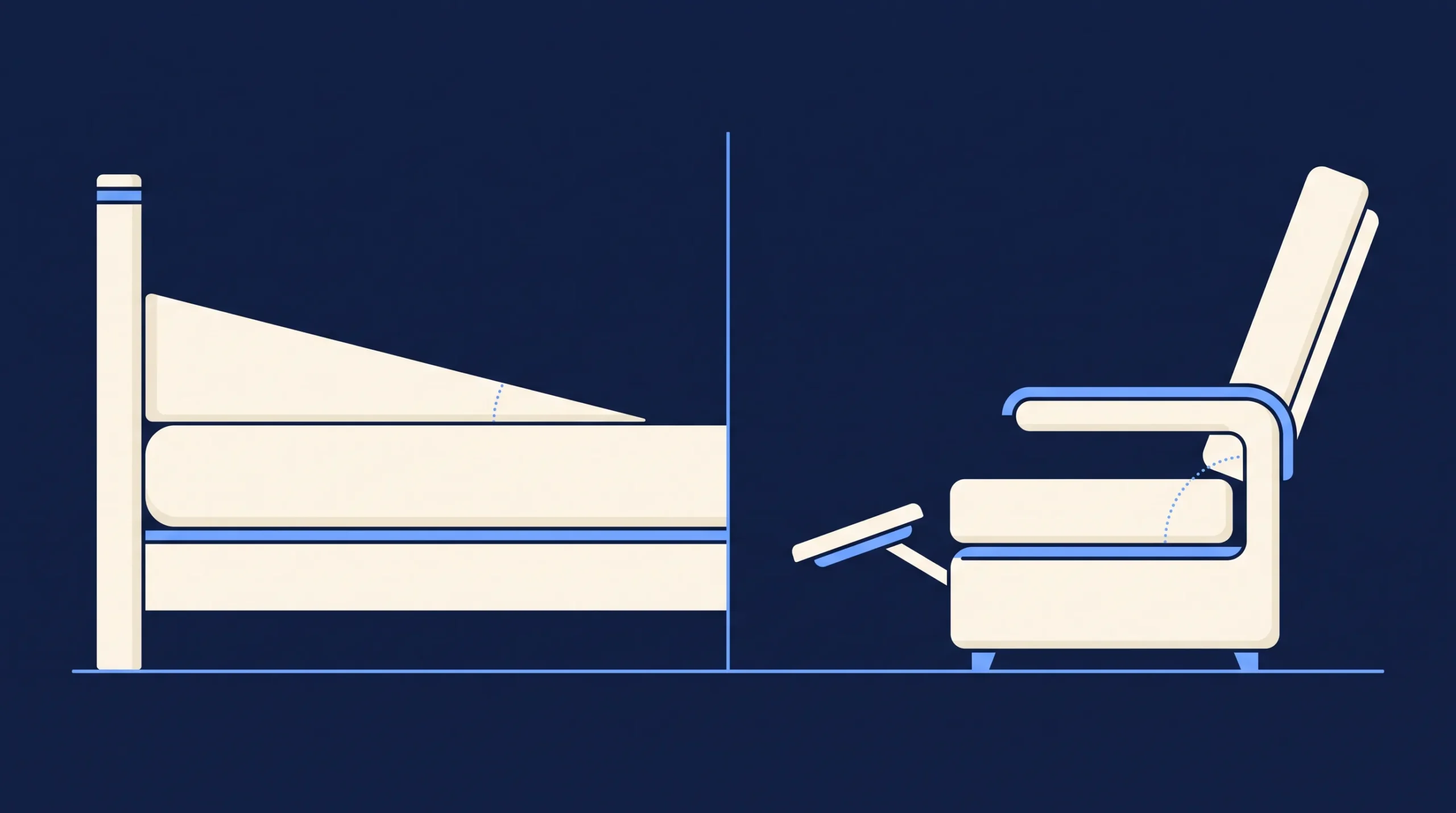
A wedge pillow for acid reflux is a firm, gently inclined bed wedge that raises your upper body so gravity helps keep stomach acid down while you sleep. Also sold as a bed incline or elevation pillow, it holds your chest and head above your stomach at a fixed elevation angle — the posture most people are after when they raise the head of the bed for nighttime heartburn, acid regurgitation, or GERD.
This is a comfort-and-positioning guide, not medical advice. A wedge pillow is sleep hardware — it may make propped sleeping easier to hold, but it is not a treatment for GERD. If reflux is frequent, painful, or keeps waking you, talk to your doctor.
5 Things to Check in a Wedge Pillow for Acid Reflux
- Apex height of 6–8 inches — the peak height should raise the torso to a gentle 30–45° reclined angle, not so tall you sit bolt upright.
- A transition slope, not a single straight ramp — a shelf that eases from steep to flat gives your hips something to rest against so you slide down less.
- Firm enough foam (higher ILD) — soft foam compresses overnight and the angle quietly collapses by morning; a firmer core holds the incline you bought.
- A base width of about 24 inches or more — enough trunk support that your shoulders rest on the wedge instead of hanging off the top.
- A non-slip or grippy cover — viscose or textured covers help the wedge stay put and reduce the slow nightly slide toward flat.
Reflux is the single most common reason people shop for a wedge pillow — GERD affects an estimated one in five adults, and in surveys roughly three out of four people with GERD report nighttime symptoms (nocturnal reflux). Yet almost every buying guide stops at “raise the head of the bed.” That sentence hides the four decisions that actually matter: the elevation angle, the apex height, whether you slide off it, and whether the foam holds its shape until morning. This guide is part of how we map choosing a wedge pillow; here we zoom into the reflux use case.
This guide is part of our full map of wedge pillows for acid reflux, GERD, and better sleep.
How does a wedge pillow help with acid reflux?
A wedge pillow keeps your upper body on a steady incline of about 30 to 45 degrees so gravity works in your favour while you sleep instead of against you. Lying flat puts your throat and your stomach on the same level, so anything that slips past the lower esophageal sphincter (LES) — the muscular valve where the esophagus meets the stomach — has a level path to travel. On a bed incline, the chest and throat stay higher than the stomach, so gravity works with the LES instead of against it, which is why a wedge is a common comfort choice for people who get reflux, heartburn, or acid regurgitation when they lie down.
This is the same posture behind the long-standing “raise the head of the bed” advice: head-of-bed elevation of about 6 to 8 inches (15–20 cm) is the range commonly described in positioning guidance for nighttime reflux, including the NIH resource linked at the end of this page. A wedge is simply a way to hold that elevation on an ordinary mattress — it supports the incline all night instead of relying on stacked pillows that flatten and shift.
What angle and height should a reflux wedge be?
Most reflux sleepers do well with a torso raised about 6 to 8 inches at the apex, which works out to roughly a 30-to-45-degree reclined back — a gentle incline, not sitting bolt upright. Too shallow and you lose the benefit; too steep and you slide down and wake up flat anyway.
Two numbers describe the same wedge, and it helps to keep them straight: the incline angle (you will also see it written as elevation angle or slope) is measured in degrees, while the apex height — the peak height at the wedge’s tall end — is measured in inches or centimeters.
| Spec | What it means | Typical reflux range |
|---|---|---|
| Incline angle | The slope of the surface your back rests on | ~7-12° bed-wedge incline (≈30-45° reclined torso) |
| Apex height | How tall the wedge is at its highest point | 6-8 inches (some go to 10-12″) |
| Base width | How much trunk the wedge supports | 24+ inches |
Angle matters more than height: a tall but short wedge can still leave you at a poor angle if your shoulders hang off the top. Height only does its job when the slope keeps your whole trunk supported.
Why do you slide down a wedge — and how do you stop it?
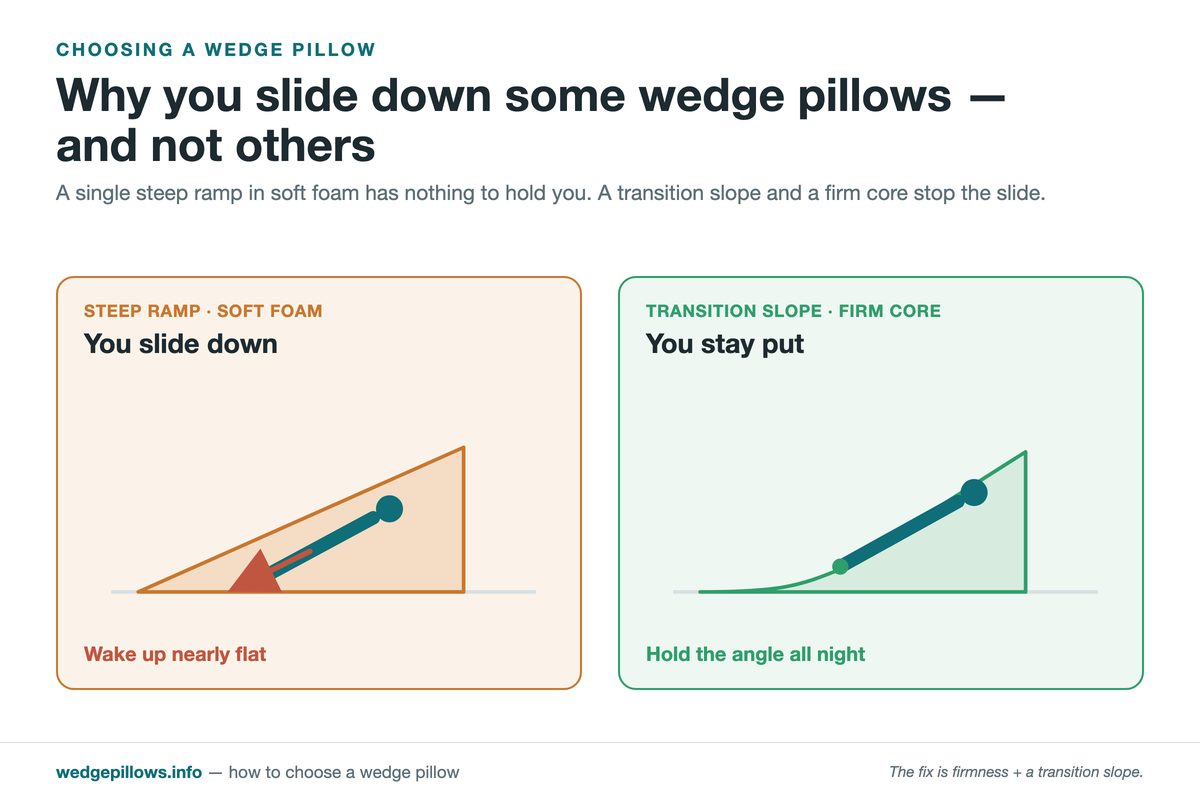
You slide because a single steep ramp has nothing to hold your hips, so gravity walks you down it over a few hours — and the fix is a transition slope plus firm enough foam to keep its shape. Sliding is the failure mode that costs you the elevation you bought the wedge for: by morning you are lying flat again. It is the complaint behind most one-star reflux-wedge reviews, and it is a design problem, not a you problem.
Two design attributes stop it:
- Transition slope — a wedge that eases from steep to flat (rather than one straight ramp) gives your hips a shelf to rest against.
- Firmness (ILD) — soft foam compresses under your weight and the angle quietly collapses by 3 a.m. A firmer wedge holds the angle you bought.
A wedge that slides is worse than no wedge, because you trust it and wake up flat. If you already own one that slides, a non-slip cover or a second small pillow at the hips is a stopgap; the real answer is a wedge built with a transition slope.
Torso-only or full-body wedge for reflux?
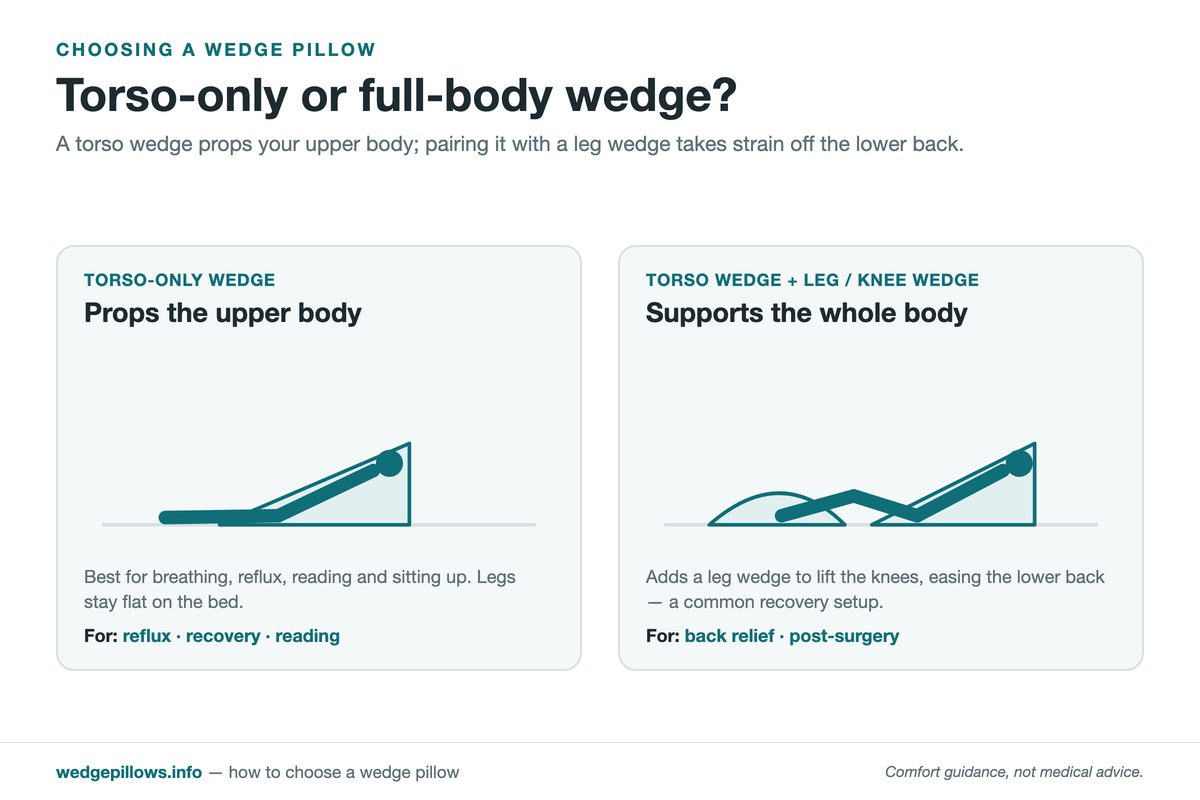
For reflux specifically, a torso-length wedge that supports you from hips to shoulders is usually enough — full-body length mainly matters if you also want your legs raised. A torso wedge is a wedge sized to carry the upper half of the body on the incline; a full-body wedge extends the slope under the legs as well. The thing to avoid is a wedge that is too short, where your shoulders and head hang off the apex and your neck does the work all night.
Match the length to your frame: taller sleepers need a longer wedge to keep the shoulders on the slope. This is the same body-frame-to-length idea covered in the how to choose a wedge pillow guide.
Should you combine a wedge with left-side sleeping?
Yes — left-side sleeping and elevation are the two positioning moves people pair most often for nighttime reflux, and a wedge makes the combination comfortable to hold. Left-side sleeping (the left lateral position) matters because of simple anatomy: the junction where the esophagus enters the stomach sits higher than the pooled stomach contents when you lie on your left side, so many reflux sleepers find the incline-plus-left-side combination the easiest position to stay in through the night.
A wedge with a slight central channel or a softer top layer makes side-lying on an incline more comfortable, so you do not roll flat in your sleep. For the broader set of propped positions, see the sleeping upright guide.
Which foam holds the reflux angle best?
Memory foam contours and stays quiet, while firmer polyfoam rebounds and resists sinking — for holding a reflux angle all night, you want enough firmness that the apex does not flatten under your shoulders. A plush memory-foam top over a firm support base is a common compromise: comfortable to lie on, firm enough to keep the angle.
The number that predicts this is ILD — indentation load deflection, the standard firmness rating that measures how much weight it takes to compress the foam. A wedge sold only on “soft and plush” is the one most likely to collapse; the pressure-relief guide covers how the surface feels once you are propped on it for hours.
Wedge pillow or adjustable bed for reflux?
For most people the choice is cost and convenience, not effectiveness — a wedge is a fraction of the price and you can take it anywhere, while an adjustable bed sets any angle on demand and never slides. If you want propped sleeping tonight without spending on furniture, a wedge is the practical start.
The wedge pillow vs adjustable bed comparison lays out the full tradeoff.
What about reflux during pregnancy?
Reflux is common later in pregnancy, and the angle and safe-position questions are different enough to have their own page. See the week-by-week pregnancy wedge protocol for trimester-specific angles and positions — and, as always with pregnancy, run sleep-position changes past your doctor or midwife.
When a wedge isn’t enough
A wedge pillow is a comfort tool for sleeping on an incline — it changes your sleeping position, not what causes reflux. If your symptoms are frequent, painful, wake you repeatedly, or come with anything that worries you, see your doctor — that is the right person to decide what reflux management you need.
Frequently asked questions
What angle is best for a wedge pillow for acid reflux?
A gentle incline — roughly a 30-to-45-degree reclined torso, about 6-8 inches of apex height. Steeper is not better; past that you tend to slide down.
Do wedge pillows really help with acid reflux?
Many people find propped sleeping more comfortable with reflux, and a wedge holds that incline steadily. It is a positioning aid, not a medical treatment — see your doctor for symptom management.
Why do I keep sliding off my wedge pillow?
A single steep ramp with soft foam has nothing to hold your hips. A wedge with a transition slope and firmer foam stops the slide.
Is a wedge or an adjustable bed better for reflux?
The wedge is far cheaper and portable; the adjustable bed is more flexible and never slides. For most people the wedge is the practical starting point.
Which reflux wedge should you choose?
Once you know your elevation angle, apex height, and firmness, the last step is to choose the wedge that holds them night after night. The best wedge pillows guide ranks current options, and our Aeris memory-foam wedge pillow review and Flexicomfort bed wedge pillow review both cover wedges built with a firm core to hold the angle through the night. To find the right wedge across every attribute, start from the how to choose a wedge pillow guide.
Related guides
- Wedge Pillows for Acid Reflux, GERD, and Better Sleep: How to Choose
- Wedge Pillow for Sleeping Upright: Angle, Firmness, Position Support
- Rainmr Bed Wedge Pillow Review: Full-Size Coverage, Height, Foam
The Aeris wedge’s reflux geometry, from its maker
As the maker of the Aeris wedge we can give you its exact reflux-relevant geometry: about 19° of incline — 22 cm of lift over a 65 cm base — rising to an 8.7-inch apex. That gentle, sustained angle keeps the head and upper chest raised above the stomach through the night, the position commonly described in NIH/NIDDK guidance on acid reflux and GERD.
Advertisement
Aeris Wedge Pillow
65 × 65 cm base, 22 cm apex, 3.1 kg — the wedge every measurement in this guide refers to.
See the Aeris Wedge product details on Amazon