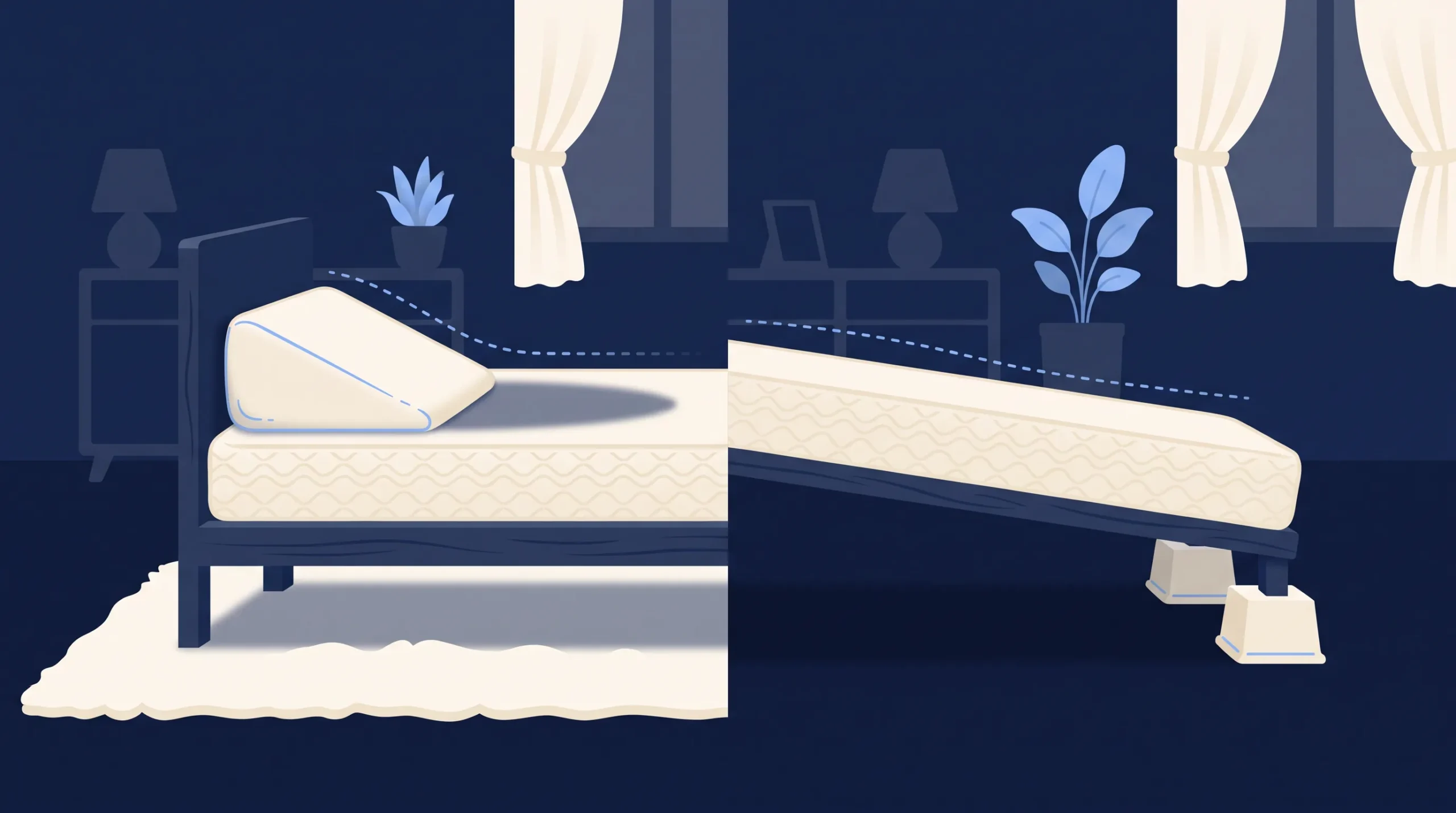
What does a wedge pillow actually do?
A wedge pillow is a firm, angled cushion that raises your upper body — or your legs — to a set incline, and the whole decision comes down to four numbers: angle, height, size, and foam. You will see it sold as a bed wedge, incline pillow, elevation pillow, or positioning wedge — the name changes, the four numbers do not. Get those four right for your use case and the pillow works; get them wrong and it slides, sags, or sits at the wrong angle.
This site is organized around one path — use case → angle and height → size and foam → the right product — and this page walks you to the entry point that fits why you are shopping.
→ Check the Aeris wedge pillow on Amazon
FSA & HSA eligible. A bed wedge pillow bought for a medical need like acid reflux can usually be paid for with FSA or HSA pre-tax funds — check the Aeris wedge pillow on Amazon to confirm eligibility at checkout.
Which wedge pillow fits acid reflux and GERD?
The most common reason people buy a wedge is nighttime reflux (nocturnal heartburn), and the deciding attribute is the incline angle — the elevation angle — not the brand.
The wedge pillow guide for acid reflux and GERD covers the angle and height most reflux sleepers use, why a wedge slides you down overnight and the transition-slope and firmness that stop it, and how left-side sleeping pairs with elevation. If a wedge alone is not settling your symptoms, that is a conversation for your doctor — this page is about choosing comfortable hardware, not treating a condition.
For the related nighttime-elevation use case, the wedge pillow guide for sleep apnea and snoring covers the same elevation logic for a different reason to sleep propped up.
How do you choose the right wedge pillow?
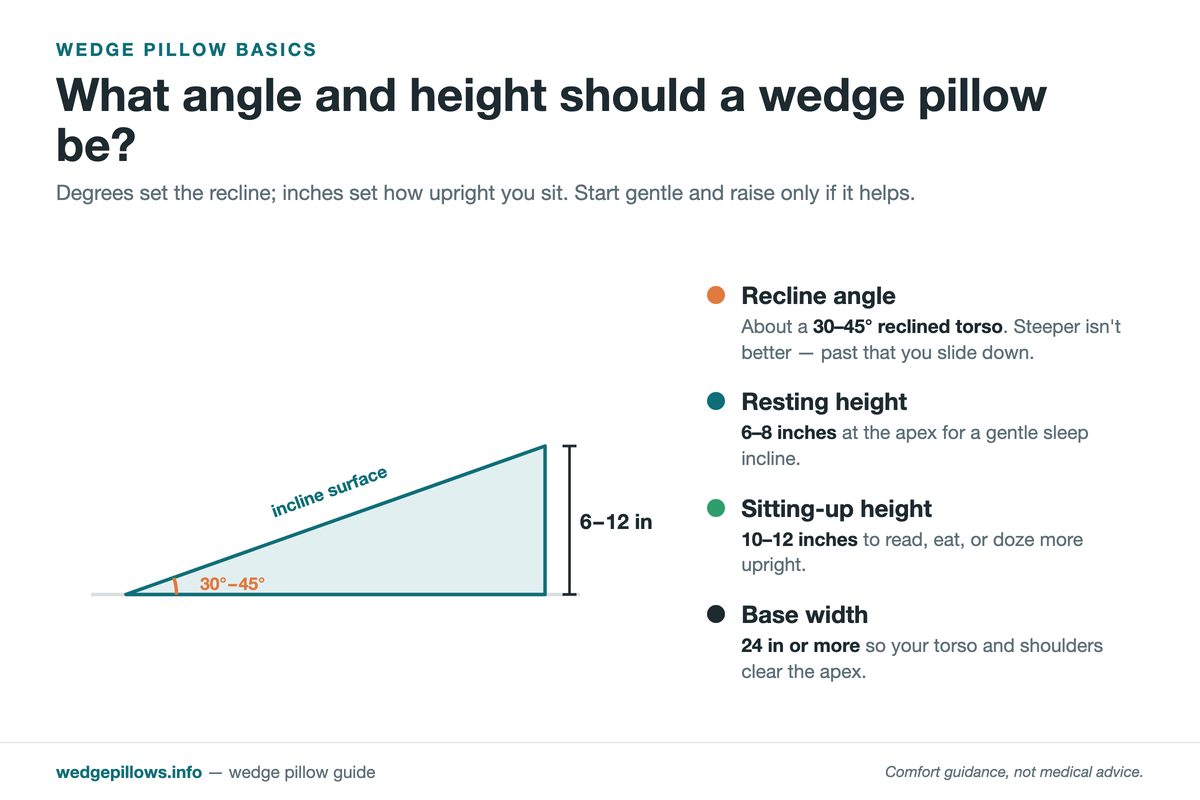
The right wedge comes from your use case and your body frame, not from the highest star rating. Too steep and you slide; too soft and the angle collapses by 3 a.m.; too short and your shoulders hang off the apex.
The how to choose a wedge pillow guide runs the full decision chain in one place — use case to angle, angle to height, height to size, size to foam — including the body-frame-to-length mapping most buying guides skip and the three failure modes (too steep, too soft, too short) and how to avoid each.
Two attributes carry most of that decision:
What incline angle and height should it be?
An angle of about 30 to 45 degrees decides whether the wedge does its job; a height of 6 to 12 inches decides how much elevation you actually get. The how-to-choose guide maps the typical incline bands and the 6-12 inch apex (peak height) range to each use case, and the wedge pillow pressure-relief guide covers how the angle changes contact pressure when you are propped up for long stretches.
Which foam holds the angle?
A wedge is only as good as its ability to hold its angle under your weight all night. The how-to-choose guide ranks memory foam against firmer polyfoam for that job, and explains the firmness number — ILD, indentation load deflection — that predicts whether a wedge stays put or flattens.
4 More Things a Wedge Pillow Can Do
Reflux is the headline, but the same angled cushion solves several other comfort problems, each at its own angle:
- Legs and circulation — a gentler incline under the knees or calves; see the leg-elevation reviews in the catalog below.
- Back support and sitting up — the wedge pillow guide for TV and reading covers the upright-in-bed use case.
- Sleeping upright after the day — the sleeping upright guide covers when and how propped sleeping helps comfort.
- Pregnancy — the pregnancy wedge guide covers trimester-specific angles and comfort positions to raise with your midwife.
The full map of positions and use cases lives in the wedge pillow positions and use-case guide.
Is a wedge pillow better than an adjustable bed?
For most people the honest answer is cost versus convenience, not better versus worse. A wedge is a fraction of the price and travels; an adjustable bed sets any angle at the touch of a button and never slides.
The wedge pillow vs adjustable bed comparison lays out the tradeoff so you can decide before spending ten times as much.
Which wedge pillow should you actually buy?
Once you know your elevation angle, apex height, size, and foam, the last step is to choose the wedge that holds them night after night.
The best wedge pillows guide ranks current options by use case, and the individual reviews go deeper — including our own Aeris memory-foam wedge pillow review and the Flexicomfort bed wedge pillow review, both designed to hold their angle through the night. When a wedge is in daily service for months, keeping it clean is part of the buying decision too.
Frequently asked questions
What is a wedge pillow used for? A wedge is an inclined foam support with many jobs: propping the torso for more comfortable sleep, raising the upper body for easier breathing, recovering after surgery, sitting up to read or watch TV, and elevating the legs to take pressure off the lower back. The same shape, flipped or repositioned, covers all of them.
What size and height wedge pillow do I need? Match height to the job: a 6-to-8-inch apex gives a gentle recline for sleeping, while 10-to-12 inches sits you more upright for reading or recovery. For width, pick one close to your shoulder span so you do not roll off the edge.
Are wedge pillows good for you, and are there downsides? For most people a wedge is a simple comfort and positioning aid with no real downside. The usual complaints are a too-steep angle, soft foam that lets you slide, or an adjustment period the first few nights — all avoidable by choosing the right height and a firm core.
How long does a wedge pillow last? A good memory-foam wedge holds its shape for about two to three years. Replace it sooner if the foam sags, stops holding its angle, or you wake up lower than you started — that is the foam giving out, not your setup.
Can you sleep on your side or stomach on a wedge pillow? Side sleeping on a wedge works well — the incline keeps you propped while you stay on your side. Stomach sleeping is the exception: a wedge bends the lower back the wrong way, so stomach sleepers are usually better with a very low wedge or none at all.