Last updated: September 2026
This guide is part of our full map of wedge pillows for acid reflux, GERD, and better sleep.
Can a wedge pillow treat sleep apnea? No: it is a positioning aid, not a treatment. Elevation lowers apnea counts in studies, but the strongest results came from tilting the whole bed, and the only wedge-style pillow trial succeeded for 4 of 14 people.
Key takeaways
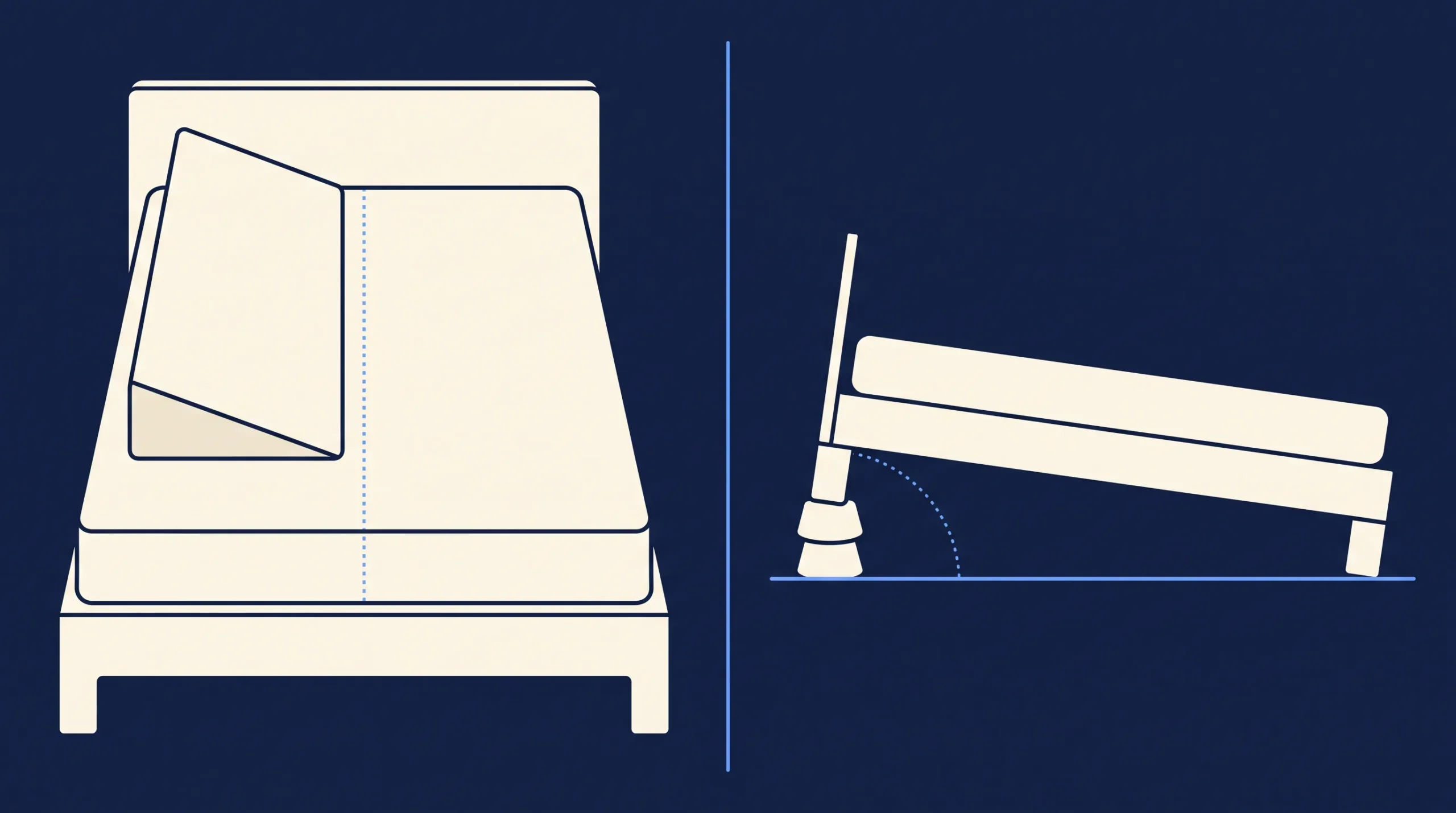
- Tilting the whole bed is the best-tested version of this idea: in 52 patients, a 15 cm block under the head-end legs (a 7.5° tilt) moved the apnea-hypopnea index from 15.7 to 10.7 events/h (Souza 2017).
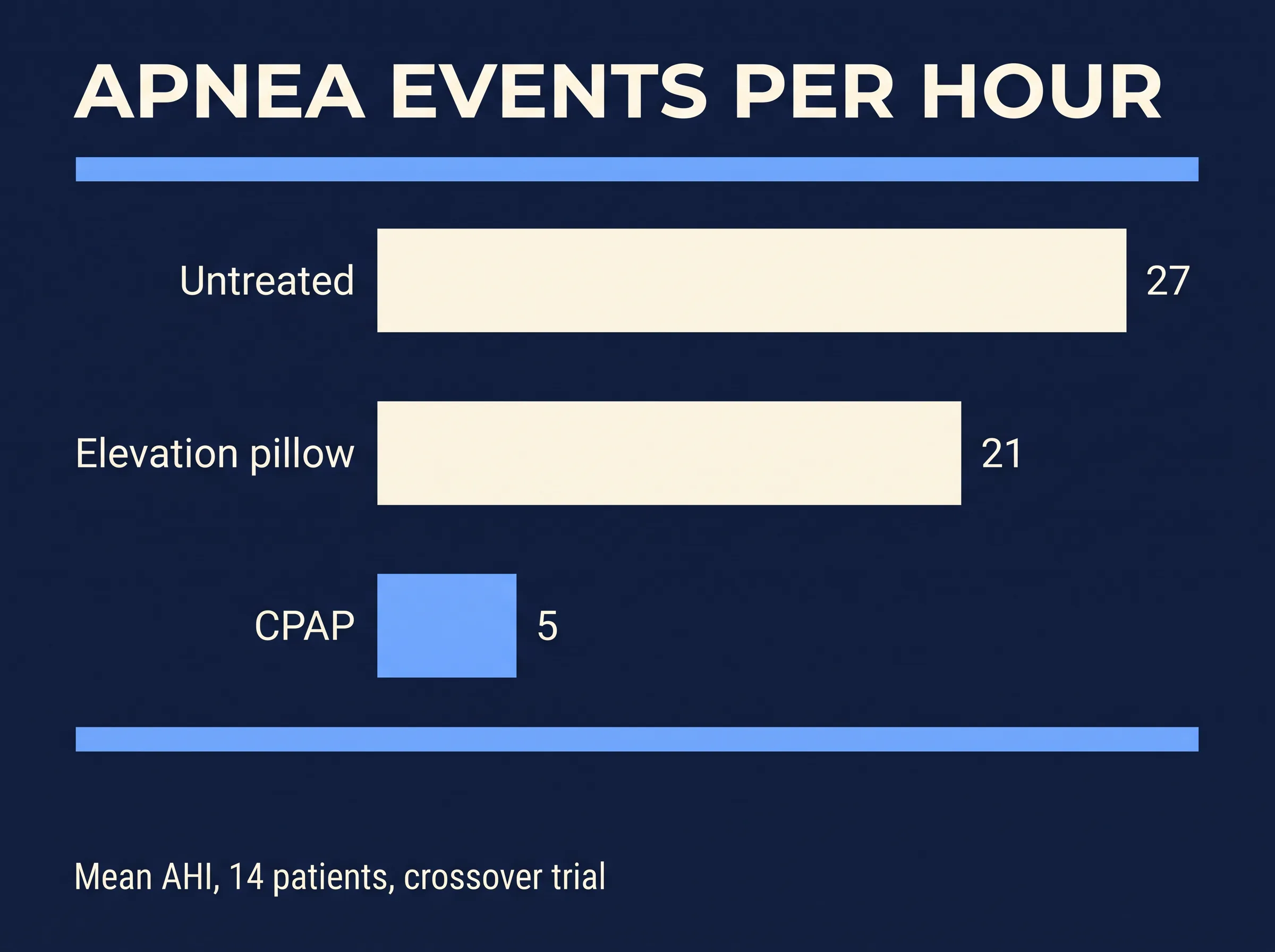
- The one trial that tested a wedge-shaped pillow compared it with CPAP in 14 people: 4 succeeded, 3 partly succeeded and 7 were treatment failures, with mean AHI going 27 → 21 against 5 on CPAP (Skinner 2004).
- Nobody can tell you in advance whether you are a responder. Skinner found no baseline measure — including positional apnea — that predicted who benefited; Souza classed 61.5% of patients as responders and 38.4% as non-responders.
- Sleeping on your side outperformed elevation head to head: 25.7 events/h supine, 17.8 at a 30° tilt, 14.8 lying on the side (multicentre study, 2025).
- For snoring specifically, 30° head-and-trunk elevation cut the share of the night spent snoring from 17.3% to 12.5% in 45 patients (Iannella 2022).
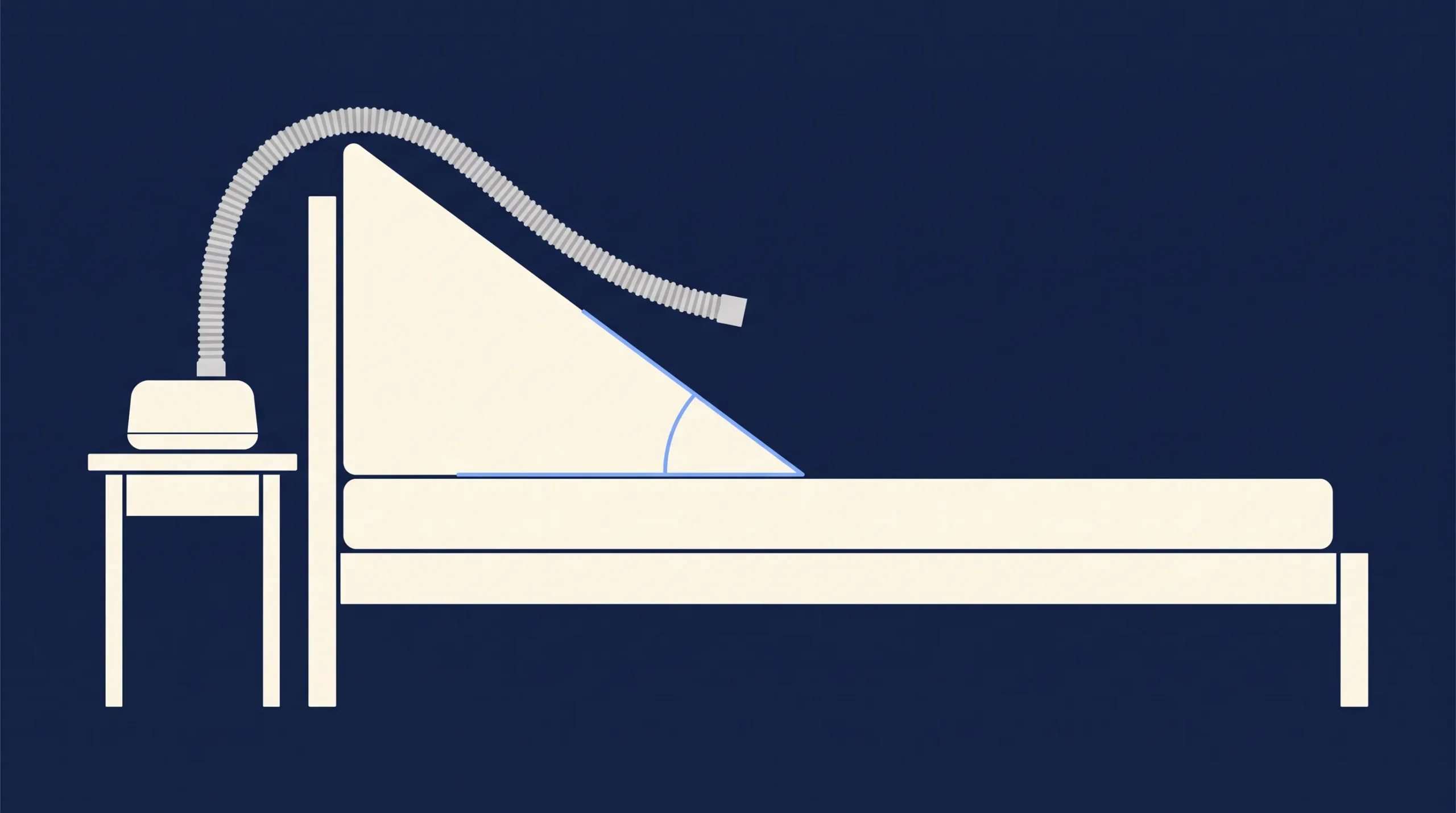
- A wedge pillow is not the same geometry as the studies: it raises head and torso and leaves a bend at your waist, where a tilted bed moves the whole body as one plane.
- Sleep apnea is diagnosed by a sleep study, and a PAP machine is the most common treatment (NHLBI). A wedge never replaces a prescribed device.
Can a wedge pillow help with sleep apnea?
It can make sleeping raised more comfortable, and raised sleeping does reduce apnea events for some people — but a wedge pillow is not a treatment for sleep apnea, and buying one is not a substitute for being assessed. That distinction runs through everything below.
The honest summary of the evidence is that elevation has support and the wedge pillow has very little. Four studies have measured raised sleeping in people with obstructive sleep apnea, and only one of them used anything shaped like a wedge pillow.
What did the elevation studies actually measure?
They measured the apnea-hypopnea index, or AHI — the number of breathing pauses and shallow-breathing events per hour of sleep, scored during an overnight sleep study. Lower is better, and the studies compared the same person flat against the same person raised.
| Study | What was raised | Angle or lift | AHI, flat → raised |
|---|---|---|---|
| Souza 2017, 52 patients | The whole bed, blocks under the head-end legs | 15 cm block, a 7.5° tilt | 15.7 → 10.7 events/h (p<0.001) |
| Iannella 2022, 45 patients | Head and trunk, adjustable hospital bed | 30° | 23.8 → 17.7 events/h (p=0.03) |
| Multicentre 2025, 30 patients | The head of the bed | 30° | 25.7 → 17.8 events/h (−31%) |
| Skinner 2004, 14 patients | A shoulder-head elevation pillow | not reported in the abstract | 27 → 21 events/h |
Two details in the Souza study are worth holding on to. Minimum oxygen saturation through the night improved from 83.5% to 87%, and time spent lying on the back barely changed — so the gain came from the tilt itself rather than from the tilt pushing people off their backs. Seven patients later slept a third night with the bed flat again, and their AHI went back to baseline.
4 things the research says about elevation and apnea
1. The effect is real but partial. Across the three whole-bed or hospital-bed studies, AHI fell by roughly a third. None of them took the average patient down to a normal AHI, and the multicentre study counted only half its patients as responders.
2. Side-lying did more than the tilt. In the same 30 patients, lying on the side scored 14.8 events/h against 17.8 for the 30° tilt. The NHLBI also lists sleeping on your side rather than your back among the lifestyle measures a provider may suggest. If you can only manage one change, that is the one with the stronger showing — our side-sleeping setup guide covers how to do it on a wedge.
3. Response is unpredictable. The Skinner trial looked for anything in the baseline data that would identify who would benefit, including whether their apnea was positional, and found nothing. A wedge is therefore something you try rather than something you can be prescribed with confidence.
4. The pillow version performed worst. The single wedge-style pillow trial left half its group unimproved, and its authors positioned raised sleeping as a second-line option — something to consider when the first-line treatment is not an option, not instead of it.
Is a wedge pillow the same as raising the head of the bed?
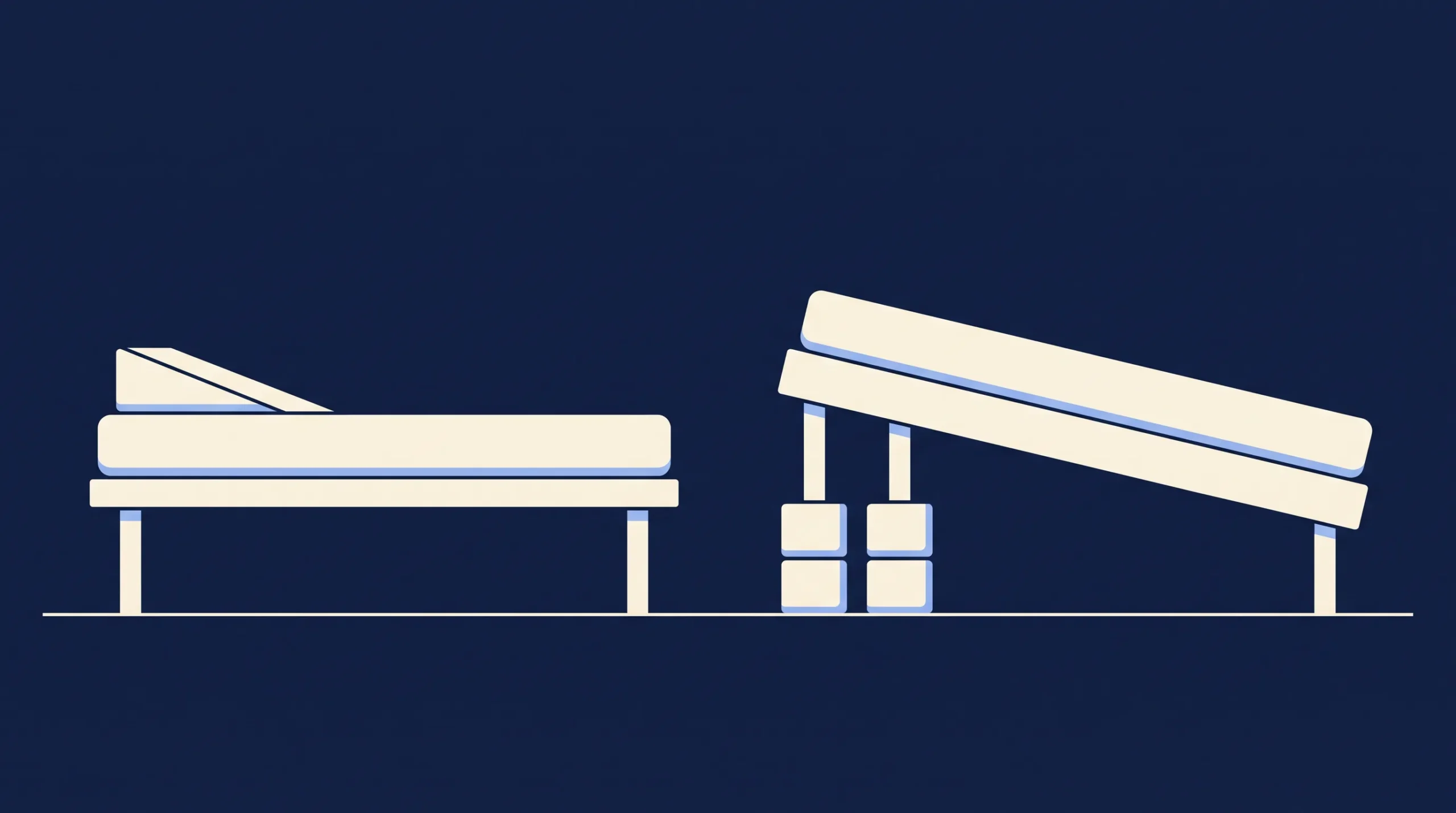
No, and this is the gap between the research and the product. When you put 15 cm of block under the head-end bed legs, your whole body tilts as one plane, the way the Souza patients slept. A wedge pillow raises your head, shoulders and part of your torso, then ends — leaving a bend around your waist that the tilted-bed patients never had.
| Wedge pillow | Whole-bed tilt | |
|---|---|---|
| What moves | Head, shoulders, upper torso | The entire sleeping surface |
| Bend in the body | Yes, where the wedge ends | None |
| Tested in the studies above | Once, in 14 patients | Yes — 52 patients on blocks, 75 more on powered beds |
| Affects your partner | No | Yes, the whole bed tilts |
| Undone in seconds | Yes | No |
| Travels | Yes | No |
Whether that bend matters for breathing has not been measured directly, so treat the wedge as an approximation of the tested setup rather than the same thing. If the whole-bed route appeals, we compare it two ways: wedge pillow vs bed risers and a wedge under the mattress vs on top. An adjustable bed does the same job with a motor, covered in wedge pillow vs adjustable bed.
Does a wedge pillow help snoring?
Snoring is the part of this where raised sleeping looks most useful, because snoring is a noise problem rather than a breathing-failure problem. In the Iannella study, 30° head-and-trunk elevation took the share of the night spent snoring from 17.3% to 12.5%, which was a statistically significant change in 45 patients.
That is a reduction, not silence, and it came from a hospital bed rather than a pillow. Snoring also has causes that no angle touches — nasal obstruction, alcohol, weight, anatomy. Our dedicated page on wedge pillows and snoring goes through the comfort side, and the congestion guide covers the blocked-nose version of the same complaint.
Loud, habitual snoring with pauses in breathing is a different matter, and it belongs in the doctor’s-visit section below rather than in a shopping decision.
Which angle and setup do the studies support?
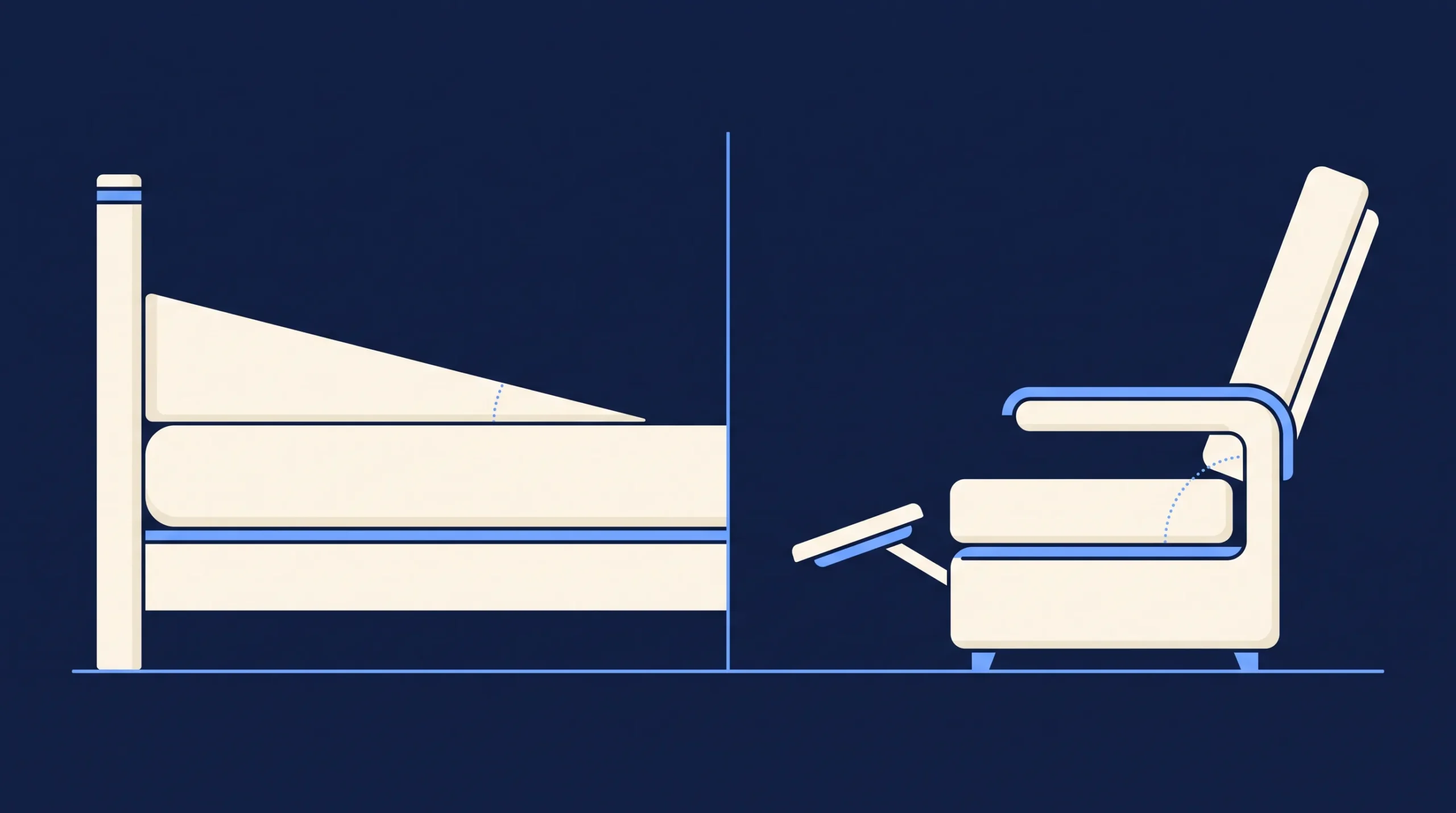
The measured angles are 7.5° for a whole-bed tilt and 30° for head-and-trunk elevation on a powered bed. Both produced a similar-sized drop in AHI, which is the most interesting thing about them: three times the angle did not produce three times the benefit, and no study has established a dose-response curve you could shop against.
Commercial wedge pillows sit between those numbers. The Aeris Wedge Pillow has a 22 cm apex on a 65 cm base, which is about 19°. Steeper is not automatically better — a wedge you slide off, or that leaves your neck kinked, is not delivering any angle at all by 3 a.m. The wedge pillow height guide sets out how apex height translates into angle, and what to put on top of a wedge pillow deals with the neck question, which is usually the reason people abandon one.
Three practical points sit alongside the angle: a firm core that holds its shape through the night, a base wide enough that your shoulders stay on the slope, and a surface that does not let you slide down. How to choose a wedge pillow works through those attributes, and wedge pillow side effects covers the complaints that mean the setup is wrong.
Can a wedge pillow replace CPAP for sleep apnea?
No. In the Skinner crossover trial the same 14 patients used both, and the contrast was stark: CPAP took 12 of them to a successful result with a mean AHI of 5 events/h, while the elevation pillow succeeded for 4 and failed for 7, at a mean of 21. The difference between the treatments was statistically significant.
The NHLBI describes a PAP machine as the most common treatment for sleep apnea, alongside oral devices and lifestyle changes. If a clinician has prescribed one, a wedge pillow is at most something you use with it — and if you find the device uncomfortable, that is a conversation with the prescriber, who can change mask, pressure or device type.
When should you see a doctor instead of buying a pillow?
If someone has seen your breathing pause in the night, or you snore loudly and habitually, gasp for air, or feel sleepy and unrefreshed through the day, those are the symptoms NHLBI lists for sleep apnea — along with dry mouth, morning headache, insomnia and waking repeatedly to urinate.
None of those are resolved by furniture. Sleep apnea is identified with a sleep study, and the NHLBI notes that the daytime sleepiness it causes can lead to problems with learning, focusing and reacting — which is why the assessment matters more than the angle you sleep at. Buy the wedge for comfort if you want one; book the appointment either way, and do not let a new pillow postpone it.
Frequently asked questions
Does a wedge pillow help with sleep apnea?
It may reduce events for some people, but it is not a treatment. The best-tested form of this idea is tilting the whole bed, which moved AHI from 15.7 to 10.7 events/h in 52 patients. The one wedge-style pillow trial helped 4 of its 14 participants and failed for 7.
What angle do the sleep apnea studies use?
Two angles have been measured: a 7.5° whole-bed tilt produced by a 15 cm block under the head-end legs, and a 30° head-and-trunk elevation on an adjustable bed. Both reduced AHI by a similar amount, so a steeper angle is not reliably better.
Is a wedge pillow a substitute for CPAP?
No. In the trial where the same patients used both, CPAP succeeded for 12 of 14 at a mean AHI of 5 events/h; the elevation pillow succeeded for 4 at a mean of 21. If CPAP is prescribed and uncomfortable, raise it with the prescriber rather than swapping in a pillow.
Is side sleeping better than sleeping raised?
In the 2025 multicentre study it scored better: 14.8 events/h on the side against 17.8 at a 30° tilt, from 25.7 flat. The NHLBI also lists side sleeping among the changes a provider may suggest. The two combine — a wedge with a wide enough base lets you hold a side position on the slope.
Can a wedge pillow stop snoring?
It may reduce it rather than end it. At 30° head-and-trunk elevation, the share of the night spent snoring fell from 17.3% to 12.5% in 45 patients. Snoring also has causes an angle does not address, including nasal obstruction and alcohol, so results vary widely between people.
How do I know if I am one of the people elevation helps?
There is no test for it. The Skinner trial searched the baseline data for a predictor, including whether the apnea was positional, and found none. In practice you try it, and a partner or a home sleep-tracking device tells you whether anything changed.
Does a wedge pillow work for central sleep apnea?
The studies above enrolled patients with obstructive sleep apnea, where the airway narrows. Central sleep apnea is a signalling problem between brain and breathing muscles, and none of this evidence applies to it. That distinction is one for your clinician, not a product page.
Which wedge holds a steady angle?
If you want the tested geometry, the whole-bed route is what the research used — blocks or risers under the head-end legs, which tilt the surface as one plane and cost very little. If you share a bed, rent, or want the option gone by tomorrow, the wedge pillow is the one that raises a single person and comes off in seconds.
We make wedge pillows, which is why the limits above are stated as plainly as the findings. Methodology: wedge measurements come from the makers’ production specs, and every physiological figure is from the studies linked above. Whichever you pick, keep the medical question on its own track — comfort tonight, assessment regardless.
Advertisement
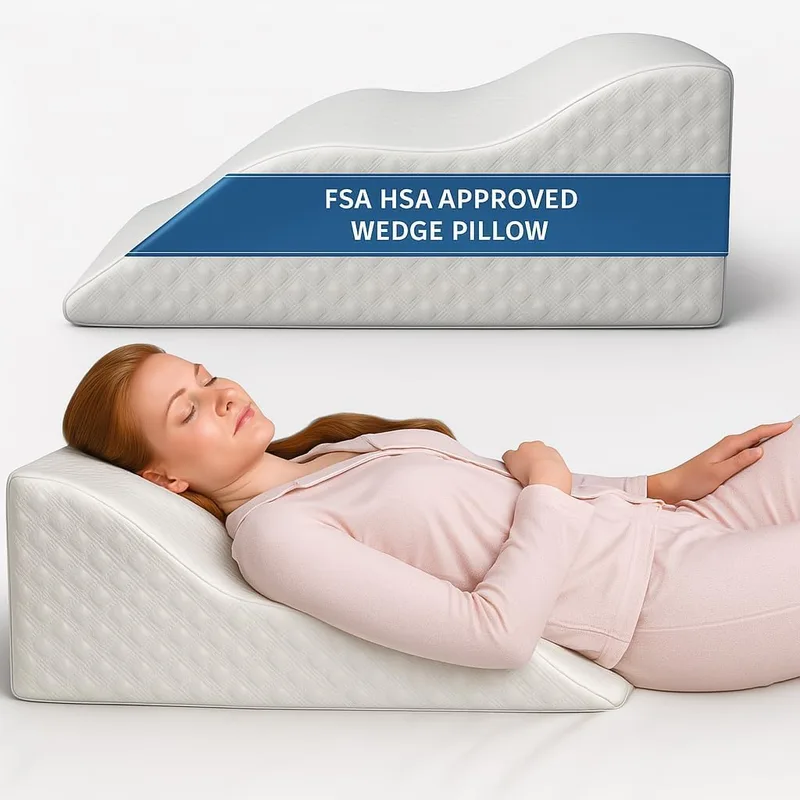
Aeris Wedge Pillow
65 × 65 cm base, 22 cm apex, 3.1 kg.
See the Aeris Wedge product details on AmazonProducts mentioned in this guide
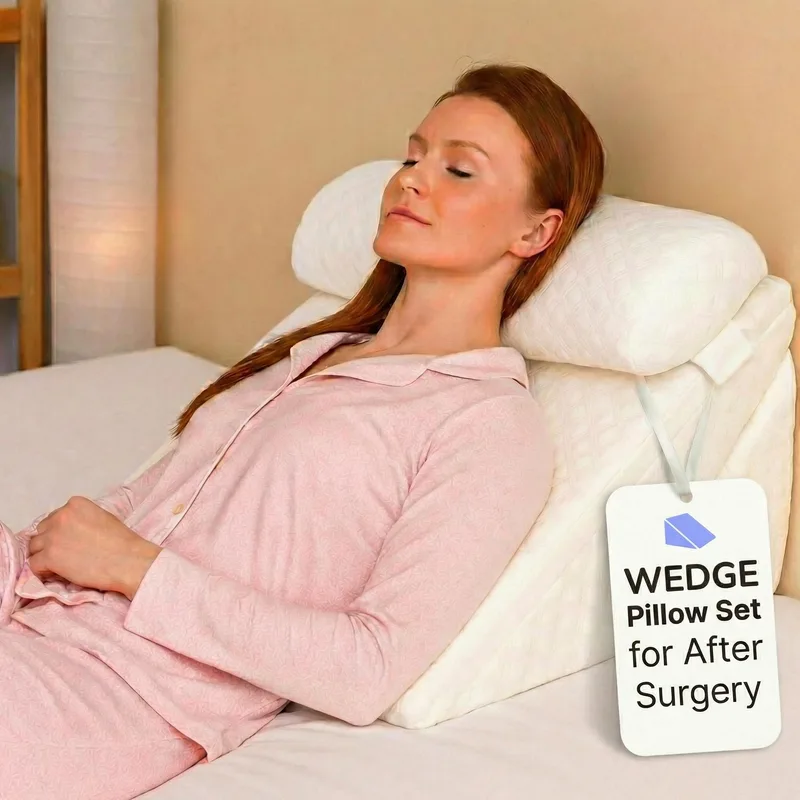 Flexicomfort Wedge Pillow — 60 × 56 cm base, 28 cm apex
- Home It adjustable bed risers — 3, 5 or 8 inch heights, set of 4