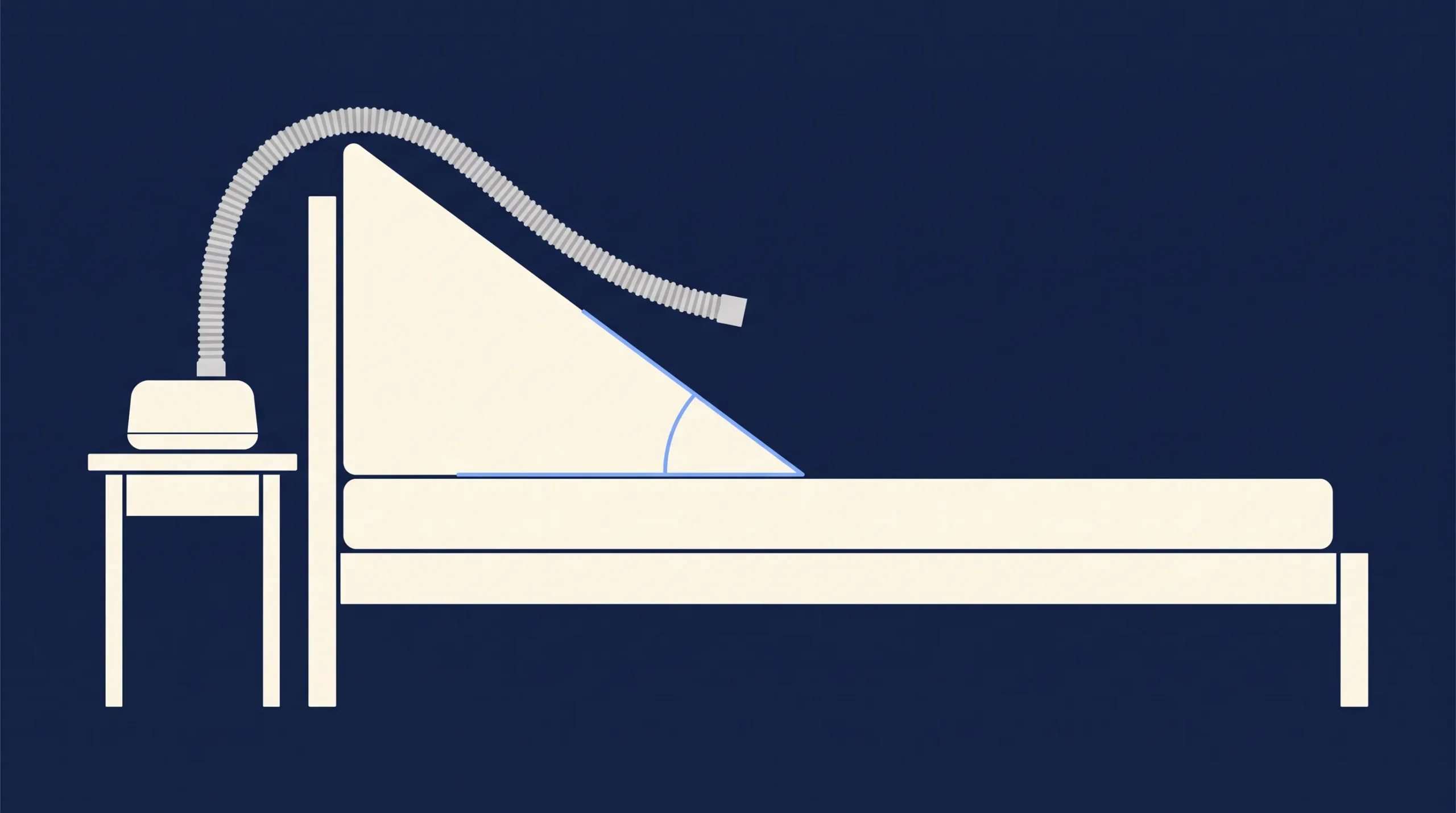
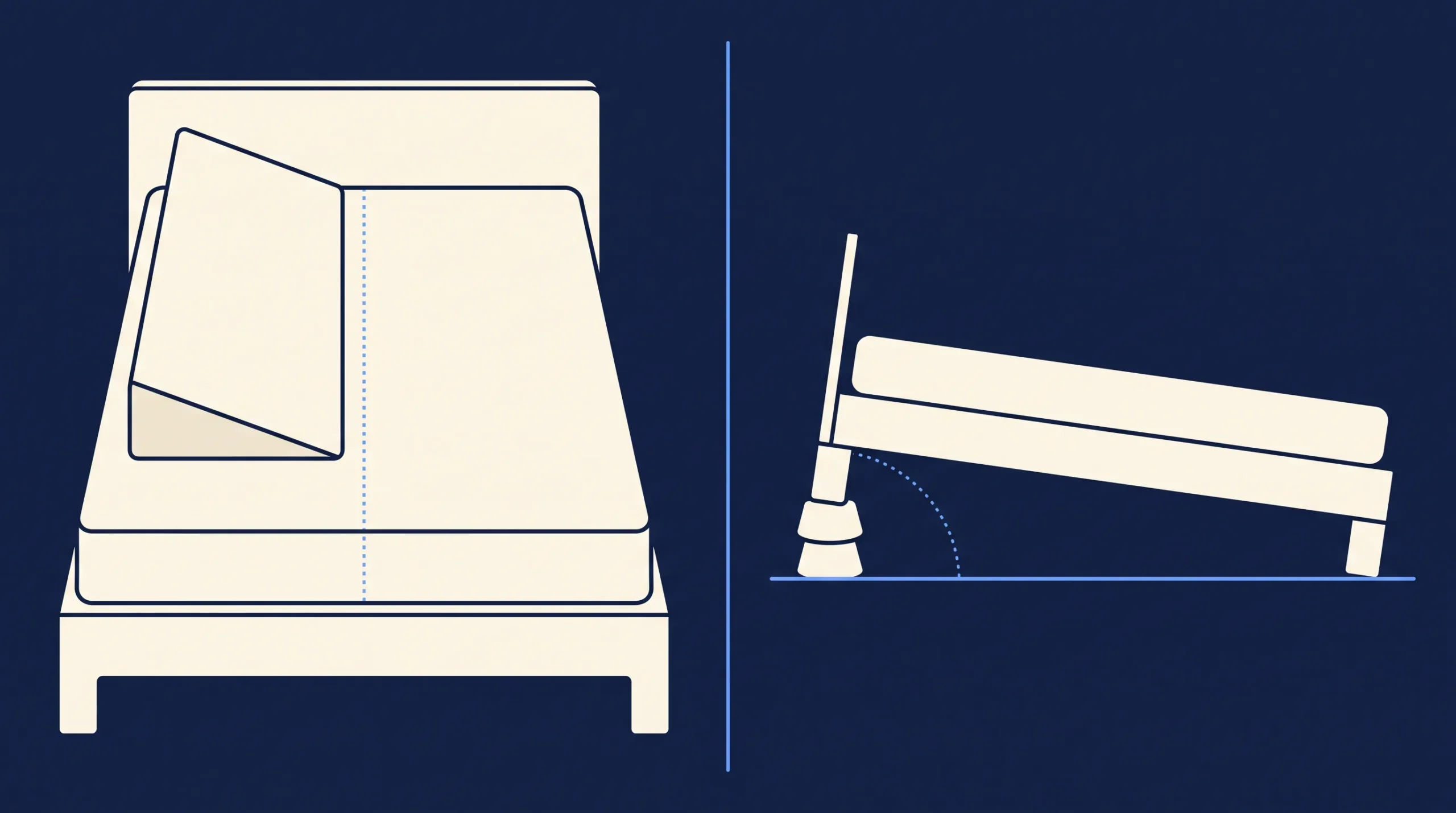
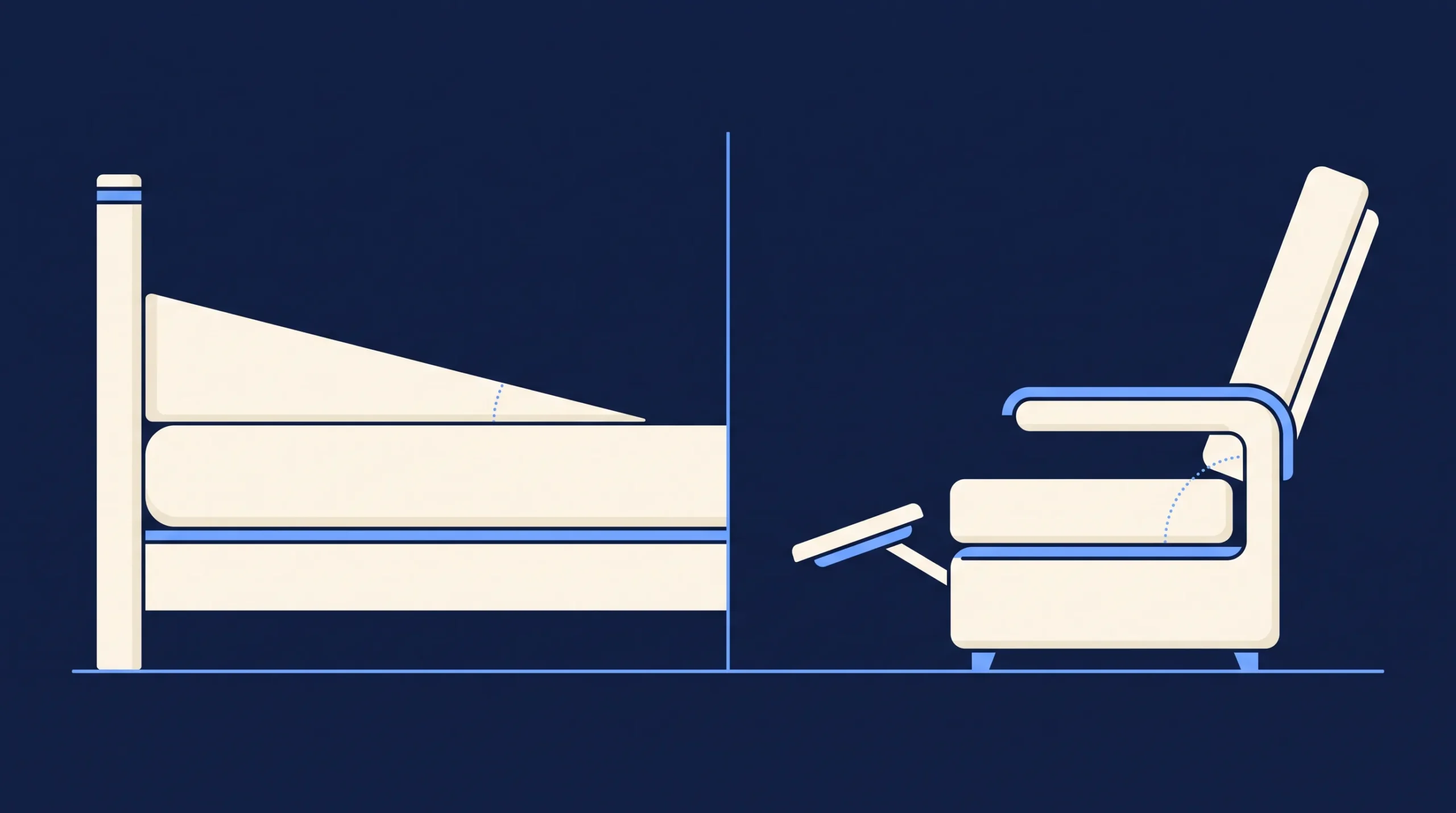
A wedge pillow is a triangular foam cushion that holds part of your body at a fixed angle. Also called a bed wedge or positioning wedge, it covers several jobs with one shape because each use is just a different elevation angle. The reason a wedge pillow is worth owning is that one cushion solves several different comfort problems — but only if you use it at the right angle for each. Propping your torso for reflux is not the same as raising your legs for tired calves. This page maps the main positions and points you to the right deep-dive. It is part of our guide to choosing a wedge pillow.
This is a comfort-and-positioning guide, not medical advice. Where a position touches a medical question — reflux, surgery recovery, persistent swelling — your doctor’s guidance comes first.
This guide is part of our full map of wedge pillows for acid reflux, GERD, and better sleep.
What are the main ways to use a wedge pillow?
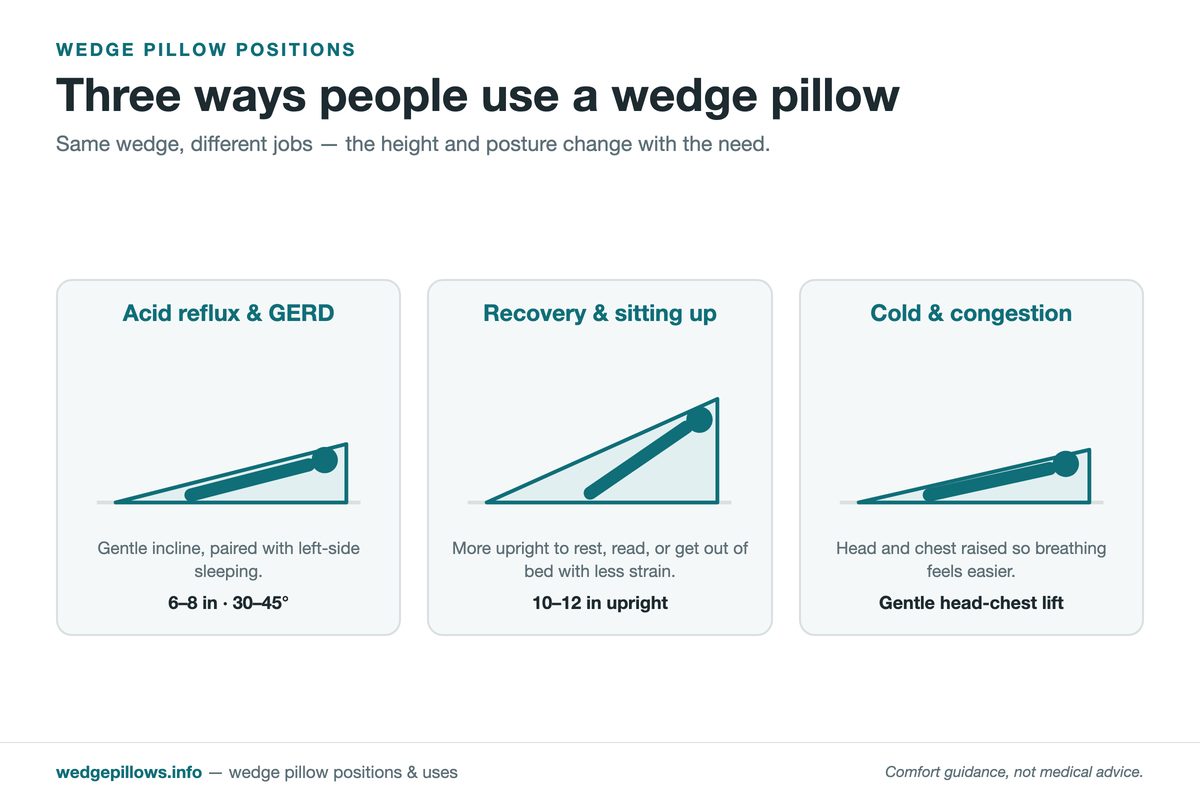
A wedge works in three broad positions — torso raised, legs raised, or back propped upright — and each use case is just one of those three at a specific angle. Torso raised is the head-of-bed elevation family (reflux, snoring, congestion); legs raised flips the same slope under the knees or calves; back propped turns it into a backrest for sitting up. Get the position and angle right and the same pillow covers reflux, reading, leg elevation, and recovery comfort.
The angle — the incline you will also see written as elevation angle or slope — is always the first decision; the how to choose a wedge pillow guide covers how to set it.
5 Wedge Pillow Positions and What Each Angle Does
- Reflux and upright sleeping — torso raised about 30–45 degrees (head-of-bed elevation) to keep the head above the stomach.
- Back support and reading — a 30–40 degree backrest angle for sitting up in bed.
- Leg and knee elevation — feet lifted roughly 15–20 degrees above heart level.
- Post-surgery recovery comfort — a gentle, stable incline that reduces rolling at night.
- Posture and circulation — a mild 10–15 degree tilt for longer seated stretches.
How do you position a wedge for reflux and upright sleeping?
For reflux and propped sleeping you raise the torso on a gentle incline of about 30 to 45 degrees, ideally paired with left-side sleeping. The incline keeps the head and chest above the stomach so gravity works in your favour, and lying on the left (the left lateral position) is the side many reflux sleepers find easier to stay on. This is the most common use, and it has its own deep-dive in the acid reflux and GERD guide. For propped sleeping more generally, the sleeping upright guide covers when and how it helps comfort, and the pressure-relief guide covers how the surface feels over long stretches propped up.
How do you position a wedge for back support and reading?
For sitting up in bed to read, work, or watch, you want a steeper back angle that supports the spine without folding. In wedge terms the slope becomes a backrest: a steeper elevation angle, with the apex height (the peak at the tall end) doing the job of a seat back. The TV and reading guide covers this upright use case. A firm wedge holds the angle; pair it with the right height for your back.
How do you position a wedge for leg and knee elevation?
Leg elevation flips the wedge low and broad under the legs, raising the calves or knees a gentle 15 to 20 degrees rather than propping the torso. Raising the calves toward heart level is a common end-of-day comfort position for tired or heavy legs, and between the knees a low wedge keeps the hips stacked for side-lying (lateral) alignment. If swelling is persistent or painful, that is a question for your doctor; as a comfort position, a low leg wedge is simple and effective.
Can a wedge pillow help with recovery comfort after surgery?
After some procedures people are more comfortable sleeping propped up rather than flat, and a wedge makes that incline easy to hold — but how you should sleep after surgery is your surgeon’s call, not a pillow’s. A wedge can be part of a comfortable recovery setup if your care team is fine with propped sleeping; always follow the positions and precautions they give you.
Does wedge position affect posture and circulation?
Sitting or lying at a supported angle can feel easier on the back than slumping, and raising the legs is a common comfort move for tired legs — both are about comfort, not medical correction. A wedge gives you a stable elevation angle to sit or lie at; if you have specific posture or circulation concerns, raise them with a professional rather than relying on a pillow to fix them.
Frequently asked questions
What are the main uses of a wedge pillow?
Three positions cover most of them: torso raised (reflux, upright sleep), back propped (reading, sitting up), and legs raised (elevation, knee support).
Can one wedge pillow do all of these?
Often yes, if the angle suits — though a steep reflux wedge and a low leg wedge are different shapes, so heavy use of both may want two.
Is a wedge pillow good for after surgery?
It can make propped sleeping comfortable, but follow your surgeon’s position and precaution instructions first.
What angle should a wedge pillow be?
It depends on the position: gentle for reflux, steeper for sitting up, low for legs. The how-to-choose guide maps each.
Which wedge fits your use case?
Once you know the position, the last step is to choose the wedge that holds its angle night after night: our Aeris memory-foam wedge pillow and Flexicomfort bed wedge pillow cover torso and back use, and the best wedge pillows guide sorts picks by use case. To find the right wedge across every attribute, the how to choose a wedge pillow guide settles angle and size first.
Related guides
- Wedge Pillows for Acid Reflux, GERD, and Better Sleep: How to Choose
- Wedge Pillow for Pregnancy: Trimester Angles and Safe Positions
- How to Choose a Wedge Pillow in 5 Steps: Use Case to Product Chain
- Tomodotchi 3-Piece Wedge Pillow Set Review: Pieces, Angles, Foam
The Aeris wedge’s exact dimensions for each position
We make the Aeris wedge, so these are its exact dimensions for working out positions: 65 × 65 × 22 cm (25.6 × 25.6 × 8.7 in), about a 19° incline, with an S-curve top that supports the upper back rather than a flat ramp. The 65 cm width is wide enough to turn flat-side-up for leg elevation too.
Advertisement
Aeris Wedge Pillow
65 × 65 cm base, 22 cm apex, 3.1 kg — the wedge every measurement in this guide refers to.
See the Aeris Wedge product details on Amazon