A blocked nose almost always feels worse the moment you lie down, and one of the oldest comfort tricks is to prop yourself up so you are not breathing flat on your back. A wedge pillow is a firm foam incline that raises your head and chest and holds that angle through the night, which is why it gets pulled out every cold season. This guide covers how propping up can make a congested night more comfortable — it is comfort guidance, not medical advice, and a fever, a congestion that will not clear, or ongoing sinus and allergy problems are reasons to see a doctor, not to rely on a pillow. It is part of our main wedge pillow guide.
Why does congestion feel worse when you lie flat?
Lying flat lets mucus pool in the nose and sinuses and lets the soft tissues settle level, so a nose that felt manageable sitting up can block almost completely once your head is down. Raising the head and chest uses gravity to help things drain downward instead of collecting, which is the same reason people instinctively reach for an extra pillow when they are stuffy. A wedge does not clear the cold; it simply changes the position you are fighting it in.
What pillow height helps with a stuffy nose at night?
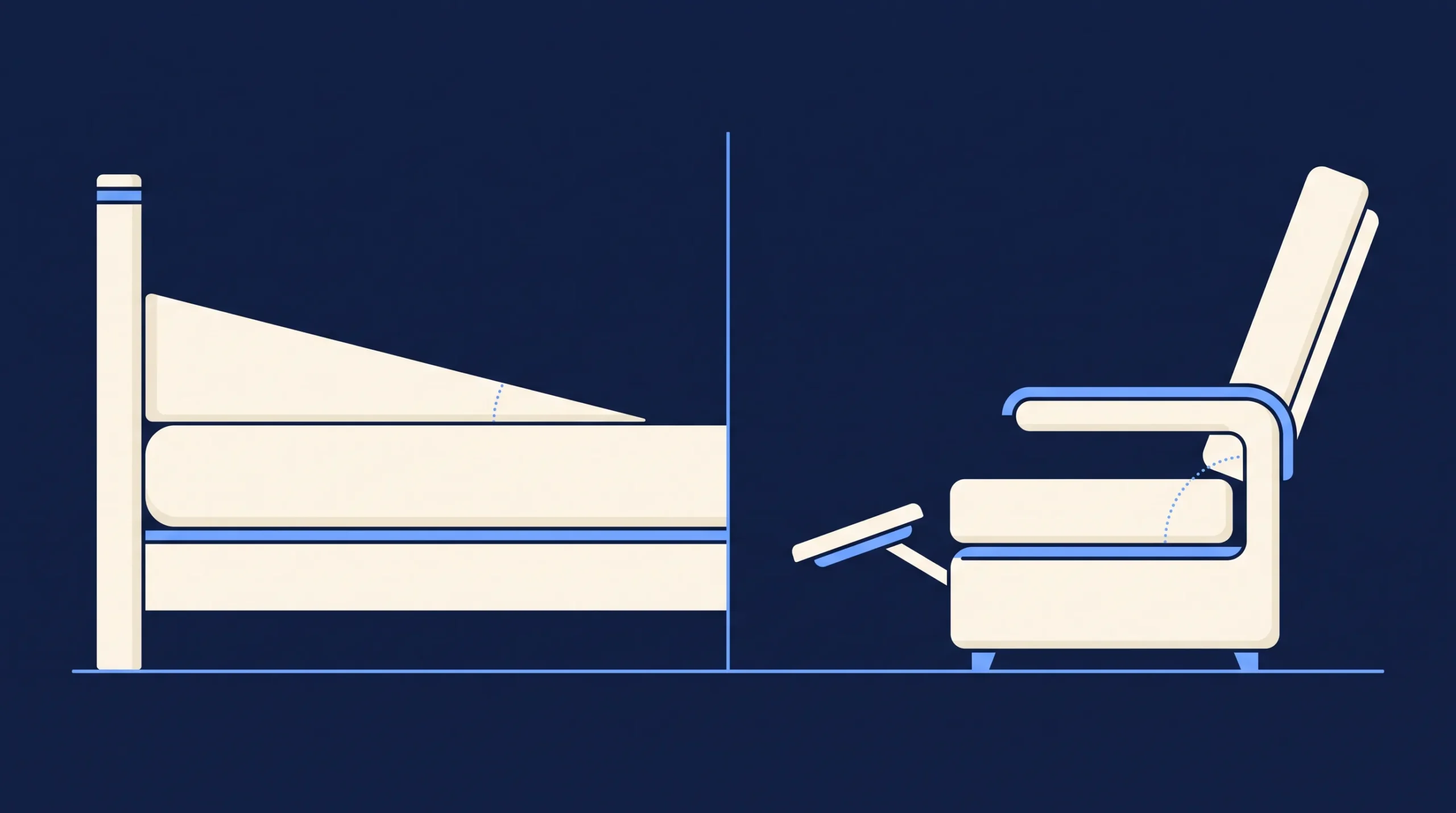
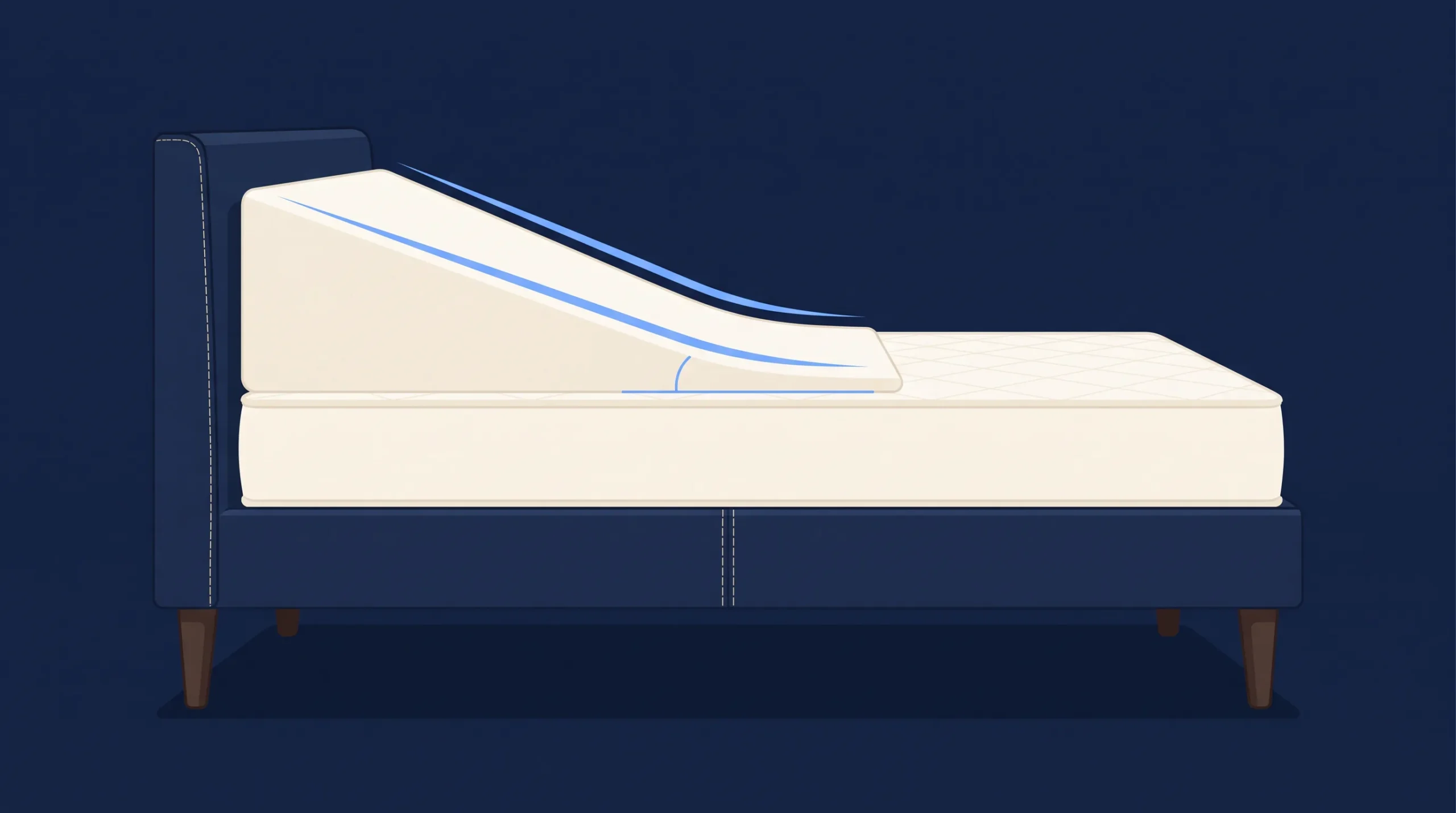
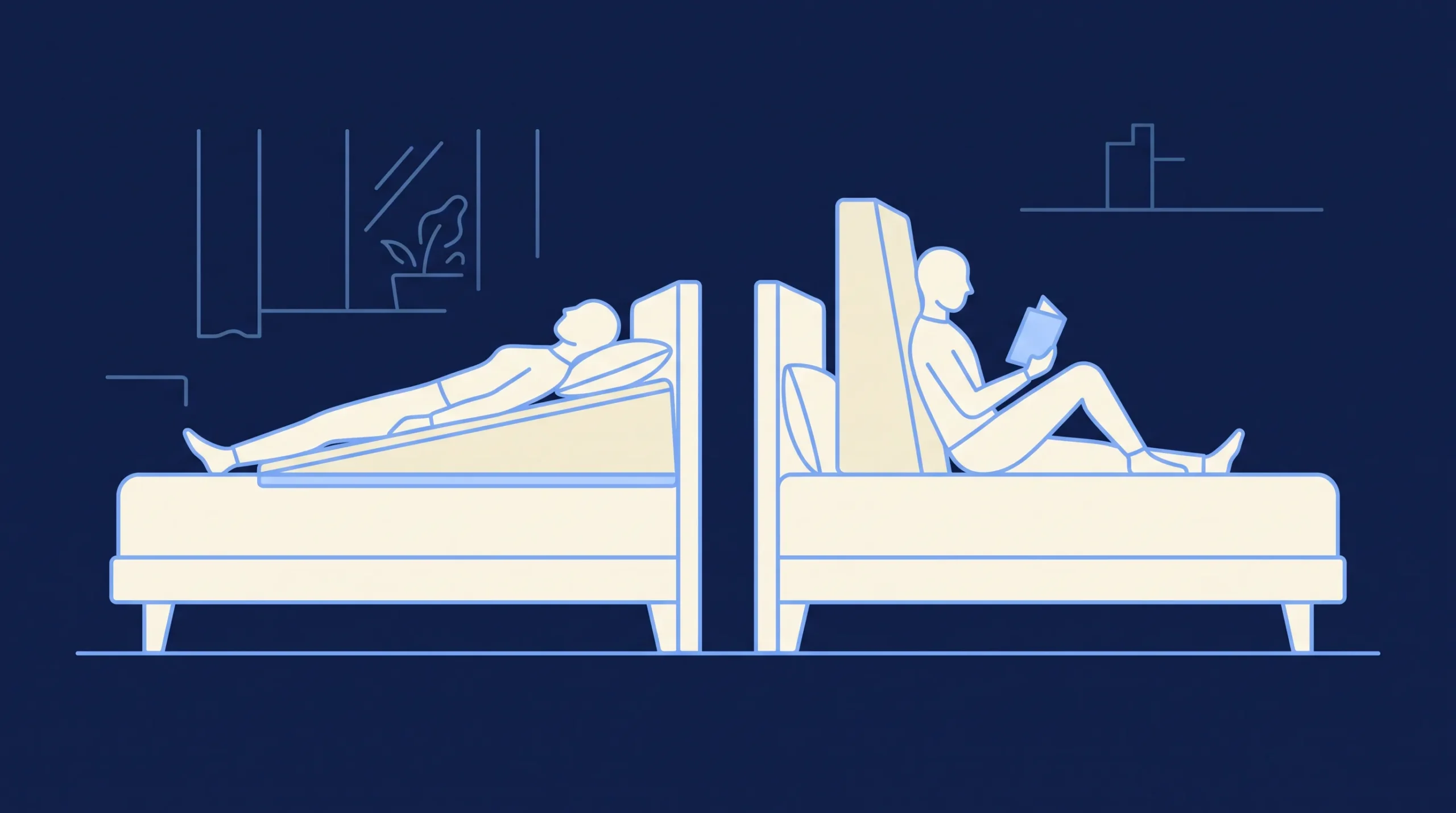
Most people breathe more easily with a gentle 6-to-8 inch rise at the apex, and sit more upright at 10-to-12 inches on the worst nights when they want to doze half-sitting — start gentle and only go higher if it helps. Too steep bends the neck and gets uncomfortable long before it helps you breathe. Our positions and uses guide shows how the same wedge covers light propping, more upright resting, and everyday sleeping as you recover.
Does a wedge help with sinus drainage and post-nasal drip?
Keeping the head and chest elevated lets gravity carry drainage downward through the night rather than letting it pool and trigger that 3 a.m. cough, which is why propped sleeping feels easier with post-nasal drip. It is comfort positioning, not a treatment — if drip and congestion are a constant, not just a cold-week thing, that is a conversation for a doctor. The same gentle incline is what people use for nighttime reflux too, covered in the acid reflux and GERD guide.
What if only one side of your nose is blocked?
One-sided congestion often shifts with position, so the setup many people find most comfortable is pairing the incline with sleeping on the less-blocked side rather than relying on elevation alone. A wedge keeps your upper body raised while you settle onto your side, combining two changes that each ease one-sided stuffiness. If the blockage never shifts and never clears, mention it to a doctor.
Why is a wedge better than stacking flat pillows?
Stacked pillows slip apart and kink your neck within an hour, so the elevation you built at bedtime is gone by the time you actually fall asleep — a single firm wedge holds one stable angle all night. This is the most common reason “propping up” disappoints: a soft stack was never going to hold. Firmness is why it leads our buying advice — the how to choose a wedge pillow guide explains how to read firmness and density so the angle is still there by morning.
Can you use a wedge for daytime rest when you’re sick?
A wedge is easy to move to the couch for daytime rest, so you can prop up to read or doze sitting up without rebuilding a pillow pile every time you move rooms. Being sick usually means more hours in bed and on the sofa, and one cushion that holds its shape in both places is the practical advantage — the same propped-up posture people use for sitting up to read or watch TV.
How do you keep a wedge clean while you’re sick?
A removable, washable viscose cover matters most exactly when you are unwell — being able to strip the cover and wash it keeps the wedge hygienic through a week of tissues and night sweats. The cleaning guide covers the routine for the cover and the foam.
When is congestion a reason to see a doctor?
A high fever, congestion that drags on past the usual cold window, or chronic sinus and allergy symptoms are reasons to see a doctor — a wedge pillow is a comfort aid for ordinary stuffy nights, not a treatment for an infection or an allergy. If anything about your breathing worries you, that is a medical conversation, not a shopping one.
Frequently asked questions
Can a wedge pillow help you sleep with a cold?
It can make a congested night more comfortable by raising your head and chest about 6 to 8 inches, which uses gravity to ease breathing and drainage versus lying flat. It is a comfort and positioning aid, not a treatment for the cold itself.
How high should you prop up for a stuffy nose?
Most people start with a gentle 6-to-8 inch incline and only go more upright (10 to 12 inches) on the worst nights. Enough to breathe easier, not so steep that your neck bends uncomfortably.
Does sleeping elevated help sinus drainage?
Keeping the head and chest raised lets drainage move downward overnight instead of pooling, which many people find eases post-nasal drip and the cough it triggers. Persistent drip warrants a doctor, not just a pillow.
Is a wedge better than stacking pillows for congestion?
Yes for most people — stacked flat pillows slip apart and kink the neck within an hour, while a firm wedge holds one stable angle all night so the elevation is still there when you wake.
When should congestion send you to a doctor?
A fever, congestion that will not clear, or ongoing sinus and allergy symptoms are reasons to get medical advice. A wedge is for comfort on ordinary stuffy nights, not for treating an infection.
Choosing a wedge for congested nights
For congestion the wedges worth owning are the firm-core ones that hold the angle all night instead of sagging flat by the early hours — our Aeris memory-foam wedge pillow is built around a firm core with a built-in handle that makes it easy to move between bed and couch, and the Flexicomfort bed wedge pillow pairs torso elevation with a neck pillow for head-and-neck support on the incline. Getting firmness right the first time is what keeps you breathing easier at 3 a.m. instead of flat again.
Advertisement
Aeris Wedge Pillow
65 × 65 cm base, 22 cm apex, 3.1 kg — the wedge every measurement in this guide refers to.
See the Aeris Wedge product details on Amazon