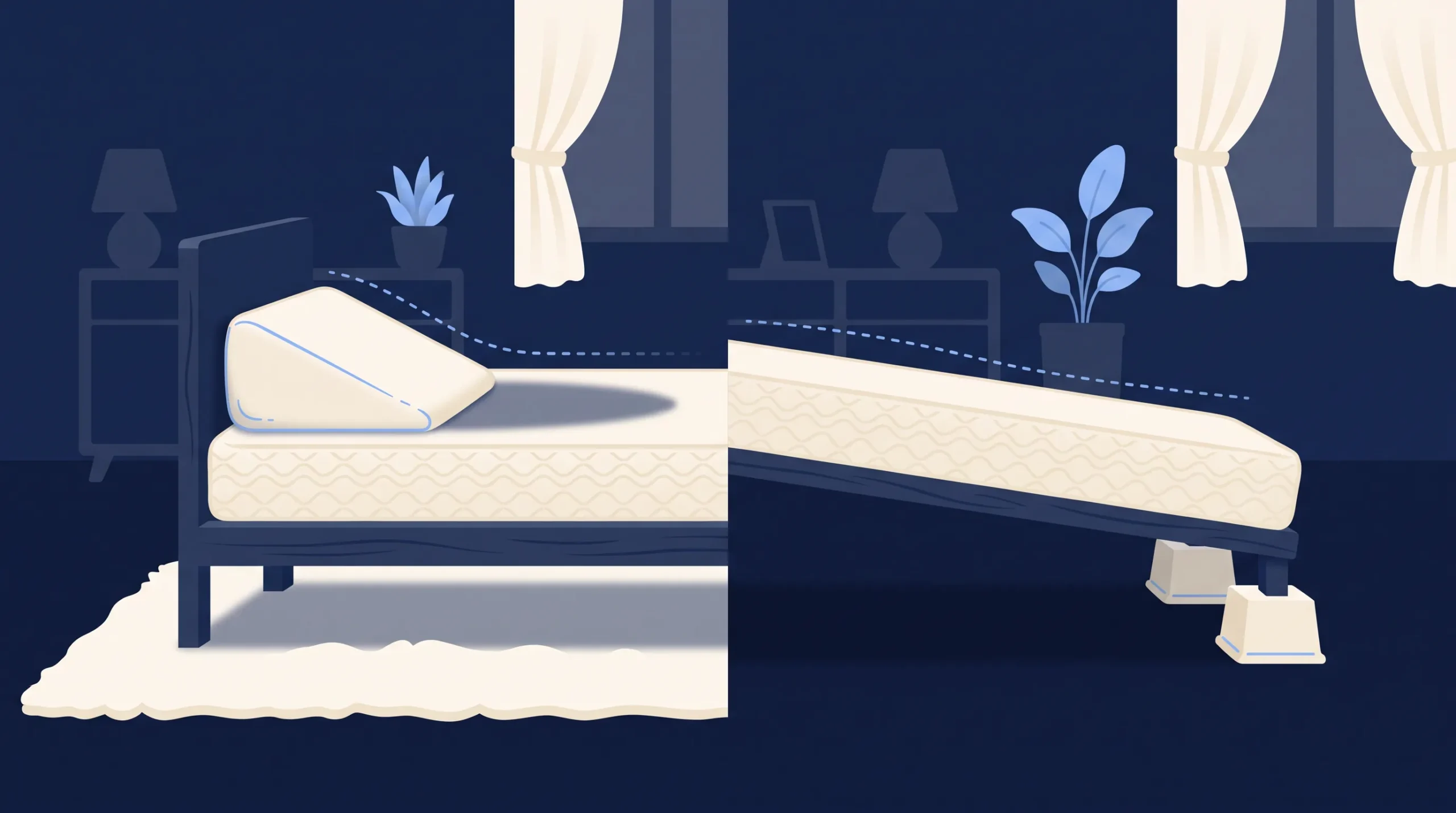
Recovering from an operation often makes lying flat uncomfortable, and many people are told — or simply find — that resting propped up is easier. A wedge pillow holds that propped position steadily, which is why it turns up so often in recovery shopping lists. This guide covers how people use one comfortably while they heal; it is comfort guidance, not medical advice, and your surgeon’s instructions always come first. It is part of our main wedge pillow guide.
Why is sleeping propped up more comfortable after surgery?
Resting on an incline keeps you off a flat-back position, takes weight off the trunk, and makes it far easier to sit up and get out of bed — which is usually the hardest movement while you are sore. Lying flat means using your core to rise; an incline lets you start most of the way there. Easier breathing while propped is a common reason people prefer it too. None of this replaces your surgeon’s positioning instructions — it is simply why the propped position tends to feel more manageable.
What height and angle are comfortable for recovery?
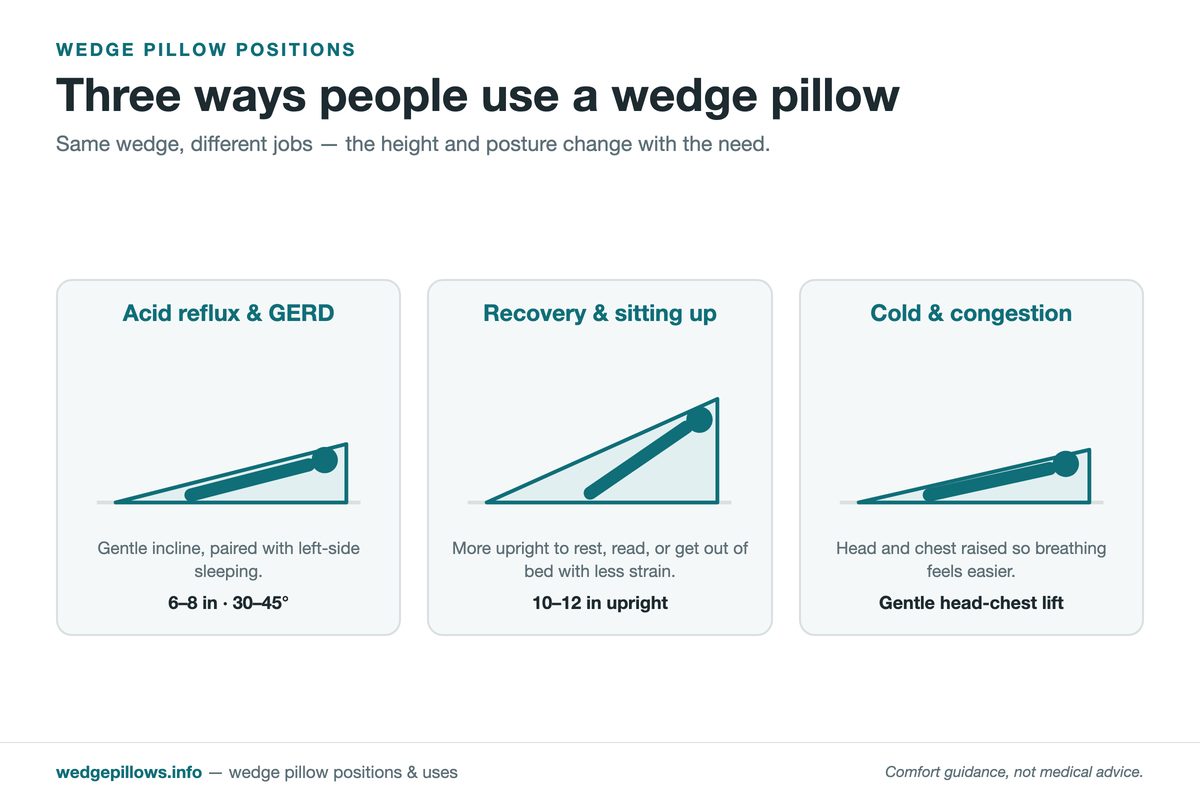
Most people rest comfortably at a gentle 6-to-8 inch elevation, and sit more upright at 10-to-12 inches when they want to read, eat, or doze sitting up — start gentle and raise it only if it helps. Higher is not automatically better; the right height is the one that feels supported without pressure. Our positions and uses guide shows how the same wedge covers resting, sitting, and leg elevation as your needs change day to day.
How do you get in and out of bed with a wedge pillow?
Use the wedge as a brace: lower yourself back against it rather than dropping flat, and to rise, roll gently toward your side and push up off the slope instead of straining your core. A firm, stable wedge gives you something solid to work against, which is exactly what a soft, collapsing one cannot do.
Why does a firm core matter during recovery?
A firm core holds the angle all night so you do not slowly slide down onto a sore trunk — soft, low-density foam collapses under you and leaves you nearly flat by morning, undoing the comfort you set up. This is the same reason firmness leads our buying advice; the how to choose a wedge pillow guide explains how to read firmness before you spend, and the pressure relief guide covers keeping weight off tender areas.
Torso-only or full-body wedge for recovery?
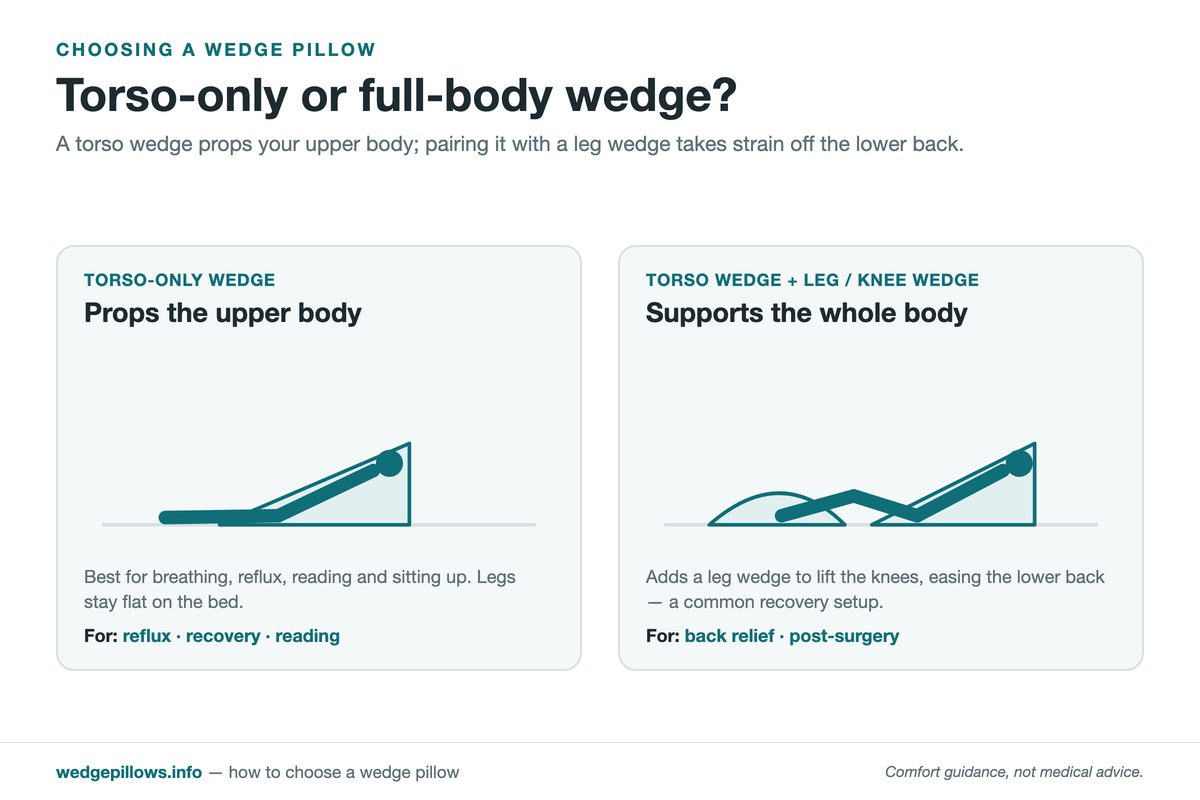
A torso wedge props your upper body for breathing and sit-ups; pairing it with a separate knee or leg wedge takes strain off the lower back and is a common recovery setup. Which combination suits you depends on the operation and what your surgeon advises — the comfort principle is to support the trunk first, then add leg elevation if it helps.
Keeping a recovery wedge clean
A removable, washable viscose cover matters more during recovery, when you are spending long hours in bed — being able to wash the cover keeps the wedge hygienic through the weeks you rely on it. The cleaning guide covers the routine.
When is propped sleeping not appropriate?
Some procedures call for specific positions, and only your surgeon can tell you what is right for your recovery — always follow their instructions over any general comfort guide, including this one. If anything about your sleeping position concerns you, ask your care team.
Our pick for the wedge side
Aeris Wedge Pillow
65 × 65 cm base, 22 cm apex, 3.1 kg — the wedge every measurement in this guide refers to.
Check the Aeris Wedge price on AmazonFrequently asked questions
How should you sleep after surgery with a wedge pillow?
Most people rest propped at a gentle 6-to-8 inch incline, using the wedge to take weight off the trunk and to make sitting up easier. Always follow your surgeon’s positioning instructions first.
How high should you elevate after surgery?
A gentle 6-to-8 inches is a common resting height, with 10-to-12 inches for sitting more upright. Start low and raise only if it adds comfort — your surgeon’s guidance comes first.
Does a wedge pillow help you get out of bed after surgery?
It can make it easier: a firm wedge gives you something to brace against so you push up off the slope rather than straining your core to rise from flat.
Why do I slide down my wedge pillow at night?
Soft, low-density foam collapses under your weight and lets you slide toward flat. A firm core with a gentle transition slope holds the angle through the night.
Can a wedge pillow speed up my recovery?
No — a wedge is a comfort and positioning aid, not a treatment. It can make resting and moving more comfortable, but recovery itself is guided by your surgeon.
Choosing a wedge for recovery
For recovery the wedges that matter are the firm-core ones that hold their angle without sliding — our Aeris memory-foam wedge pillow is built around a firm core and a built-in handle for low-effort repositioning, and the Flexicomfort bed wedge pillow pairs torso elevation with a neck pillow. The best wedge pillows guide sorts options by use case, and if you want a fuller comparison with an adjustable bed, see wedge pillow vs adjustable bed. Start from the how to choose a wedge pillow guide to get firmness right the first time.
Related guides
- Wedge Pillows for Acid Reflux, GERD, and Better Sleep: How to Choose
- Flexicomfort Bed Wedge Pillow Review: Memory Foam, Neck Pillow, Post-Surgery Support
- Discover the Ultimate Comfort: 45 Degree Wedge Pillow for Shoulder Surgery Recovery & Pain Relief
- Wedge Pillow for Sleep Apnea and Snoring: What Elevation Can and Can’t Do