A sore lower back often feels worst when you lie flat, because a flat mattress leaves the natural curve of your spine unsupported and your muscles working to hold it. A wedge pillow is a firm foam incline that you can put under your knees to ease that curve, or behind your back to sit up without slumping — and it holds the position instead of letting you sink back into the sore one. This guide covers how people use a wedge for back comfort in bed; it is comfort guidance, not medical advice, and pain that radiates down a leg, comes with numbness, follows an injury, or simply will not settle is a reason to see a doctor or physiotherapist, not to buy a pillow. It is part of our main wedge pillow guide.
How does a wedge pillow ease lower-back tension in bed?
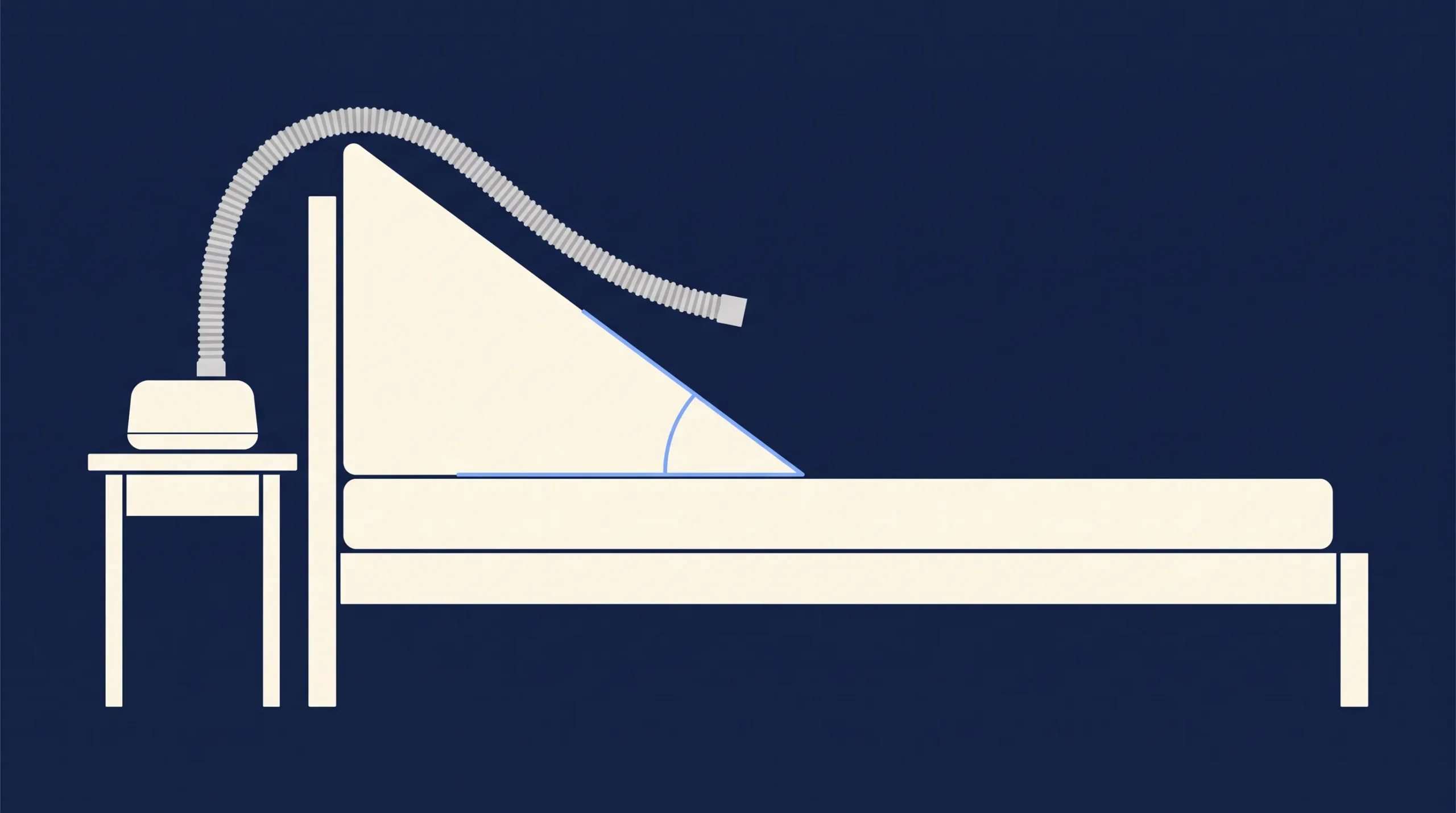
Lying flat on your back leaves a gap under the lumbar curve and lets the pelvis tip, so the lower-back muscles stay switched on all night — raising the knees on a wedge flattens that curve and lets those muscles let go. The same cushion used the other way, behind your back, supports the spine when you want to sit up to read or rest rather than slumping into the headboard. It is a positioning change, not a fix for whatever is causing the pain.
Should the wedge go under your knees or behind your back?
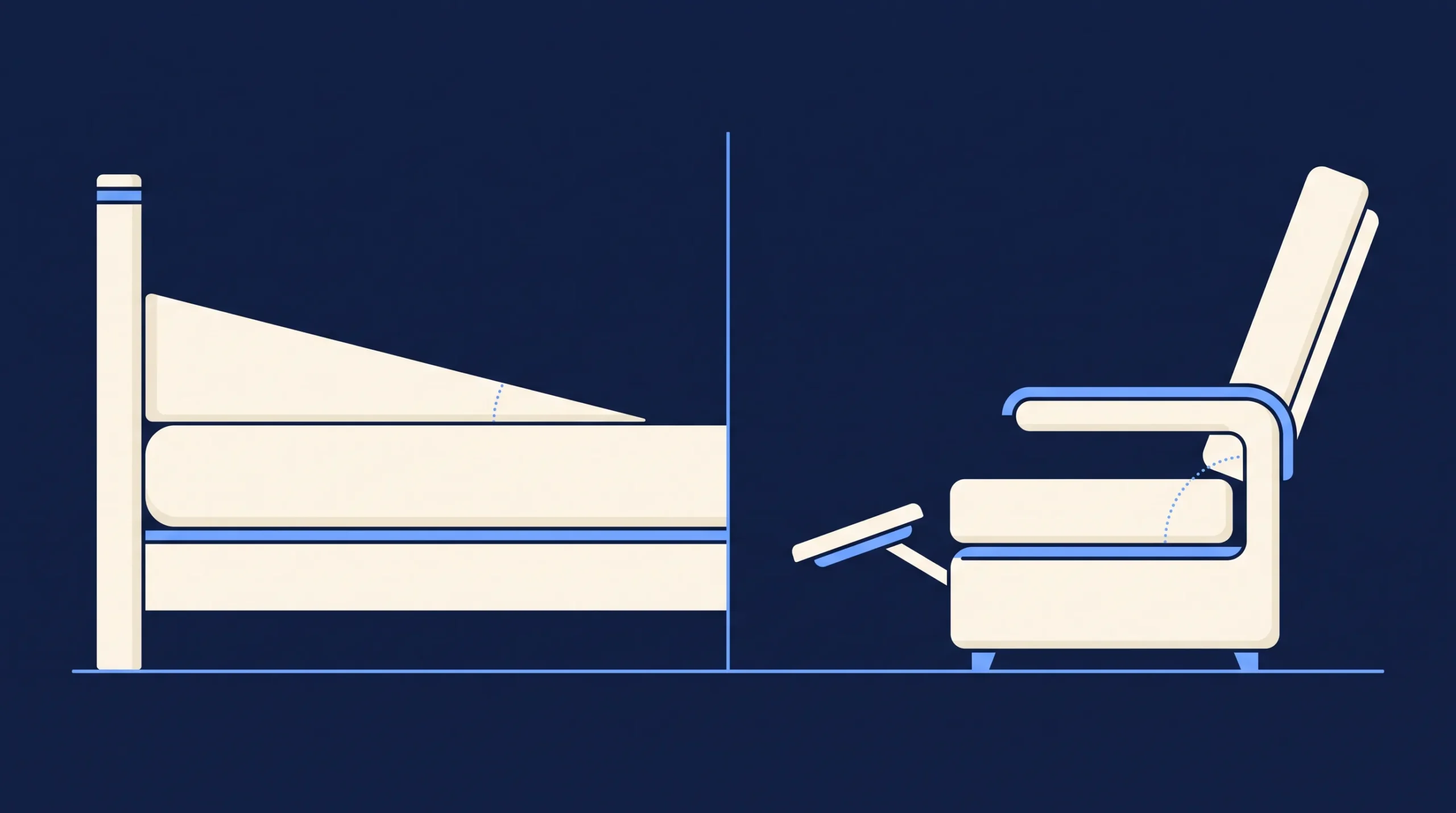
Under the knees is what most people reach for with lower-back tension lying down — it takes the pull off the lumbar spine — while a back wedge is for sitting up supported; they solve two different problems, and some people want both. If your back aches when you lie flat, start with a gentle knee lift. If it aches when you slump up in bed, a reclined back wedge is the one. Our positions and uses guide maps how the same wedge covers leg, back, and torso positions.
What angle and height ease the lower back?
A gentle 15-to-20 degree knee lift is enough to flatten the lumbar curve for most people, and a 30-to-40 degree back recline supports sitting up — higher is not better, and too steep just trades one ache for another. Start low and adjust only if it helps. The point is a supported, neutral position you can hold all night, not the biggest angle you can manage.
Why does a firm wedge matter for back support?
A soft, low-density wedge collapses under your weight and drops you straight back into the unsupported position you were trying to get out of — a firm core holds the angle so the support is still there at 3 a.m. This is the single most common back-wedge disappointment: the shape was right but the foam could not hold it. Firmness is why it leads our buying advice — the how to choose a wedge pillow guide explains how to read firmness and density before you spend.
Can you use two wedges for a neutral-spine setup?
Pairing a back wedge with a knee wedge supports the spine from both ends at once — the back stays reclined and supported while the knees stay lifted — which is a common setup for resting comfortably without the lower back doing the work. It is the same principle as keeping pressure off tender areas, covered in the pressure relief guide; the two wedges hold a position your muscles would otherwise have to.
Is a wedge better than a rolled towel or stacked pillows?
A rolled towel flattens and stacked pillows slip apart within an hour, so the support you set up is gone by the time you are asleep — a single firm wedge holds one stable angle all night. Improvised props are fine for ten minutes on the sofa; for a full night the thing that matters is whether the support is still there when you stop thinking about it. The same elevated, supported posture also helps with nighttime reflux, covered in the acid reflux and GERD guide.
When is lower back pain a reason to see a doctor?
Pain that shoots down a leg, numbness or tingling, anything that follows a fall or injury, or back pain that persists or gets worse despite rest are reasons to see a doctor or physiotherapist — a wedge is a comfort-positioning aid, not a treatment for a back condition. Comfort in bed is worth having, but it is not a diagnosis. If any of those signs are present, get it looked at rather than self-managing with a pillow.
Frequently asked questions
Can a wedge pillow help with lower back pain?
It can make lying down more comfortable by raising the knees about 15 to 20 degrees to flatten the lumbar curve, or by reclining the back so you sit up supported instead of slumping. It is a comfort and positioning aid, not a treatment for a back condition.
Should I put the wedge under my knees or behind my back?
Under the knees eases the lower back while lying flat; behind the back supports you sitting up. They address different problems — pick by when your back feels worst, or use one of each.
What angle eases the lower back lying down?
Most people use a gentle 15-to-20 degree lift under the knees. Enough to flatten the lumbar curve and let the muscles relax, not so steep that it becomes its own strain.
Is a wedge better than a rolled towel for back support?
For a full night, yes — a towel flattens and stacked pillows slip, while a firm wedge holds one stable angle so the support is still there when you wake.
When should lower back pain send me to a doctor?
Pain radiating down a leg, numbness or tingling, pain after an injury, or pain that persists or worsens are reasons to see a doctor or physiotherapist rather than to keep trying pillows.
Choosing a wedge for back comfort
For back comfort the wedges that matter are the firm-core ones that hold their shape instead of sagging back into the position you were escaping — our Aeris memory-foam wedge pillow is built around a firm core with a built-in handle for easy repositioning between knee-lift and back-support use, and the Flexicomfort bed wedge pillow pairs torso elevation with a neck pillow for full upper-body support when you sit up. Getting firmness right the first time is what keeps the support there all night instead of by bedtime only.
Advertisement
Aeris Wedge Pillow
65 × 65 cm base, 22 cm apex, 3.1 kg — the wedge every measurement in this guide refers to.
See the Aeris Wedge product details on Amazon