Last updated: November 2026
This guide is part of our full map of wedge pillows for acid reflux, GERD, and better sleep.
To tell if your wedge pillow is working, compare two weeks of morning notes on it with one flat week — same bedtime, same dinner time, one change at a time — rather than judging by the first night.
This guide covers what “working” can reasonably mean, what to write down, how far a snoring app or a sleep tracker can be trusted, and the setup faults that make a good wedge pillow look like a failure.
Key takeaways
- Give it at least two weeks. The controlled trials of head elevation in a 2021 systematic review ran from one night to six weeks; one wedge trial used a 20° wedge pillow for two weeks.
- Log in the morning, not at night. The Consensus Sleep Diary has nine core items and is filled in within one hour of getting out of bed.
- A snoring app is a rough meter. In a 2021 study of 19 adults, one app detected heavy-snoring nights with 94.7% accuracy but could not detect obstructive breathing events.
- A sleep tracker’s score is weaker evidence than your notes. In a 2021 test of seven devices, specificity for detecting wake was 0.18 to 0.54 and stage readings were inconsistent.
- Most “it doesn’t work” cases start as setup faults: sliding down, a thick pillow on top, a soft mattress, or a slope that starts too high on the back.
- Change one variable per week. Angle, dinner time and a new pillow tried at once cannot be told apart.
- Symptoms such as gasping, choking or ongoing heartburn are a reason to see a doctor, not to extend the test.
What does “working” mean for a wedge pillow?
It means the thing you bought it for has changed in a way you can see in your own notes. A wedge pillow is a foam ramp that raises the head and upper body; what you measure depends on why you raised them.
For snoring, the measure is how much snoring a partner or a recording picks up. For night-time acid reflux, it is how often heartburn or a sour taste wakes you and whether you reach for an antacid. For reading or sitting up, it is whether your neck and lower back feel better in the morning. Write your one main reason at the top of the log before the first night, so the first comfortable night does not redefine the goal.
“Working” also has a ceiling. Elevation is a position change; the review of reflux trials concluded that their methodological limits “preclude confident conclusions”, while describing head-of-the-bed elevation as cheap, relatively safe and promising. A wedge pillow can be worth keeping without being a treatment.
How long should you test a wedge pillow before judging it?
Two weeks is a reasonable minimum, and the research gives a sense of scale. The five trials in the systematic review were short — none longer than six weeks:
| Trial in the review | Elevation used | How long | What was measured |
|---|---|---|---|
| Hamilton 1988 | 25 cm foam wedge pillow (22°) or 20 cm bed cones | One night each | Acid in the oesophagus by pH probe |
| Huang 2019 | 20 cm wedge-shaped pillow (20°) | Two weeks | Symptom score |
| Morales 2020 | 20 cm wooden blocks under the bed | Six weeks | Reflux questionnaire score |
The first nights are also the noisiest. Most people sleep differently on any new slope for a while, which our page on getting used to a wedge pillow covers. Judging after night one mostly measures novelty; judging after week two measures the wedge pillow.
What should you write down each morning?
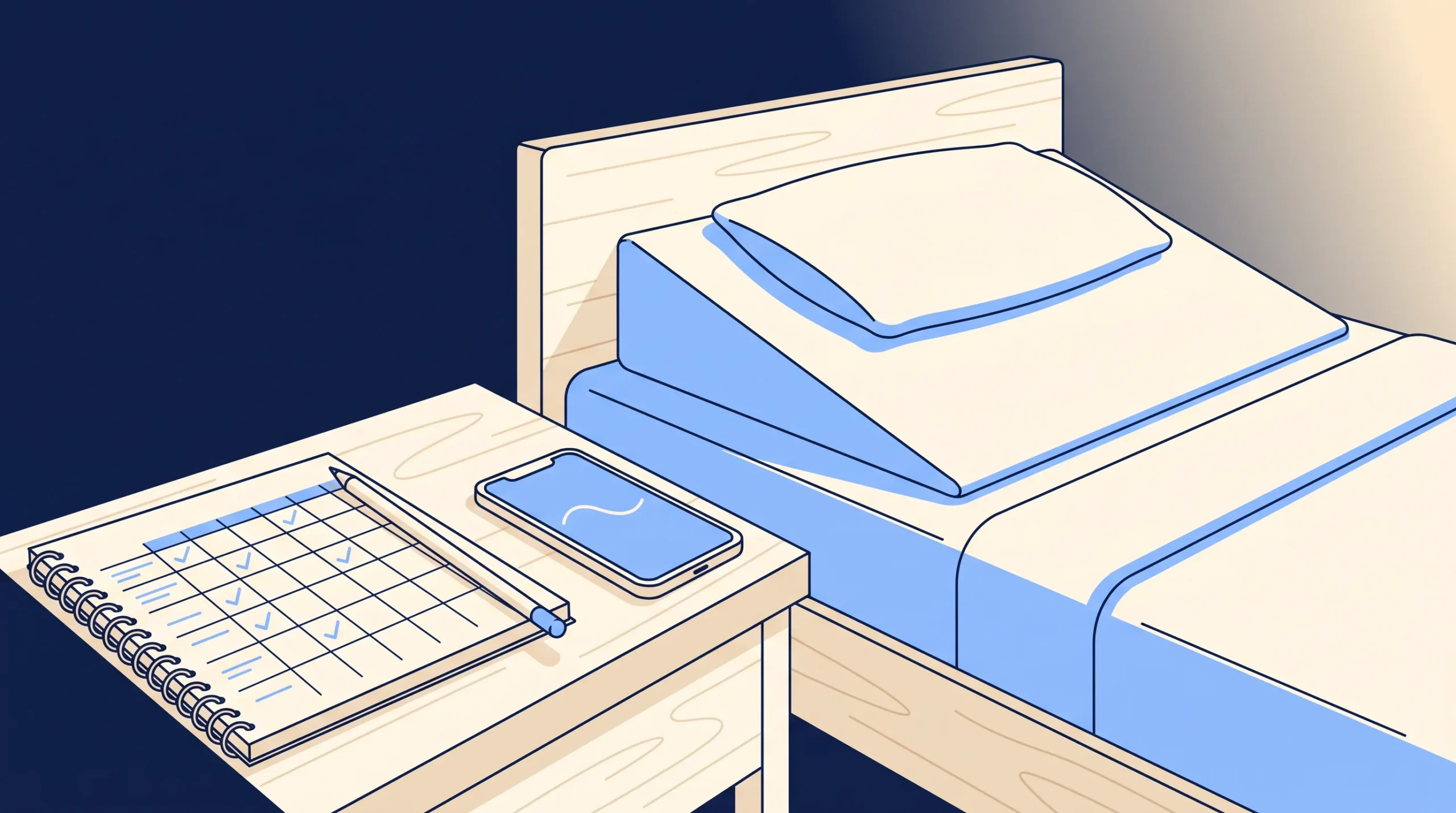
A short version of the diary sleep researchers use. The Consensus Sleep Diary asks nine core questions — time into bed, time you tried to sleep, how long it took to fall asleep, number and length of awakenings, final wake time, rise time, perceived sleep quality and a comments line — and its instructions say to complete it within one hour of getting out of bed.
For a wedge pillow check, keep the core and add three lines tied to your reason:
| Column | Example entry | Why it matters |
|---|---|---|
| Lights out / up | 23:10 / 07:00 | Keeps nights comparable |
| Awakenings | 2, about 10 min in total | The main change most people notice |
| Sleep quality, 1 to 5 | 3 | Your own rating, not a device’s |
| Still on the wedge pillow at waking? | No, at the thin end | Flags a sliding problem |
| Main reason line | Heartburn woke me once / partner heard no snoring | The outcome you bought it for |
| Last meal | 19:30 | The most common hidden variable for reflux |
| What changed today | Removed the pillow on top | One change per week |
One week fits on a single page, as in the diary itself. Three pages — one flat week and two wedge pillow weeks — are the whole test.
Can a snoring app tell you if your wedge pillow is working?
It can show a trend in loud snoring, which is useful, but it cannot tell you why you snore or whether your breathing pauses. The evidence is small and comes from validation studies, not from wedge pillow trials.
In a 2021 study of SnoreLab, 19 healthy adults wore a home breathing recorder while the app ran on the same night. For nights with snoring more than half the time, the app reached 94.7% accuracy, 100% sensitivity and 94.1% specificity, but a positive predictive value of 66.6%, and the authors state that obstructive events could not be detected. A 2024 study of three apps in 60 people with diagnosed sleep apnea placed the phones 15 cm from the bed and found the apps’ snore counts correlated with the sleep lab’s, while concluding that larger studies are needed.
Keep the phone in the same spot every night, because the recording distance changes what the app hears. And compare weekly totals rather than single nights; one loud night after a late dinner says little. Our wedge pillow for snoring page covers what elevation can and cannot change about snoring itself.
Is your sleep tracker’s score good evidence?
It is weaker evidence than your own notes, especially for the thing you most want to see — fewer awakenings. A 2021 study in Sleep tested seven consumer devices against a sleep lab in 34 healthy adults over three nights. The devices were good at detecting sleep (sensitivity 0.93 or higher) but poor to middling at detecting wake (specificity 0.18 to 0.54), their sleep-stage readings were inconsistent, and they did worse on disrupted nights.
So a “sleep score” can move for reasons unrelated to the wedge pillow. Log it as one column, not the verdict, and check it against your own awakening count.
4 setup faults that make a wedge pillow look like it isn’t working
Each is checked in the morning log or with a minute in the bedroom, and each has its own fix on this site.
- You end the night at the bottom. If “still on the wedge pillow at waking?” keeps saying no, you spent the second half of the night flat. Sliding was the most common complaint in the elevation trials — 20 of the 63 people in the 2020 bed-block trial reported bed slipping — and the remedies are in our acid reflux and GERD guide.
- A thick pillow on top bends the neck. A tall head pillow on the slope tips the chin towards the chest and adds a bend the wedge pillow was meant to remove. Our page on using a pillow on top of a wedge pillow gives the height to start with.
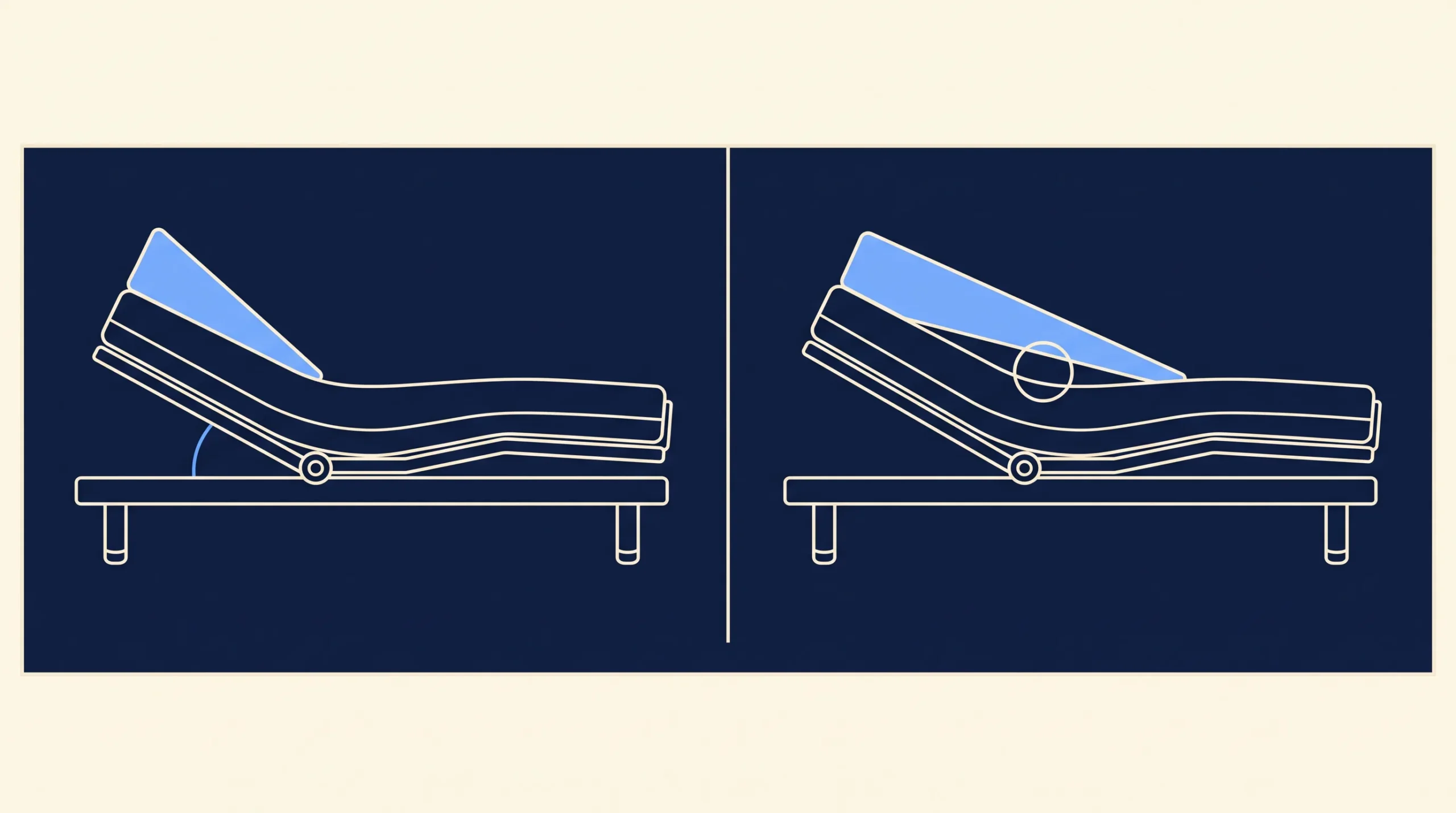
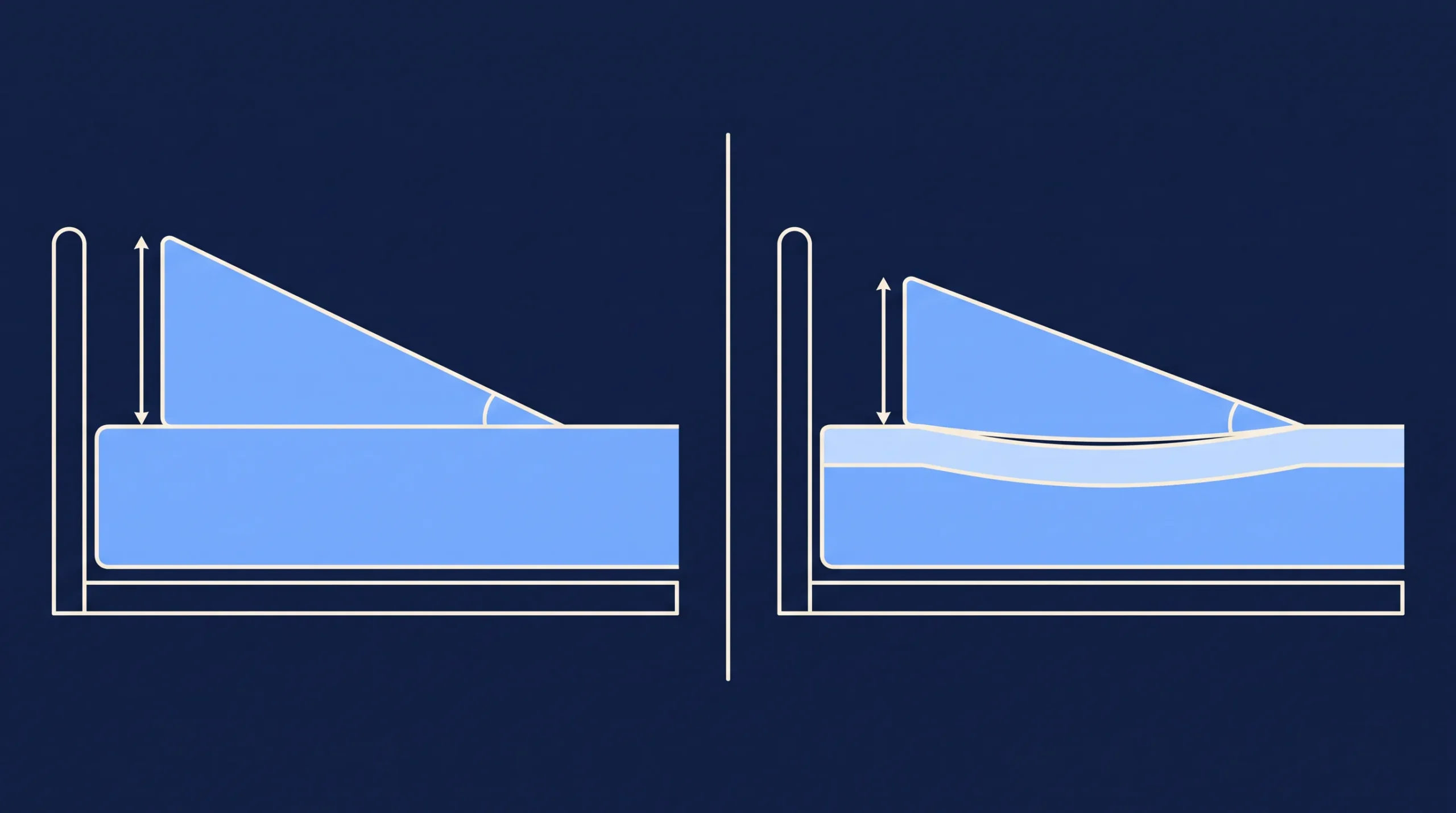
- The mattress swallows the slope. On a soft mattress or topper, the wedge pillow sinks under the shoulders and the real angle drops below the catalogue figure, as our soft mattress and topper page explains.
- The slope starts too high or too low. The thin end belongs near the waist, so the incline runs from the hips up rather than folding you at the middle. If the angle itself feels wrong, our wedge pillow height guide relates apex height to angle; on catalogue dimensions the Aeris Wedge Pillow is about 18.7° and the FirmNest Extra Firm Wedge about 17.3°.
How do you run a fair before-and-after comparison?
Hold everything steady except the wedge pillow, and change only one thing per week. A simple schedule:
- Week 0 — flat. Your usual pillow, usual bed, the log every morning. This is the baseline.
- Weeks 1 and 2 — wedge pillow. Same bedtime, same last-meal time, same phone position for any snoring app. Fix setup faults in week 1 if the log shows them; leave week 2 untouched.
- Read the pages side by side. Count awakenings, nights the main reason line was bad, and nights you woke off the wedge pillow. A clear difference in week 2 is a meaningful result for you; no difference after fixing the setup is also a result.
- Optional week 3 — one variable. Change only the angle, the head pillow or the dinner time, and compare with week 2.
The dinner line matters most for reflux, because eating late can change a night as much as any pillow. If you share a bed, a partner’s note on snoring is often more consistent than an app — our guide to a wedge pillow in a shared bed covers raising only one side.
When should you stop testing and talk to a doctor?
When the log shows symptoms rather than comfort questions. Choking or gasping awake, a partner noticing pauses in your breathing, heavy daytime sleepiness, or heartburn most nights despite the wedge pillow are reasons to see a doctor; neither a snoring app nor a sleep tracker can rule out sleep apnea. Our wedge pillow and sleep apnea page explains where positional changes fit alongside medical care.
Bring the log. Two or three pages of dated morning notes give a clinician more to work with than a description of how the wedge pillow “seems” to be doing.
Frequently asked questions
How long does it take for a wedge pillow to work?
Judge it over at least two weeks, not one night. The first nights mix a new sleep position with any real change. In the trials summarised in a 2021 review, head elevation was tested for one night to six weeks, and one wedge pillow trial ran for two weeks. Compare your week-two notes with a flat week.
Why do I still snore on my wedge pillow?
Check the log first: if you wake at the bottom of the wedge pillow, the second half of the night was flat. A thick head pillow can also tip the chin down. Snoring has several causes that elevation does not change, and loud snoring with gasping or pauses is a reason to see a doctor.
Is a snoring app accurate enough to test a wedge pillow?
For trends in loud snoring, roughly. In a 2021 study of 19 adults, one app identified heavy-snoring nights with 94.7% accuracy, but it could not detect obstructive breathing events. Keep the phone in the same place each night and compare weekly totals, not single nights.
Can my sleep tracker tell me if the wedge pillow helps?
Only loosely. A 2021 test of seven consumer devices found them good at detecting sleep but weak at detecting wake, with inconsistent sleep-stage readings and worse performance on disrupted nights. Use the score as one column in your log alongside your own count of awakenings.
What if I feel no difference after two weeks?
Fix the setup before deciding: stop sliding down, lower the head pillow, check whether a soft mattress is flattening the slope, and make sure the thin end sits near your waist. Then run one more week with only that change. No difference after that is a fair result.
Should I stop using the wedge pillow during the flat week?
Yes, for a fair comparison, unless a doctor has told you to sleep elevated. The flat week is the baseline your wedge pillow weeks are measured against. If you already use a wedge pillow on medical advice, compare angle or setup changes instead of going flat.
Choosing a wedge pillow for a fair test
A test is easier to read when the wedge pillow holds one known angle all night, so firmness and base length matter more here than extras. Our walkthrough on how to choose a wedge pillow starts from the reason you are raising your head and works down to dimensions.
The three below cover a gentle slope on a firm core, a mid slope on a square base, and a taller wedge pillow for those who want more lift. Methodology note: dimensions come from the makers’ production specifications and the research cited above, with angles calculated as the arctangent of apex over base.
Advertisement
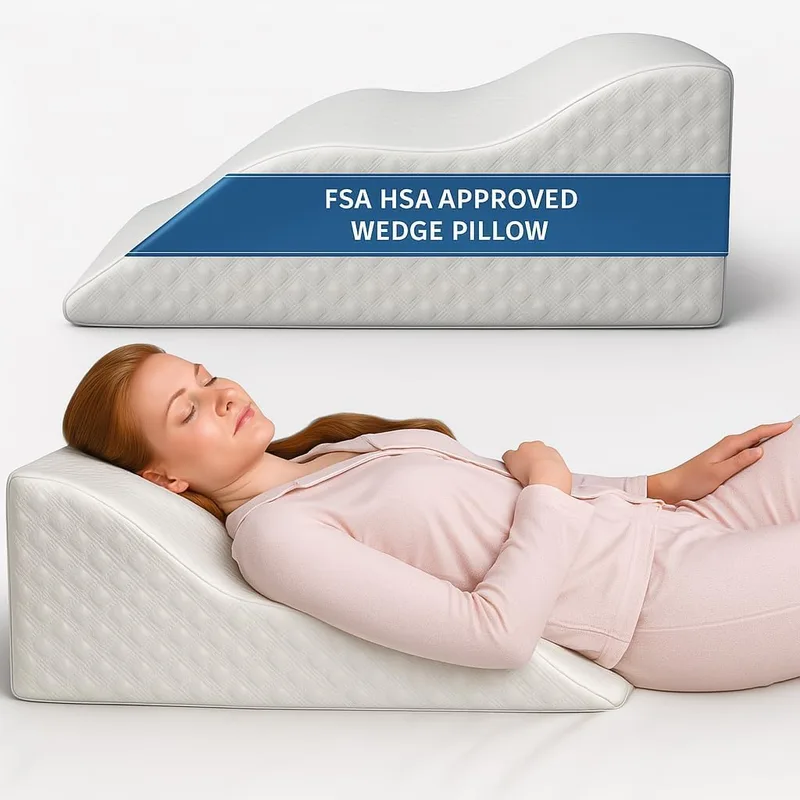
Aeris Wedge Pillow
65 × 65 cm base, 22 cm apex, 3.1 kg.
See the Aeris Wedge product details on AmazonProducts mentioned in this guide
- FirmNest Extra Firm Wedge Pillow — 61 × 61 cm base, 19 cm apex, about 17.3°
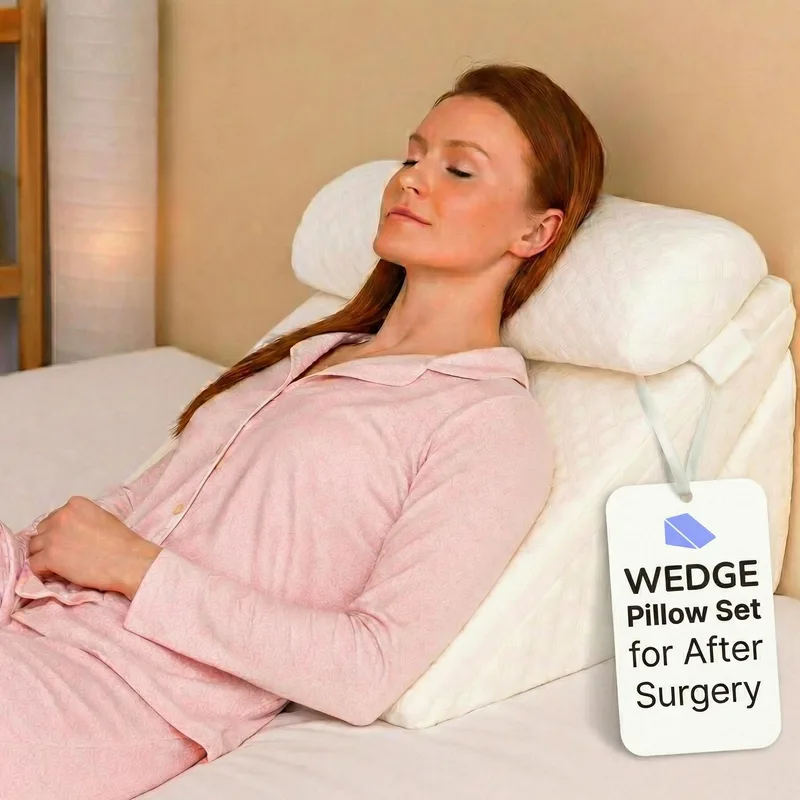 Flexicomfort Wedge Pillow — 60 × 56 × 28 cm