Last updated: October 2026
This guide is part of our full map of wedge pillows for acid reflux, GERD, and better sleep.
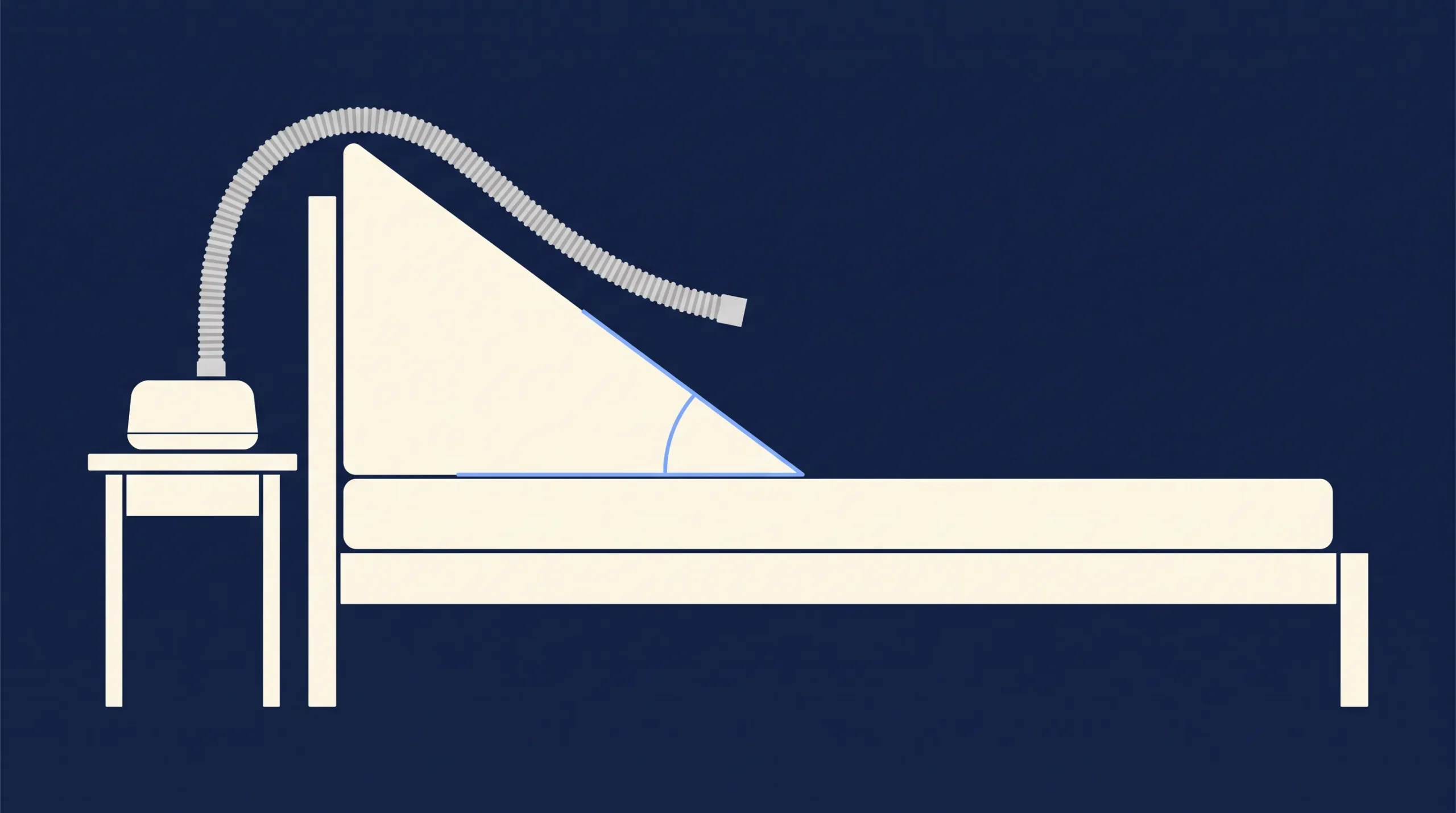
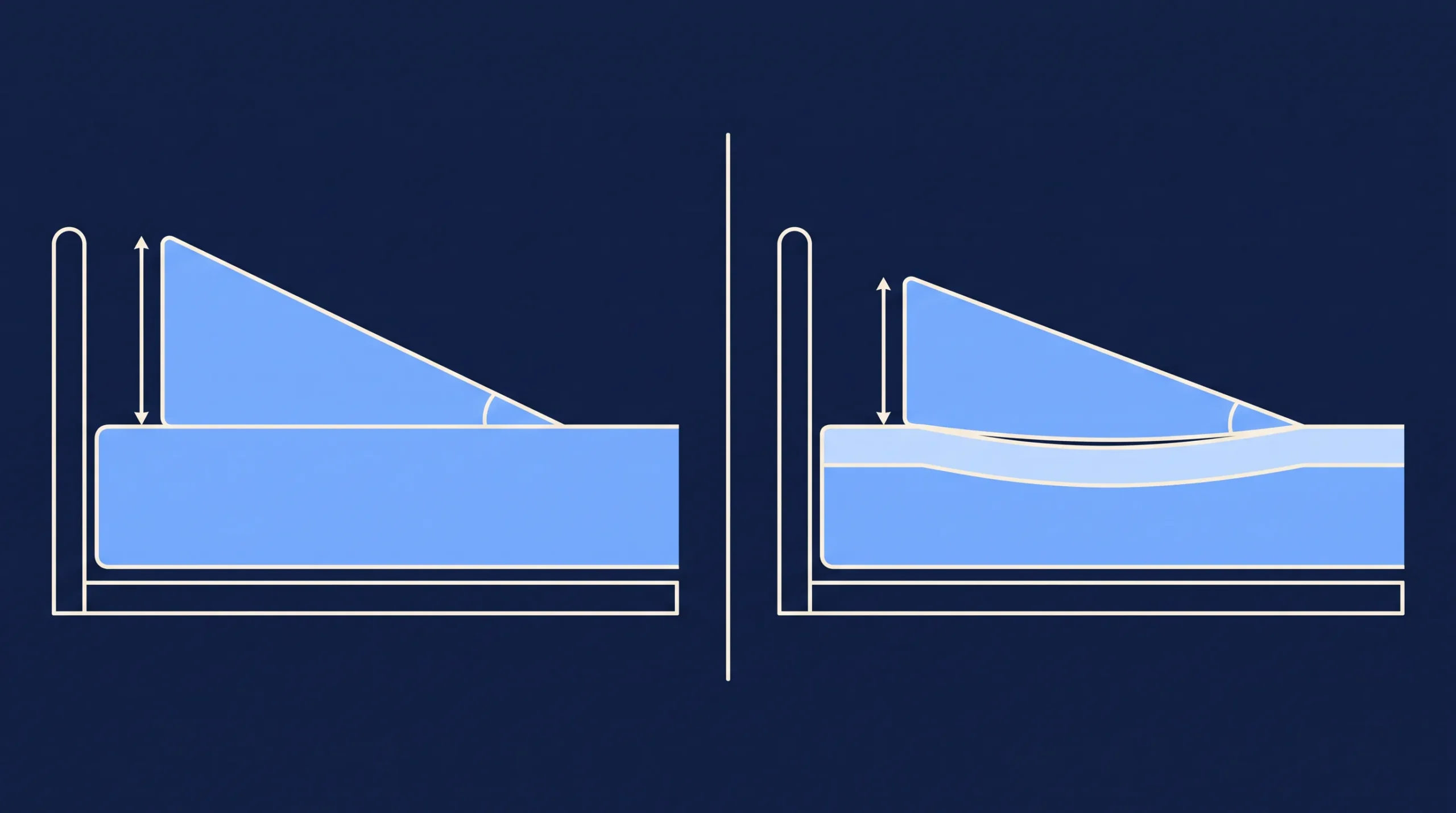
Yes, a wedge pillow on a soft mattress still raises your torso, but rarely by the apex height on the box. That figure is measured on a firm, flat surface; a soft bed absorbs part of the slope.
This guide covers why the spec sheet assumes a firm surface, what changes on a soft mattress or memory foam topper, and how to measure the slope you actually sleep on.
Key takeaways
- The apex height on the label measures the product, not your bed. Two people with the same wedge pillow and different mattresses are not at the same angle.
- Effective elevation is the height difference between shoulders and hips. Both ends of that measurement move on a compressible surface.
- Foam firmness and foam density are separate specifications. The Polyurethane Foam Association states that “firmness is independent of foam density”: high-density foams can be soft, low-density foams firm.
- The specification for deep-down support is the support factor: 65% indentation force deflection divided by 25%, ranging from about 1.5 to 2.6. A high one lets a surface feel soft without bottoming out under load.
- Angles are less fragile than they feel. On the Aeris Wedge Pillow’s 22 cm apex over a 65 cm base — about 18.7° — losing 2 cm of effective rise moves the slope to about 17.1°.
- Most elevation research sidestepped this. In the 2021 systematic review of five trials and 228 patients, four used bed blocks under the legs, which lift the frame so nothing compresses.
- We found no published measurement of how much angle a given soft mattress takes away — the figures in circulation are uncited — which is why this page ends with a measurement you can take rather than a number to trust.
Does a wedge pillow still work on a soft mattress?
Usually yes, but with less of the slope you paid for and less stability than on a firm surface. A soft mattress does not prevent a wedge from raising your torso; it changes how much of the raise survives your weight.
The distinction worth holding onto is between the product and the setup. A wedge pillow is a foam ramp with fixed dimensions; the slope you sleep on is that ramp plus the surface under it plus your weight across both. Only the first is printed on the box.
This is why two readers can follow our wedge pillow height guide to the same apex height and have different experiences. The guide sets the target; the mattress decides how much reaches you.
Why the number on the box assumes a firm surface
Because that is the only way to measure foam repeatably. Dimensions are taken with the wedge pillow unloaded on a flat, rigid base — the convention that lets us state the Aeris Wedge Pillow as 65 × 65 cm with a 22 cm apex.
Foam testing follows the same logic. The Polyurethane Foam Association describes indentation force deflection as the force needed to compress a sample to 25 percent of its height, on a test rig under controlled conditions, with readings from about 5 pounds for supersoft grades to about 80 for very firm. None of it is measured on a mattress. The label is not misleading; it answers a different question from the one you ask when you lie down.
What makes a wedge pillow lose its angle on a soft bed?
Two separate things compress, and each calls for a different adjustment.
The wedge pillow’s own foam. Under your shoulders and upper back, the core carries most of your torso’s weight across the thickest part of the ramp. The support factor matters here: a foam can have a low 25% indentation force deflection — a soft surface feel — and still resist bottoming out, provided its support factor is high. A core with a poor one feels adequate at first, then gives way once your weight settles.
The mattress or topper underneath. The base is unevenly loaded, because your torso’s mass sits over the thick end rather than spreading along the ramp. A compressible surface under that load compresses more at the thick end than the thin one, rotating the ramp backwards and flattening the slope.
There is an offsetting effect, and leaving it out would overstate the problem. Your hips rest on the bare surface just past the thin end, with your pelvis pressing into a small area, so on a soft mattress your hips sink too. What matters is the difference between the two: lose height at the apex and gain depth at the hips, and the net change may be smaller than the first mechanism suggests.
Which effect wins depends on your weight, how it is distributed, and how your surface responds at depth — genuinely unresolved, which is why the next section is a measurement rather than a claim.
4 things to measure before you blame the wedge pillow
Each takes a tape measure and one night. None needs a sleep study.
- Hip-to-shoulder height, loaded. Have someone measure from the mattress surface beside your hip to the top of your shoulder, with you lying on the wedge pillow in your usual position. The gap between that and the label’s apex height is what your setup absorbs.
- The same measurement on a firm surface. Repeat it with the wedge pillow on the floor. Two readings turn an impression into a difference. If they match, the mattress is not your problem and the slope itself is.
- The trench at the thin end. Run a hand along the join where the thin edge meets bare mattress. A dip leaves your lower back unsupported across the transition, a separate complaint from a lost angle — our page on what to put on top of a wedge pillow covers what belongs above the slope.
- Overnight travel. Mark the starting position against the headboard with tape and look in the morning. A wedge that migrates is a different fault from one that sinks; if you end the night further down the slope, the sliding section of our acid reflux and GERD guide applies.
How much does a centimetre of lost rise matter?
Less than most people expect, which is the reassuring half of this article. The slope is the arctangent of apex height divided by base length, so a wedge pillow on a long base loses angle slowly. The table is arithmetic on three sets of catalogue dimensions, not a measurement of any mattress.
| Wedge pillow | Base × apex | Full slope | −1 cm | −2 cm | −3 cm |
|---|---|---|---|---|---|
| FirmNest Extra Firm Wedge | 61 × 61 cm, 19 cm apex | 17.3° | 16.4° | 15.6° | 14.7° |
| Aeris Wedge Pillow | 65 × 65 cm, 22 cm apex | 18.7° | 17.9° | 17.1° | 16.3° |
| Flexicomfort Wedge Pillow | 60 × 56 cm, 28 cm apex | 25.0° | 24.2° | 23.4° | 22.6° |
Three centimetres is substantial sinkage, and on the Aeris dimensions it costs about 2.4°. For context, the reflux trial in Cancer Nursing used a memory foam wedge pillow specified at 20 cm high, 62 cm long and 20°, while the 2017 sleep apnea study measured its effect at 7.5°, where the apnea-hypopnea index fell from 15.7 to 10.7 events an hour. The studied angles span a wide range, so a degree or two of drift is not the difference between a working setup and a useless one.
Where sinkage bites is comfort and stability rather than the headline angle: a base that settles unevenly also rocks, which interacts badly with side sleeping. If your symptom is hip or shoulder pressure, sleeping on your side on a wedge pillow is closer to the problem.
Does a memory foam mattress topper take more of the slope?
A thick topper adds a compressible layer between the wedge pillow and the mattress, so more material is available to absorb the slope. Whether that is noticeable depends on the topper’s specification rather than its thickness alone.
Here the separation of firmness from density earns its keep. Flexible polyurethane foam runs from about 0.5 to 6 pounds per cubic foot, and density alone does not tell you how firm a layer feels: a dense topper can be soft, a light one firm. What predicts whether a layer keeps supporting as you press deeper is the support factor, and toppers rarely publish one.
Since most product pages disclose neither figure, measurement 2 above is the practical read — it compares your bed against the firmest surface in the house and does not care what the label says. The side sleeper on r/snoring whose hip pain disappeared after changing the topper, with the wedge pillow unchanged, is one reader whose account points this way.
It is also worth separating a soft surface from a tired one. A wedge pillow whose core has softened over years produces the same symptom as a bed that was always too soft, and the remedy differs — see how often to replace a wedge pillow.
Why did the elevation studies mostly raise the bed instead?
Because blocks under the bed legs are easier to standardise. The 2021 systematic review in BMC Family Practice screened 1,206 records and included five controlled trials covering 228 patients. Two used bed blocks, one used a wedge pillow, and two used both — so four of the five involved a rigid lift of the whole frame.
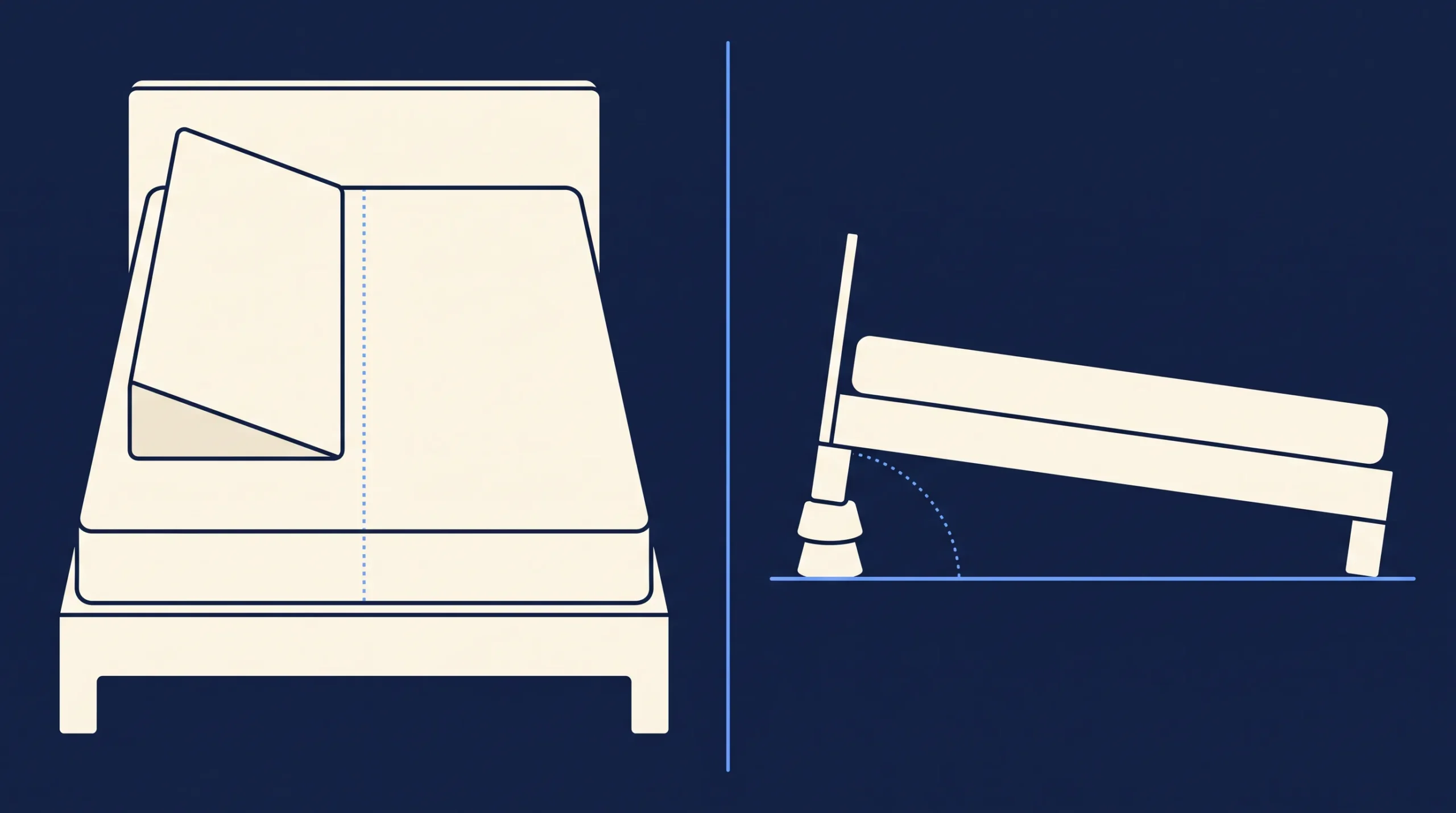
That detail is useful to anyone comparing methods. A block under a bed leg raises the frame, and nothing between the floor and your body compresses; the geometry is set by the block and stays set. A wedge pillow puts foam between you and the mattress by design — what makes it portable, partner-friendly and adjustable also introduces the variable this article is about.
The review’s verdict belongs here as the authors wrote it: methodological and reporting limitations preclude definitive recommendations, though head-of-the-bed elevation could still be considered a cheap and safe alternative to drug interventions with unfavourable safety profiles. One high-quality crossover trial reported a risk ratio of 2.1 (95% CI 1.2 to 3.6) at six weeks. The method comparison is on our wedge pillow versus bed risers page.
What can you change if the mattress is the problem?
Four levers, roughly in order of how little they cost to try.
The first is what sits on top: a regular pillow above the slope raises your head further without touching the surface below, and removing one does the reverse. The second is core firmness — if your measurements point at the wedge compressing rather than the bed, a firmer core is the direct answer, and it behaves differently in the first week, which our wedge pillow adjustment period page covers.
The third moves the lift underneath the mattress: an under-mattress elevator spreads the rise across the whole surface and carries the mattress with it, removing the join at the thin end (wedge under the mattress or on top). The fourth raises the frame, as four of those five trials did, and is the least adjustable. What does not work is stacking more ordinary pillows underneath, which compresses unevenly and redistributes overnight — a worse version of the same problem, covered on our stacked pillows versus a wedge pillow page.
Frequently asked questions
Does a wedge pillow work on a memory foam mattress?
It can, though memory foam is more compressible under load than an innerspring, so expect to keep less of the apex height. Measurement 2 above settles it: take your loaded hip-to-shoulder height on the bed, then repeat it on the floor. Close readings mean the mattress costs you little.
How do I know whether the wedge pillow or the mattress is sinking?
Move the wedge pillow to a firm surface and repeat the same loaded measurement. If the slope holds up on the floor but not on the bed, the surface is absorbing it. If it gives way on both, the wedge pillow’s own core is the variable, and firmness is what you would change.
Do I need to remove my topper to use a wedge pillow?
Not as a rule. Measure it both ways rather than guess, because the net effect depends on your weight, your topper’s support factor and where your hips sit. Removing a topper also changes the surface under your hips, which is part of the same calculation.
Is a firmer wedge pillow always better on a soft bed?
Not always, but more often than on a firm bed. A firmer core resists compressing into a soft surface, which helps hold the slope. The cost is surface comfort, and a high support factor is the specification that allows both — soft on contact, resistant under load.
Will a wedge pillow slide more on a soft mattress?
It is a common complaint and the mechanism is plausible, since a base that settles unevenly has less flat contact to grip with. Marking the starting position with tape and checking in the morning separates sliding from sinking, because the two call for different adjustments.
How much elevation do the studies actually use?
The reflux trial in Cancer Nursing used a wedge pillow specified at 20 cm high over a 62 cm length at 20°, and the 2017 sleep apnea study used 7.5° of head-of-the-bed elevation. The review found four of five trials raised the bed with blocks instead of a pillow.
Choosing a wedge pillow for a soft bed
If your measurements point at the surface rather than the slope, the useful specification is core firmness rather than more apex height — a taller wedge pillow on a soft bed has more foam to settle, not less. Our walkthrough in how to choose a wedge pillow starts from the use case and works down to dimensions.
The options below cover the two directions this article points: a firmer core that resists settling, and a rigid lift that takes the mattress out of the equation. Methodology note: dimensions come from the makers’ production specifications and the research cited above, with angles calculated as the arctangent of apex over base.
Advertisement
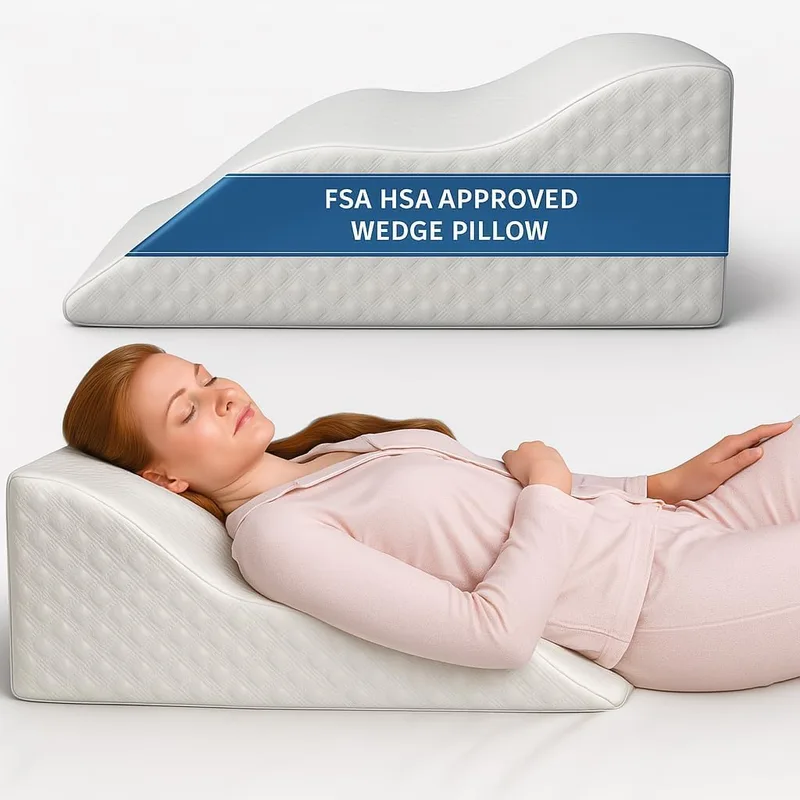
Aeris Wedge Pillow
65 × 65 cm base, 22 cm apex, 3.1 kg.
See the Aeris Wedge product details on AmazonProducts mentioned in this guide
- FirmNest Extra Firm Wedge Pillow — 61 × 61 cm base, 19 cm apex, about 17.3°
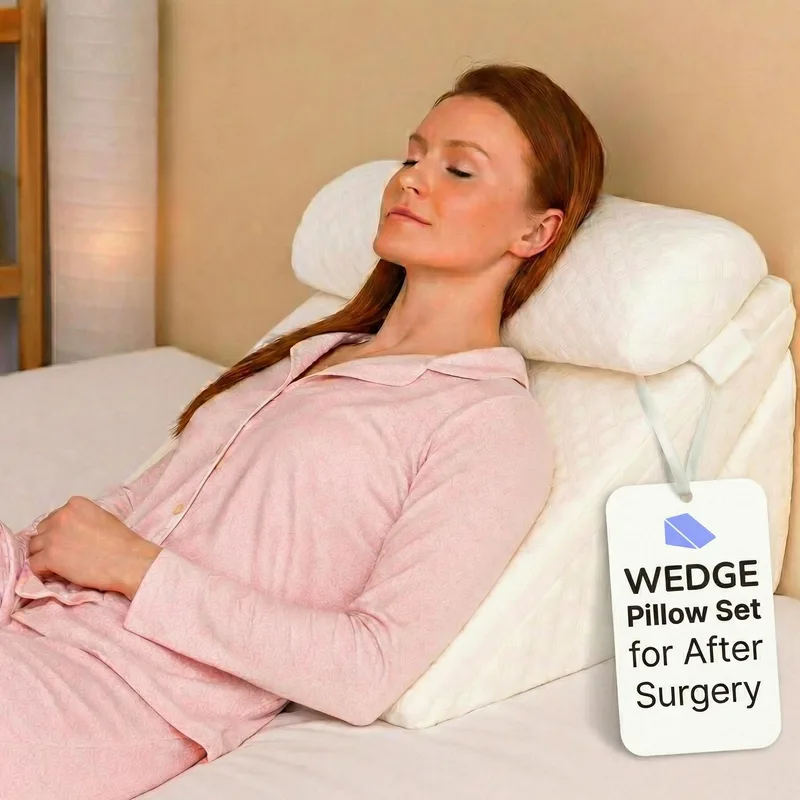 Flexicomfort Wedge Pillow — 60 × 56 cm base, 28 cm apex, about 25.0°
- Home It Adjustable Bed Risers — 3, 5 or 8 inch heights, set of 4, rated to 1,300 lbs