Last updated: October 2026
This guide is part of our full map of wedge pillows for acid reflux, GERD, and better sleep.
Yes, wedge pillow side effects exist, but in the trials they were comfort problems rather than harm: sliding down the slope, neck or lower-back ache, a rough first week. Most of the logged complaints came from tilting the bed, not from the wedge.
This guide covers what the trials actually recorded, which complaints belong to the wedge and which belong to the bed, and who has a reason to ask a clinician first.
Key takeaways
- The pooled evidence is small: a systematic review in BMC Family Practice screened 1,206 records and found only five trials, 228 patients in total, with none running longer than six weeks.
- Only two of those five trials reported adverse events at all, so for most of the wedge pillow side effects people list, there is no measurement either way.
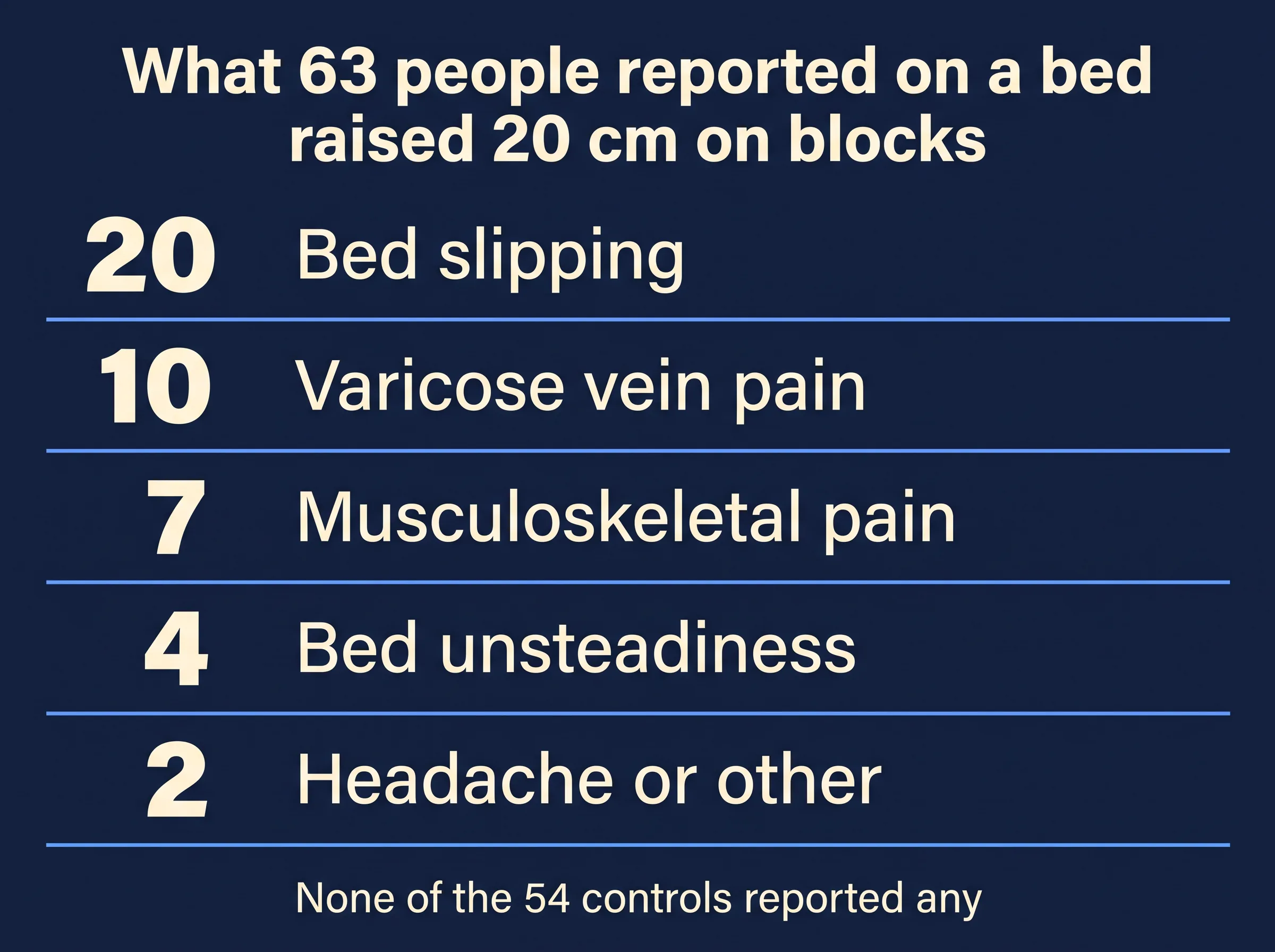
- The headline figure comes from a 2020 crossover trial: 39 of 63 participants (62%) in the elevation group reported what the review calls “largely minor” adverse events at 14 weeks, against none of the 54 controls.
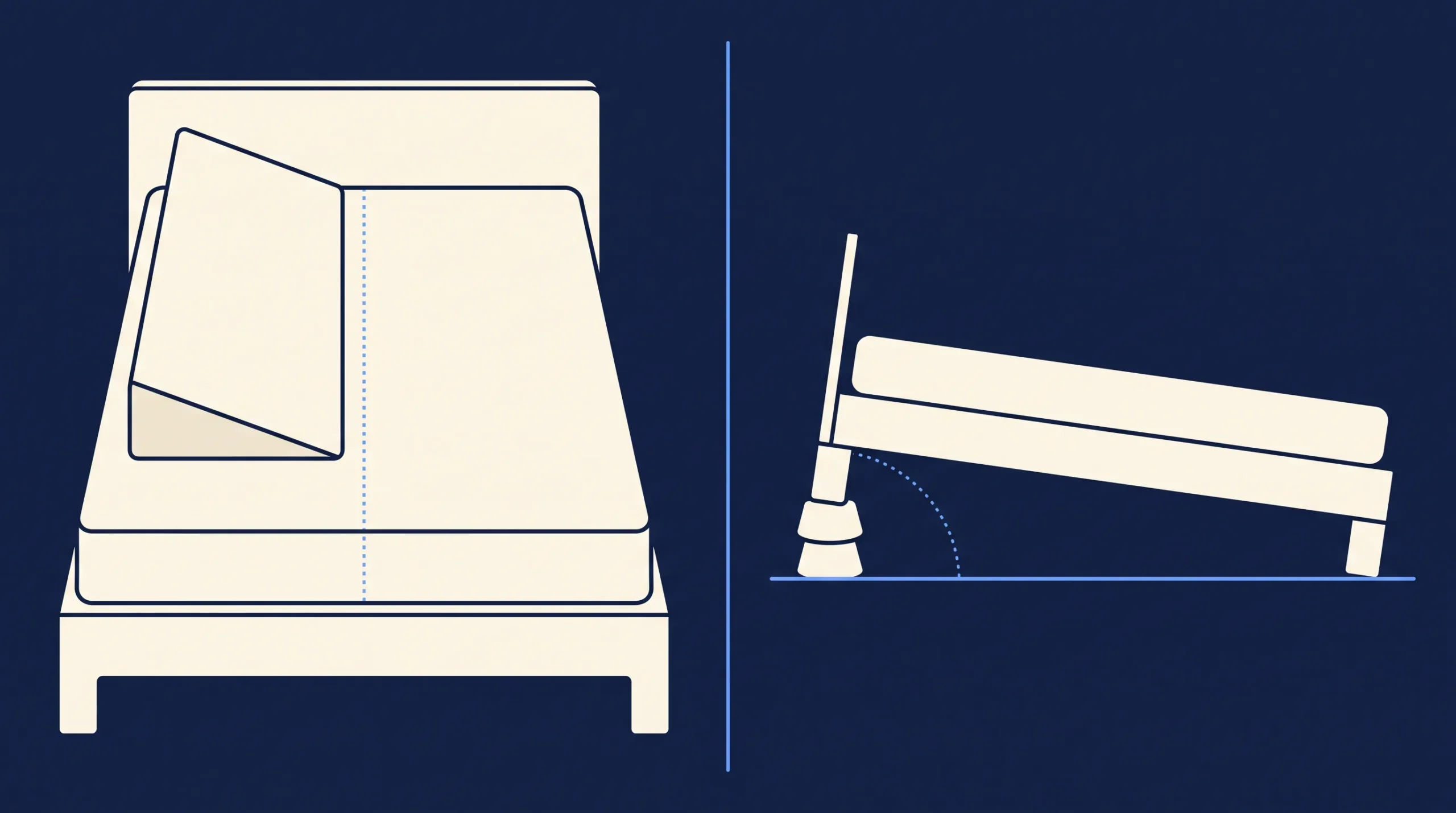
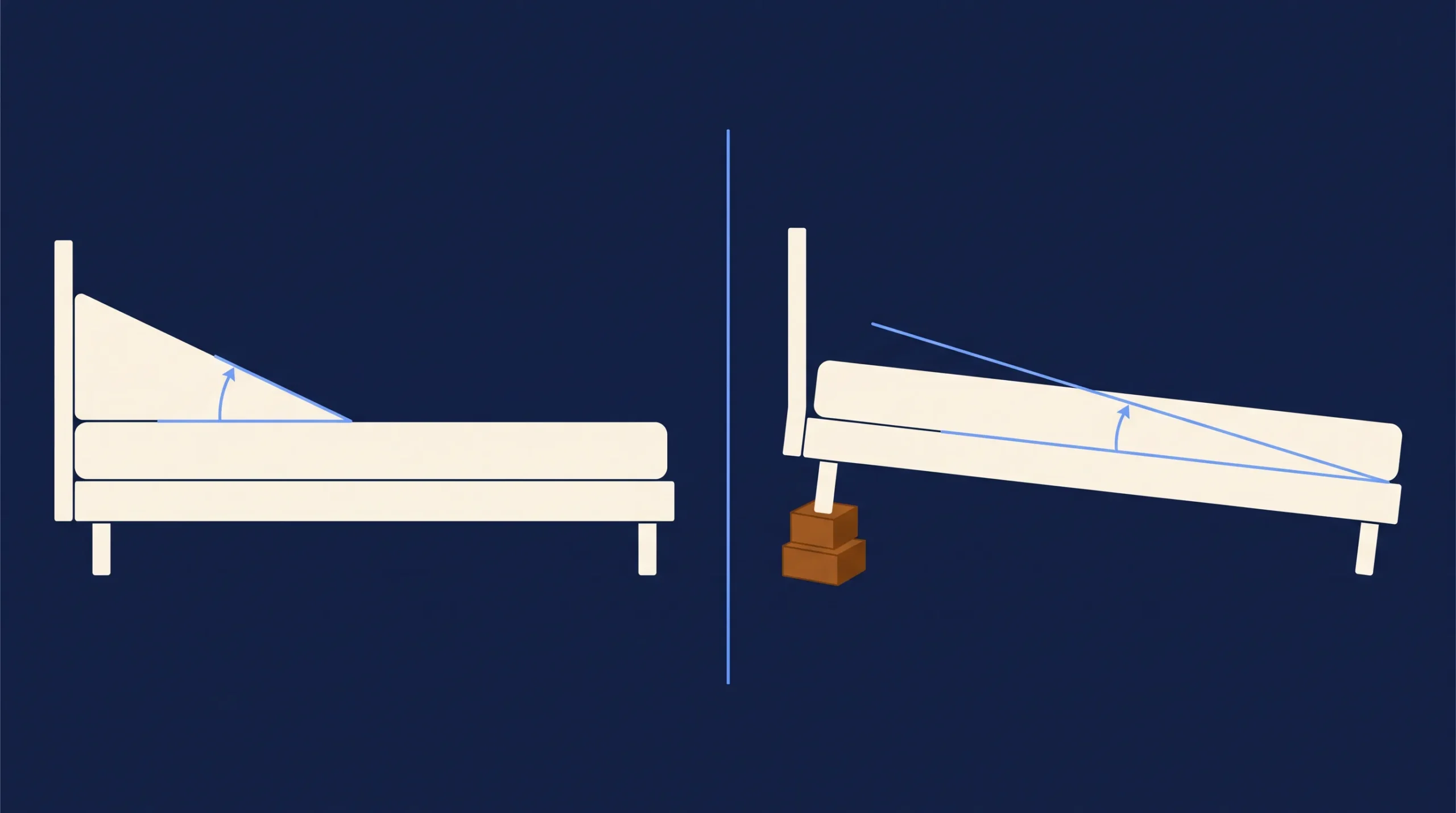
- That trial raised the bed on 20 cm wooden blocks. The breakdown — 20 bed slipping, 4 bed unsteadiness, 10 varicose vein pain, 7 musculoskeletal pain, 1 headache and 1 report of interference with sex — is dominated by things a tilted bed frame does, not a pillow.
- A second trial logged adverse events in 2 of 32 people (one bed slipping, one interference with sex); both resolved and neither person stopped using the intervention.
- The one trial that used a wedge pillow on its own — 14 patients, a 20 cm wedge at 20°, two weeks — did not report adverse events. That is missing data, not a clean record.
- Despite the complaint count, 63.2% of 57 participants preferred sleeping elevated to sleeping flat, and the review’s own verdict is that raising the head of the bed is “a cheap, easy-to-implement, relatively safe and promising approach”.
Does a wedge pillow have side effects?
Yes, in the ordinary sense that a change in sleeping position can be uncomfortable — but the published record describes nuisances rather than injuries. The systematic review that gathered this literature found five trials and 228 patients, judged all five at high risk of performance bias, and could not pool them because the outcomes were reported so differently.
Two things follow. Confident lists of wedge pillow side effects are mostly inference, and the complaints that were recorded are worth reading closely, because they are the only measured ones there are.
Our guide to choosing a wedge pillow covers matching the product to the use case; this page covers what can go wrong afterwards.
Which side effects did the elevation trials actually record?
Two of the five trials reported adverse events. One found a lot, one found almost none, and the difference between them is mostly the method.
| Trial | How the angle was made | Patients | Adverse events reported |
|---|---|---|---|
| Morales 2020, Colombia (crossover) | 20 cm wooden blocks under the bed legs, 6 weeks | 65 enrolled | 39 of 63 (62%) vs none of 54 controls: 20 bed slipping, 4 bed unsteadiness, 10 varicose vein pain, 7 musculoskeletal pain, 1 interference with sex, 1 headache |
| Factorial RCT (with ranitidine) | Head of the bed raised | 32 in the elevation arm | 2 of 32: one bed slipping, one interference with sex; both resolved, neither discontinued |
| Huang 2019, Taiwan (crossover) | 20 cm wedge pillow at 20°, 2 weeks | 14 | Not reported |
| Hamilton 1988, United States (crossover) | Wedge pillow and bed blocks compared | 15 | Not reported |
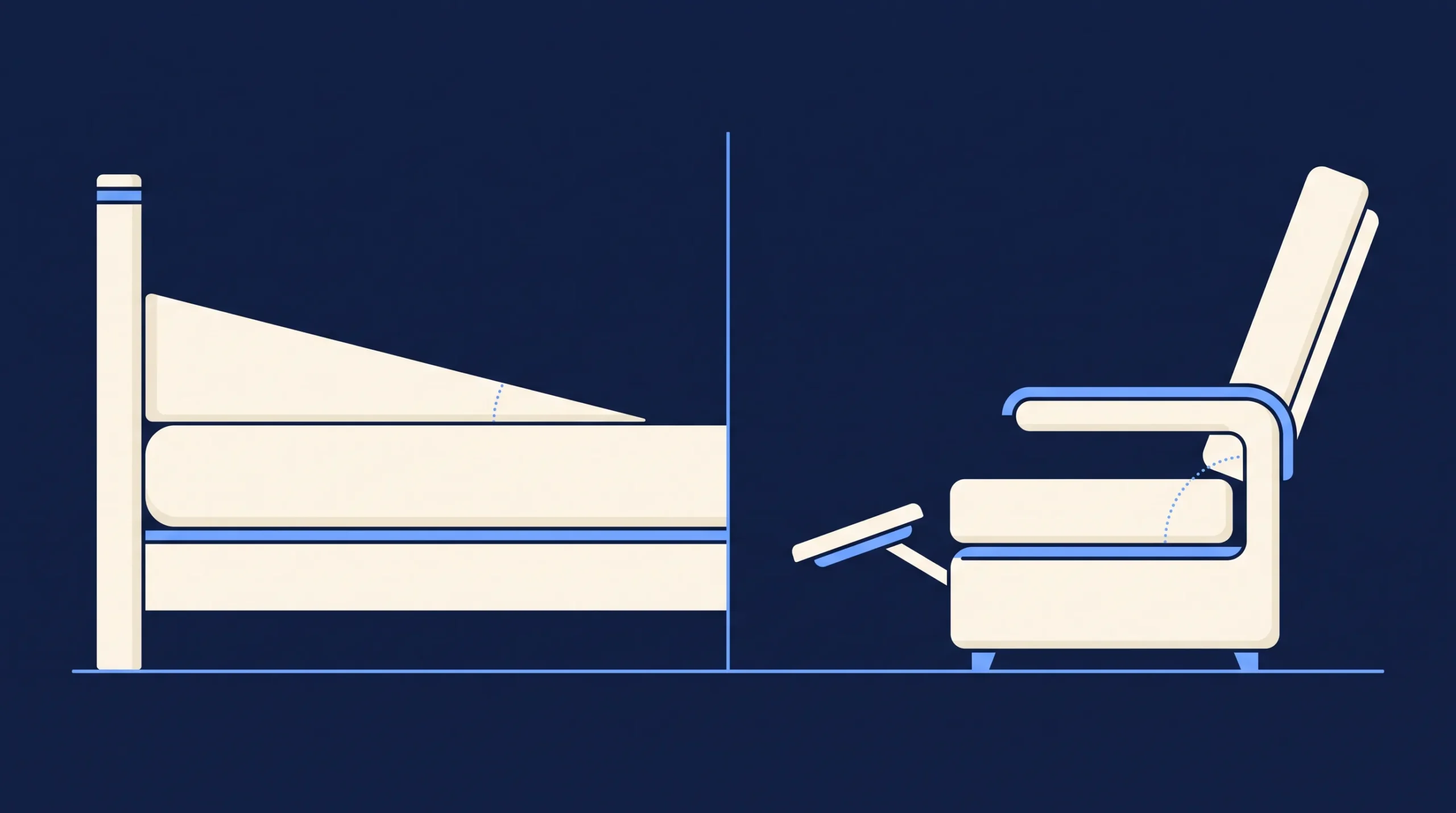
Read the first row with the method in mind. Bed slipping, an unsteady bed and aching varicose veins are what happens when a bed frame is propped on blocks and your legs sit below your heart all night. A wedge pillow leaves the frame level and raises the torso only — the distinction our wedge pillow versus bed risers comparison is built around.
Why do people slide down, and does that count as a side effect?
Sliding was the single most frequent complaint in the trial data — 20 of the 39 adverse-event reports — and it is the one that carries straight across from a tilted bed to a wedge pillow, because gravity does not care which of the two made the slope.
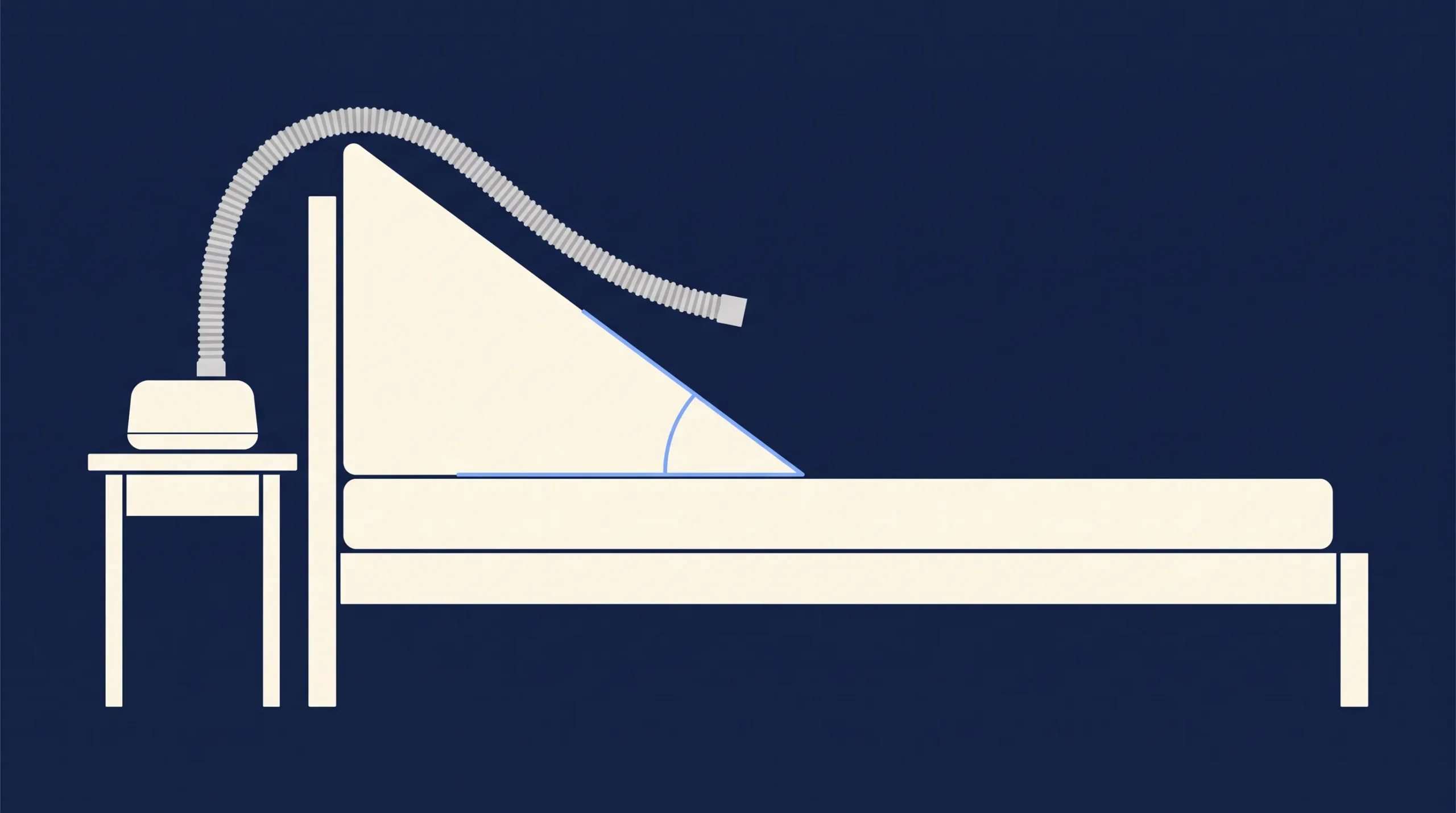
Two bits of geometry drive it. A base shorter than your torso leaves your hips past the bottom edge, so you are balanced on the apex instead of supported along it. And a soft core compresses under the shoulders into a steeper, shorter ramp than the one you lay down on. Our acid reflux and GERD guide works through the remedies, of which something under the knees is the least obvious and the most effective.
Sliding is also the one complaint you can check yourself: if you wake at the bottom of the slope, the wedge was not doing its job.
Can a wedge pillow cause neck or lower-back pain?
Seven of the adverse-event reports in the 2020 trial were musculoskeletal pain, so aches are a real entry in the record. What the trial cannot tell you is where they were, because it did not break them down by body part.
The mechanism people describe is unglamorous. A slope raises the torso, and if a thick pillow then props the head further, the neck stays flexed forward for hours; our page on what to put on top of a wedge pillow covers that trade-off. Lower-back ache tends to be reported when the slope ends mid-spine, leaving the lumbar curve unsupported over the edge — the subject of our wedge pillow for lower back pain page.
Both are reasons to change the setup rather than drop the wedge. Pain that persists past a fortnight is a reason to ask a clinician.
4 fit problems that turn a wedge pillow into a sore morning
- A base shorter than your torso. Your shoulders need to finish on the slope, not past it. This is the root of both sliding and mid-back ache.
- An angle chosen for maximum rather than purpose. The breathing studies used tilts from 7.5° to 30°, and the gentlest produced changes comparable to the steepest. Our height guide works through the rise-to-angle arithmetic.
- Foam too soft to hold the shape. A wedge that sags overnight is not the wedge you measured. The Aeris Wedge Pillow uses a memory foam core over a 65 cm base for that reason, and a wedge that has already lost its shape is covered in how often to replace one.
- Nothing under the knees. Hips unanchored on a slope migrate downhill, taking the shoulders with them.
Who should be careful with a wedge pillow?
Most of the entries below are about asking someone who knows your situation, not about avoidance. The exception at the top is absolute.
| Who | What the record says | Sensible step |
|---|---|---|
| Infants under one year | The CPSC bans infant sleep products with a surface inclined more than 10 degrees, and the AAP states that any surface inclining more than 10 degrees is not safe for a baby to sleep on | Never. Flat, firm, and no pillow in the sleep space |
| People with painful varicose veins | 10 of the 39 adverse-event reports came from legs held below the heart all night on a tilted bed frame | Raise the torso rather than the whole bed, and raise it with your doctor if the veins are already symptomatic |
| Anyone with a known neck, back or shoulder problem | 7 musculoskeletal pain reports, body part not specified | Ask the clinician who already manages it before changing your sleeping angle |
| Pregnancy | The trials excluded it, so there is nothing to report either way | Positioning advice in pregnancy belongs to your midwife or obstetrician; our pregnancy page covers setup, not whether |
| Stomach sleepers | No trial data; the geometry is simply against it | See wedge pillows for stomach sleepers before buying |
| Anyone who cannot reposition themselves in bed unaided | Outside the scope of every trial here, all of which used mobile outpatients | A change of sleeping angle is a care-team decision |
Should a baby ever sleep on a wedge pillow?
No, and this is the one place where the answer is a flat rule rather than a judgement call. The Safe Sleep for Babies Act of 2021 banned inclined sleepers for infants, and the Consumer Product Safety Commission defines one as a product with a sleep surface inclined more than 10 degrees intended for an infant up to one year old; the implementing rule was published in August 2023.
The American Academy of Pediatrics puts the same line in plainer terms — any surface inclining more than 10 degrees is not safe for a baby to sleep on — and separately asks that pillows and pillow-like objects stay out of the sleep space altogether. An adult wedge pillow fails both tests at once, including for infant reflux.
Is it safe to use a wedge pillow every night?
The honest answer is that nobody has measured it. The longest trial in the review ran six weeks, so nightly use over months or years sits outside the evidence entirely, and anyone quoting a long-term safety verdict is extrapolating.
What the short-term record shows is a population that mostly liked it: 63.2% of 57 participants preferred sleeping elevated to sleeping flat, complaints and all, and the review’s authors called the approach “relatively safe”. The practical risk is a wedge that has quietly stopped holding its angle, which is why replacement matters more here than with a flat pillow.
New-wedge aches are usually short-lived; our adjustment period page covers the first fortnight.
Frequently asked questions
Are wedge pillow side effects dangerous?
Nothing in the published trials suggests so. The systematic review describes the reported events as “largely minor”, the two logged in the smaller trial both resolved, and nobody in that trial stopped using the intervention. Anything that persists or worsens is a conversation with a clinician rather than a known wedge risk.
Why do I keep sliding down my wedge pillow?
Sliding was the most common complaint in the trial data, and two things usually explain it: a base shorter than your torso, which leaves you balanced on the apex, and foam soft enough to compress into a steeper ramp than you lay down on. Adding support under the knees anchors the hips and tends to do more than anything else.
Can a wedge pillow cause neck pain?
It can, and the usual cause is stacking. The slope already raises your head; a thick pillow on top of it adds flexion the neck holds for hours. Starting with a thin pillow, or none, and letting the wedge do the lifting is the first adjustment to try. Pain that lasts beyond a couple of weeks should go to a clinician.
Can a wedge pillow make lower-back pain worse?
Musculoskeletal pain appeared seven times in the 2020 trial, though the report does not say where. The setup most often blamed is a wedge whose slope ends mid-spine, leaving the lumbar curve unsupported over the bottom edge. A longer base, or a small cushion filling that gap, changes the geometry that causes it.
Is it safe to sleep on a wedge pillow every night?
No trial has run long enough to answer that: the longest in the review lasted six weeks. Over those short horizons the approach was described as relatively safe and was preferred by most participants. The practical thing to watch is the wedge itself, since foam that has lost its shape no longer gives you the angle you chose.
Can my baby sleep on a wedge pillow?
No. US federal law bans infant sleep products inclined more than 10 degrees, and the American Academy of Pediatrics says any surface over that angle is unsafe for a baby, as well as asking that pillows stay out of the sleep space. That applies to infant reflux too; raising a baby’s sleep surface is a question for a paediatrician, not a bedding purchase.
How long do the first-week aches usually last?
Most people describe a short settling-in rather than a lasting problem, which matches a literature where complaints were frequent but almost nobody abandoned the intervention. If you are still waking sore after two weeks of adjusting the height and what you put on top, the fit is wrong rather than the idea.
Choosing a wedge pillow that avoids the common complaints
Almost everything above points back to two numbers and one material: a base long enough to carry your torso, an angle chosen for your use rather than for maximum, and a core firm enough to hold that shape all night. Those three are what the recorded complaints keep pointing back to.
Methodology: the dimensions below come from our own production specs for the two wedges we make, and every clinical figure on this page comes from the papers linked above. Nothing here rests on trying these setups ourselves.
Advertisement
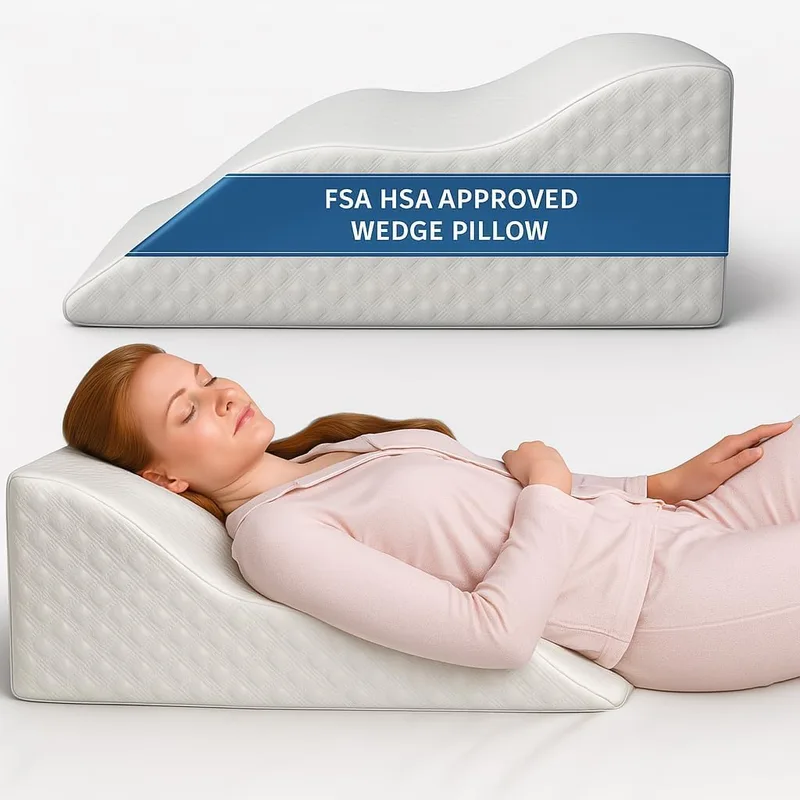
Aeris Wedge Pillow
65 × 65 cm base, 22 cm apex, 3.1 kg.
See the Aeris Wedge product details on AmazonProducts mentioned in this guide
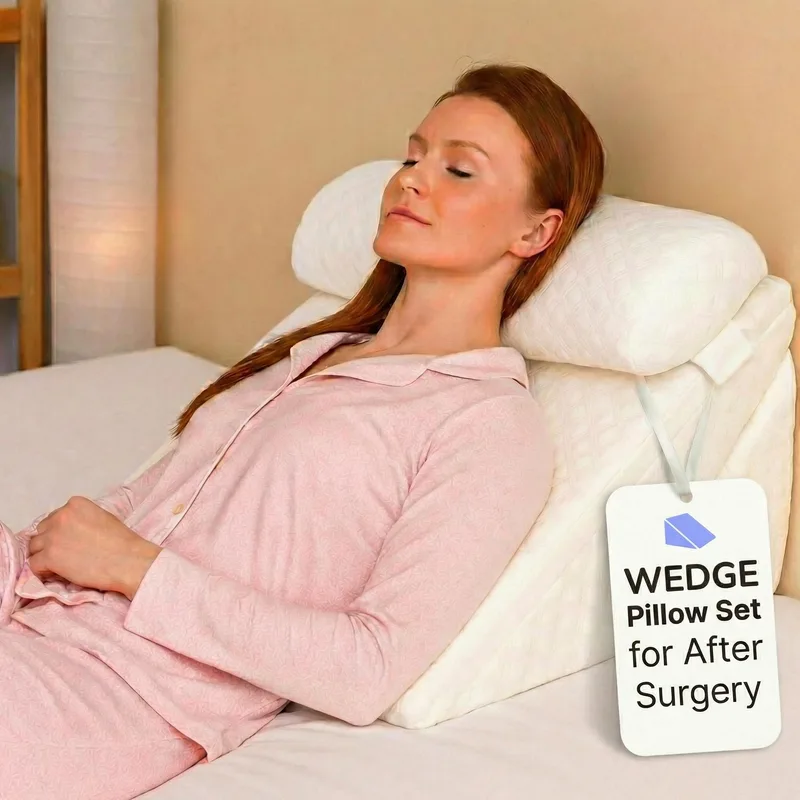 Flexicomfort Wedge Pillow — 60 × 56 cm base, 28 cm apex, about 27°