Last updated: September 2026
This guide is part of our full map of wedge pillows for acid reflux, GERD, and better sleep.
A pregnancy wedge pillow is a small, firm foam wedge that you tuck under the bump, behind your back or between your knees to stay comfortable while sleeping on your side. It is not the same as a large bed wedge used for reflux.
This guide shows the three setups, what ACOG and the NHS say about sleeping position, how to handle heartburn without lying flat on your back, and what to check before you buy.
Key takeaways
- A pregnancy wedge pillow is a compact foam wedge for side sleeping; a bed wedge is a long ramp that raises the whole upper body.
- ACOG says sleeping on your side in the second and third trimesters may be best, with knees bent and a pillow between the knees and another under the belly.
- The same ACOG page explains that lying on your back in those trimesters may compress a major blood vessel, which can make you dizzy and may reduce blood flow to the fetus.
- The NHS advises going to sleep on your side after 28 weeks, either left or right, and turning back onto your side if you wake up on your back.
- For heartburn, the NHS suggests propping your head and shoulders up in bed and says sleeping on your left side can also help.
- A full-length body pillow is the other common option; a wedge is smaller, firmer and easier to move, while a body pillow supports more of the body at once.
What is a pregnancy wedge pillow?
A pregnancy wedge pillow is a small triangular block of foam, usually sold with a washable cover, that fills the gap between your body and the mattress when you lie on your side. It is sometimes called a belly wedge, bump wedge or maternity wedge. Because it is small, it can move from under the bump to behind the back during the night, and some models are firmer on one face than the other.
It is easy to confuse with two other products sold for pregnancy. The table compares them.
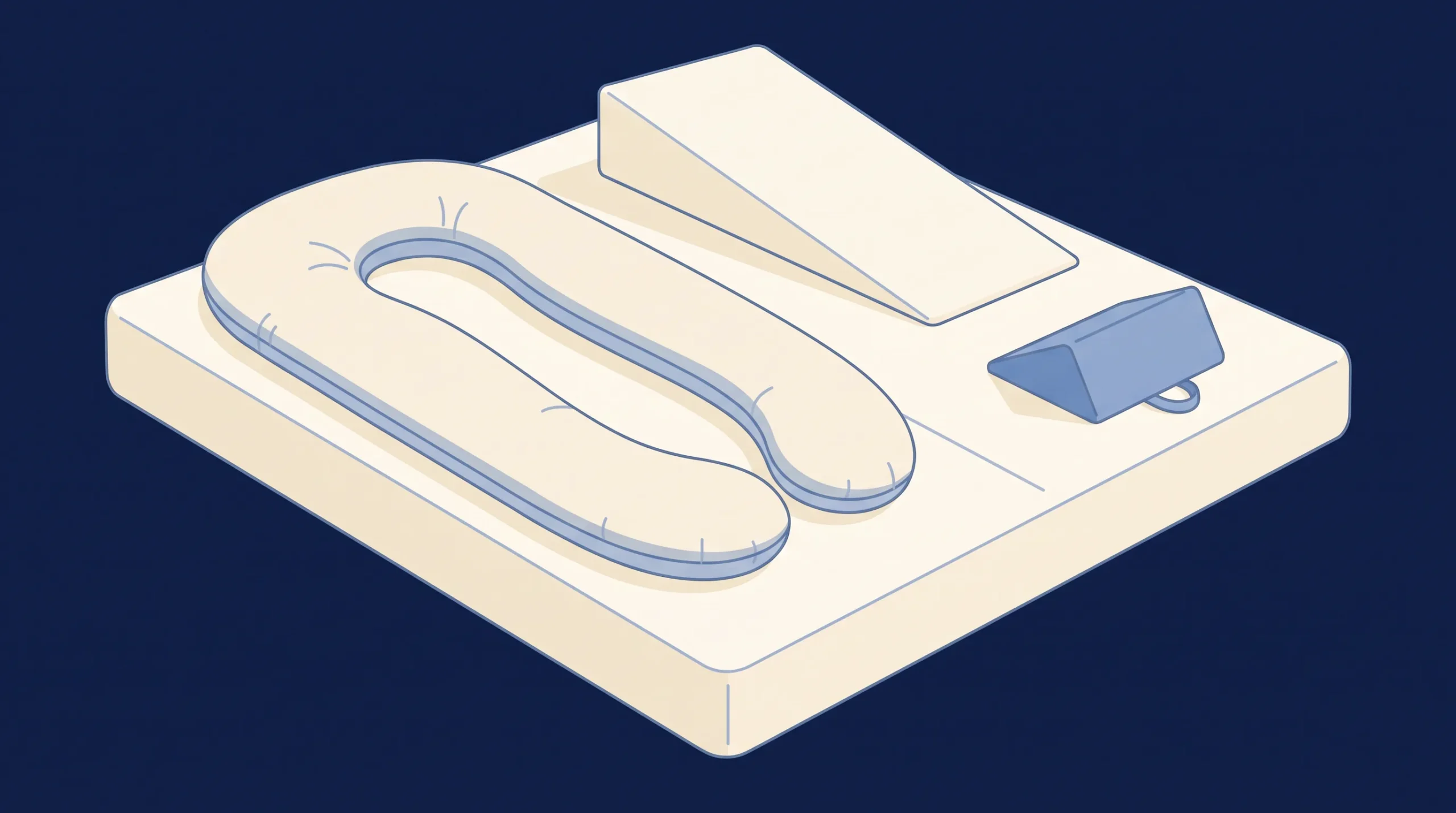
| Pillow | Size and shape | Main job in pregnancy | Trade-off |
|---|---|---|---|
| Pregnancy wedge pillow | Small foam triangle | Supports the bump, the back or the knees while you lie on your side | Supports one area at a time |
| Full-body pregnancy pillow (U, C or J shape) | Long pillow wrapped around the body | Supports bump, back, knees and head together | Takes up a lot of the bed; can make turning over harder |
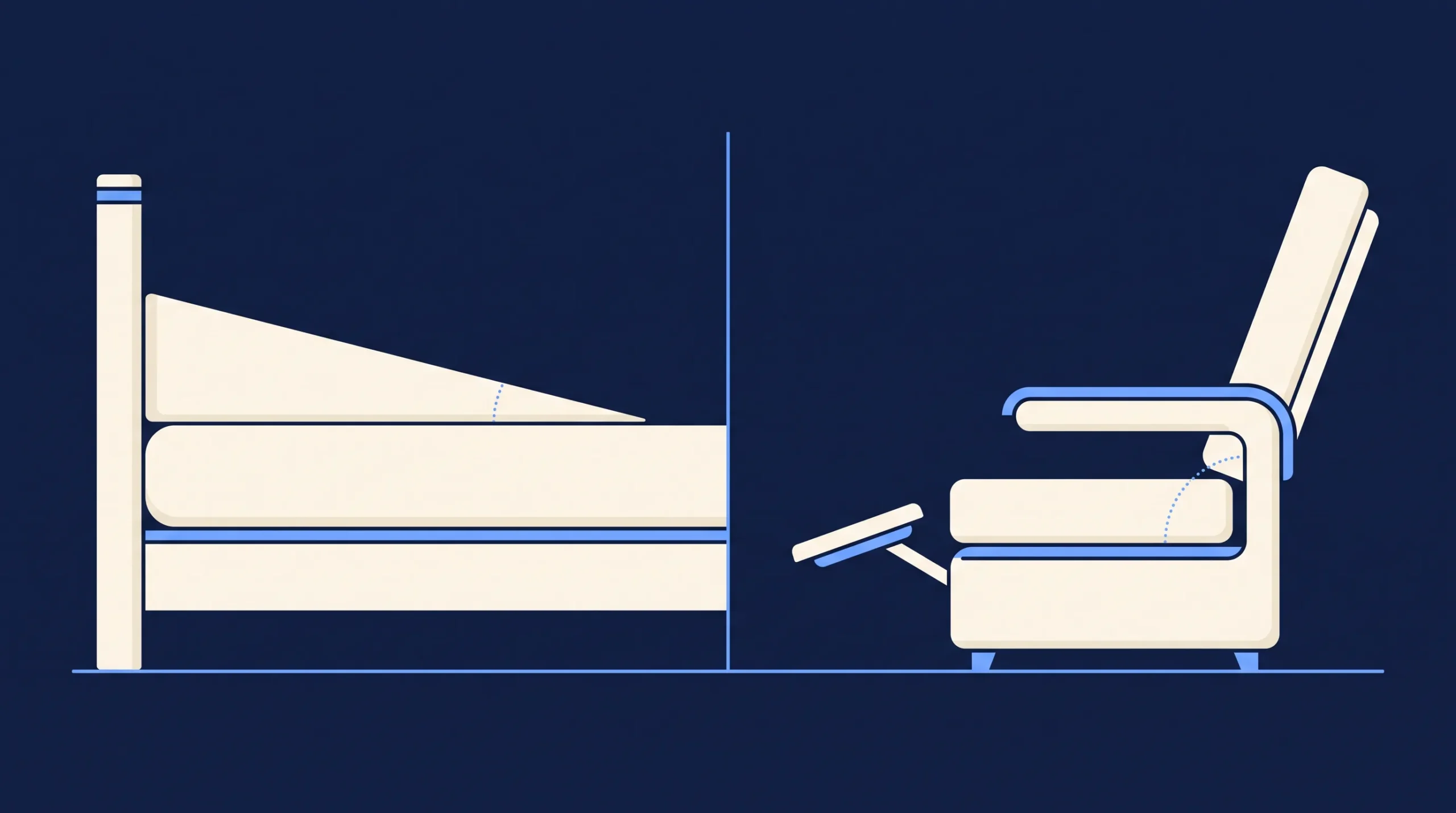
| Bed wedge | Long foam ramp, often 7 to 12 inches high | Raises the head and upper body, often for heartburn | Encourages lying back rather than on your side |
| Knee pillow | Contoured block for between the knees | Keeps the knees apart while side sleeping | Does not support the bump |
ACOG’s own suggestion uses two of them together: a pillow under the belly and another between the knees. Our guide to sleeping on your side on a wedge pillow covers side-lying setups on a larger wedge.
How do you use a pregnancy wedge pillow?
You lie on your side and place the wedge where the gap is: under the bump, behind the back, or between the knees. ACOG’s own suggestion for side sleeping, on its back-pain page, is to keep one or both knees bent, put a pillow between the knees and another under the belly, or use a full-length body pillow.
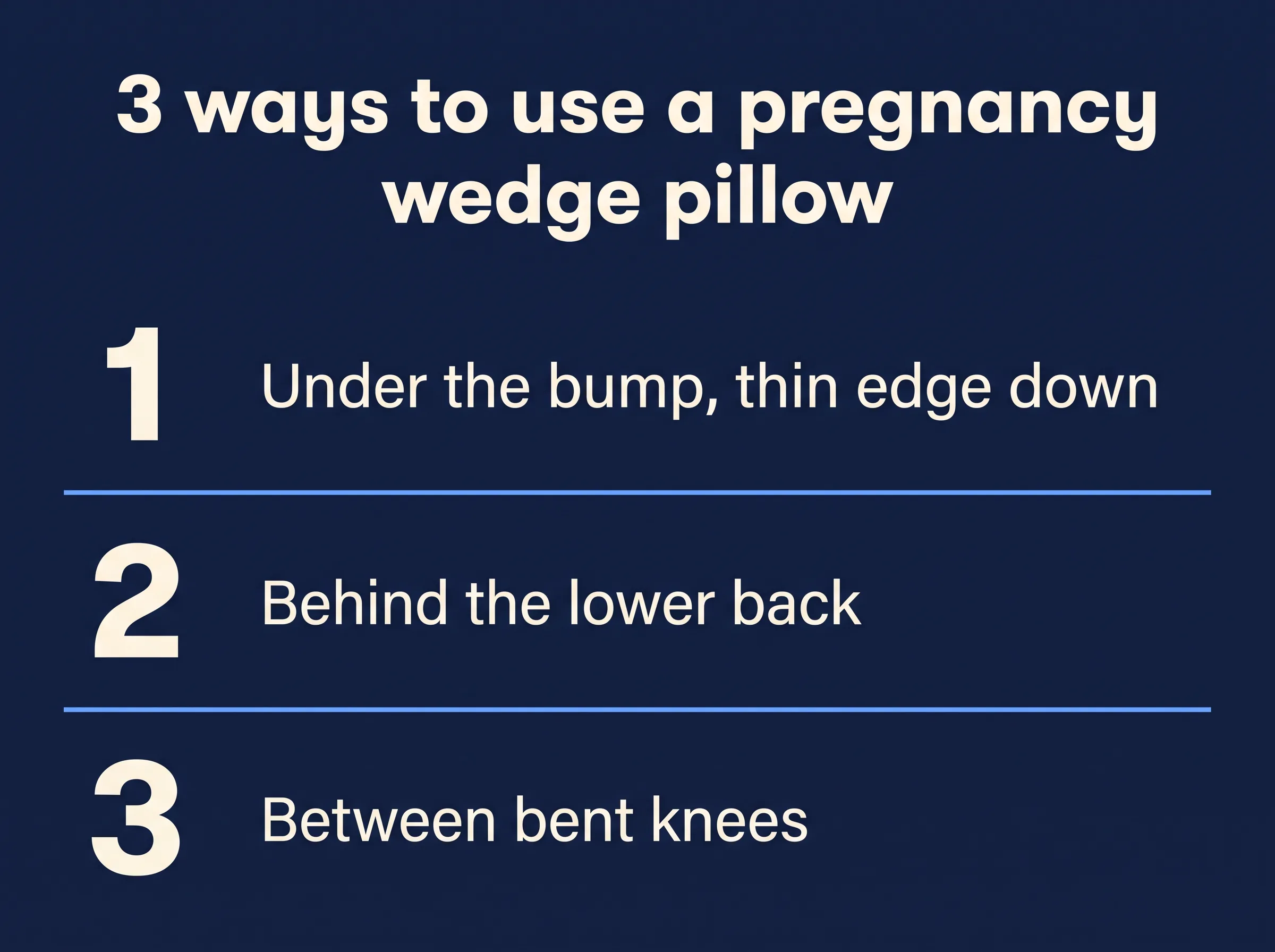
3 ways to use a pregnancy wedge pillow
- Under the bump. Lie on your side, slide the wedge under the belly with the thin edge towards the mattress, and let the bump rest on the slope.
- Behind the back. Tuck the wedge against your lower back with the tall face towards you, so you can lean back slightly without rolling onto your back.
- Between the knees. With knees bent, place the wedge or a dedicated knee pillow between them. A thicker, firmer knee pillow holds its height better than a soft wedge if the knees need more space.
Two-sided wedges are designed so you can flip between a softer and a firmer surface as your needs change. Try each setup for a few nights before deciding one does not work, because comfort changes as the pregnancy progresses. For questions about your specific pregnancy, including pelvic or back pain, ask your midwife, doctor or physical therapist.
Is it safe to sleep on a wedge pillow while pregnant?
Using a small wedge to support the bump, back or knees while you lie on your side fits the positions ACOG and the NHS describe. The part to be careful with is a large bed wedge that keeps you lying back.
ACOG explains that in the second and third trimesters, lying on your back may compress a major blood vessel that takes blood to the uterus, which can make you feel dizzy and may reduce blood flow to the fetus. The NHS says that research suggests going to sleep on your back after 28 weeks can increase the risk of stillbirth, and that the safest position to fall asleep in is on your side, left or right. It also says not to worry if you wake up on your back; turn onto your side before going back to sleep.
A bed wedge raises the upper body but you still lie on it, so it does not turn a back position into a side position. If you are considering sleeping propped up on a bed wedge later in pregnancy, for heartburn or breathing, ask your midwife or doctor which angle and position suit you. Our wedge pillow side effects guide lists other groups who should check before sleeping inclined.
Can a wedge pillow help with heartburn in pregnancy?
It can be part of the setup: the NHS suggests propping your head and shoulders up when you go to bed, and says sleeping on your left side can also help. ACOG’s digestive system FAQ notes that acid reflux happens more often during pregnancy and lists raising the head of your bed and eating smaller, more frequent meals among the steps to try.
The wider reflux evidence points the same way. The American College of Gastroenterology’s 2022 guideline suggests elevating the head of the bed for night-time symptoms as a conditional recommendation with a low level of evidence, and notes that lying right side down increases night-time reflux compared with left side down.
Putting the sources together, a pregnancy-friendly heartburn setup raises the head and shoulders while you still go to sleep on your side:
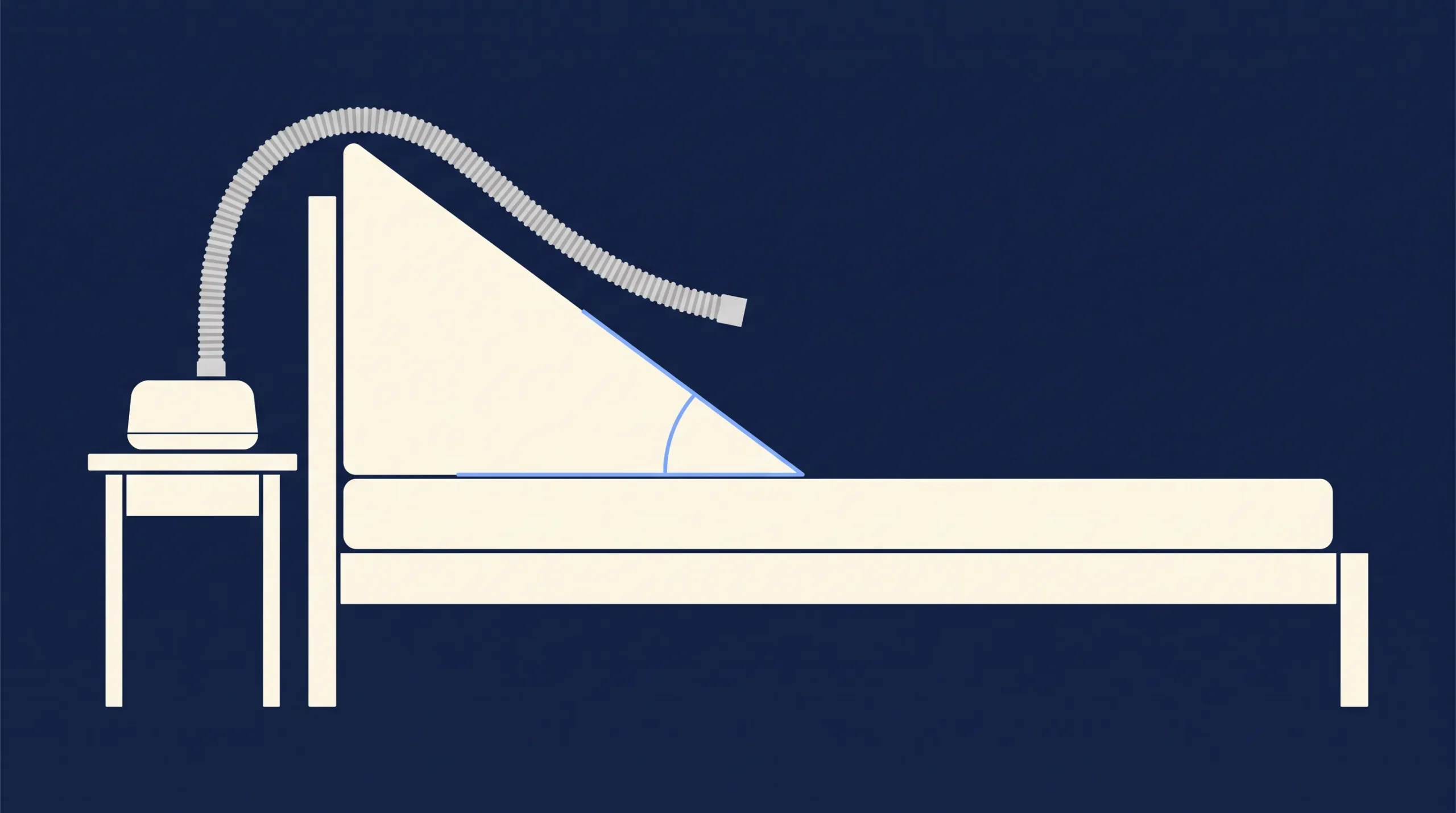
- Low bed wedge, lying on your side on it. A gentle ramp raises the upper body; the NHS advice on side sleeping still applies. Our wedge pillow height guide explains why a lower, longer wedge is easier to stay on.
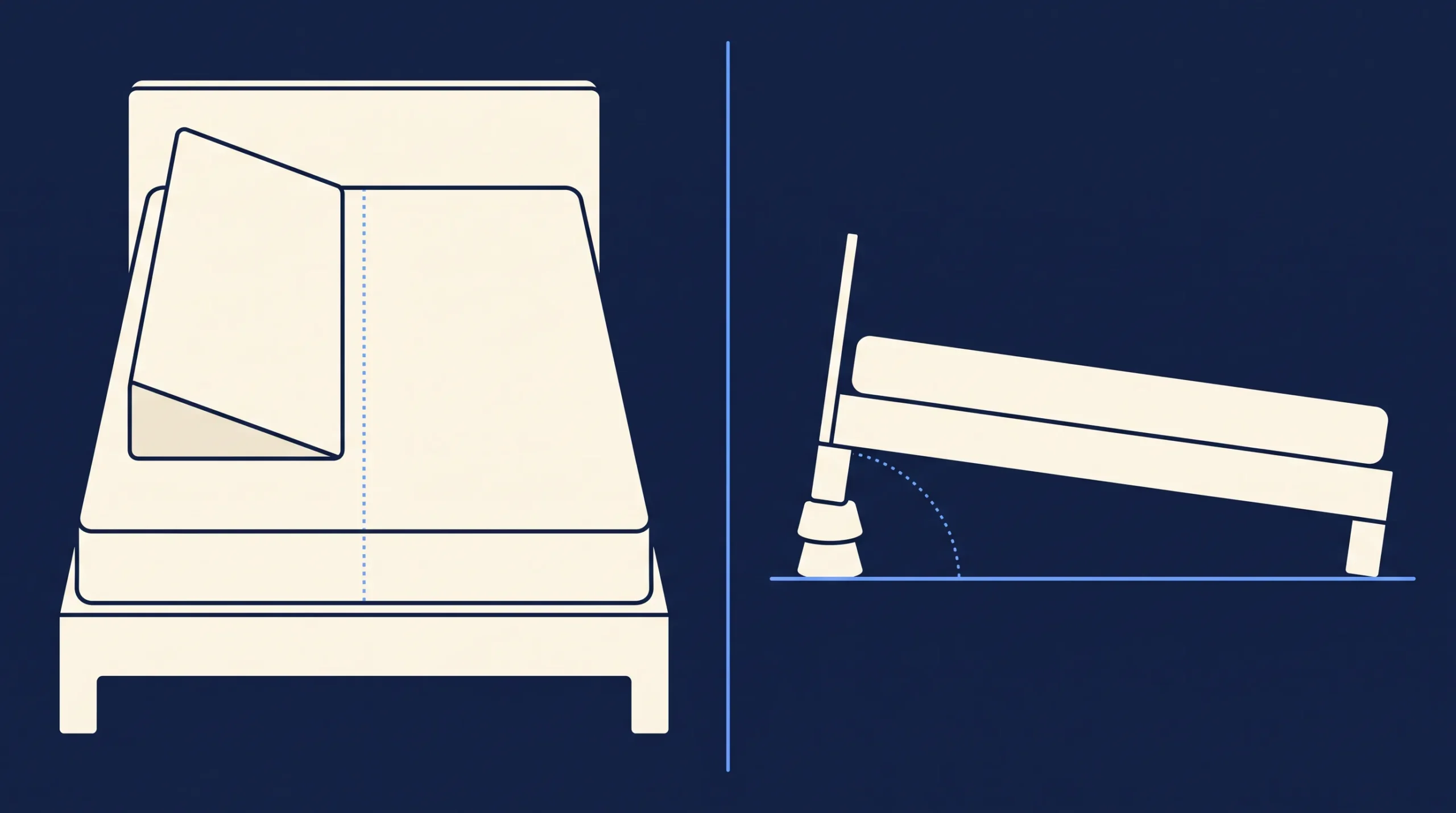
- Raising the head of the bed. Risers under the head-end legs tilt the whole mattress, so you can lie on your side at an angle without a ramp under you; see wedge pillow vs bed risers.
- Meal timing. The NHS suggests small, frequent meals and not eating within 3 hours of going to bed.
Talk to your midwife, doctor or pharmacist if heartburn is persistent; the NHS notes that some antacids are not suitable during pregnancy. Our wedge pillow for acid reflux guide covers the general reflux setup.
Pregnancy wedge or full-body pregnancy pillow?
Choose a wedge if you want something small that supports one area and moves easily; choose a full-body pillow if you want support for the bump, back, knees and head at the same time. ACOG mentions both a pillow under the belly and a full-length body pillow as options, so this is a comfort choice rather than a safety one.
A wedge suits people who share a bed, travel, turn over often, or already have a pillow arrangement they like and only need bump or back support. A full-body pillow suits people who want one pillow to hold them on their side all night, at the cost of bed space and some warmth.
5 things to check in a pregnancy wedge pillow
Check firmness, size, the cover, the foam and how easy it is to move; the angle matters less than on a bed wedge.
- Firmness, ideally two-sided. Some wedges pair a softer memory-foam face with a firmer foam face so you can flip between them; the Hiccapop Pregnancy Wedge Pillow is built that way.
- Size. Small enough to sit under the bump without pushing you forward, large enough that the bump does not roll off the slope.
- A removable, washable cover. Pregnancy pillows are used every night for months.
- Foam certification. Look for a named certification such as CertiPUR-US on the listing rather than general “non-toxic” wording.
- Portability. A light wedge, sometimes with a carry bag, can move to the sofa or travel with you.
For the legs, a separate knee pillow with removable layers lets you set the height between the knees as the body changes; the Flexicomfort Knee Pillow uses extra-firm memory foam with layers you can take out. Our five-step guide to choosing a wedge pillow covers larger wedges if you also want one for heartburn or reading.
Product details come from each maker’s Amazon listing and production spec sheet; health guidance is quoted from ACOG, the NHS and the ACG.
Frequently asked questions
How do you use a pregnancy wedge pillow?
Lie on your side and place the wedge in the gap between your body and the mattress: under the bump with the thin edge down, behind your lower back, or between bent knees. ACOG suggests side sleeping with knees bent and pillows between the knees and under the belly in the second and third trimesters.
When should I start using a pregnancy wedge pillow?
There is no fixed week; you can start whenever side sleeping becomes less comfortable. ACOG’s side-sleeping advice covers the second and third trimesters, and the NHS advice to go to sleep on your side applies after 28 weeks. Your midwife can advise for your pregnancy.
Which side should I sleep on when pregnant?
Either side. The NHS says the safest position to fall asleep in is on your side, left or right, after 28 weeks, and ACOG does not require the left side. For heartburn, the NHS says sleeping on your left side can help, and the ACG guideline notes more night-time reflux lying right side down.
Can I sleep on my back on a wedge pillow while pregnant?
Ask your midwife or doctor before doing this in later pregnancy. ACOG says lying on your back in the second and third trimesters may compress a major blood vessel, and the NHS advises going to sleep on your side after 28 weeks. A bed wedge raises you but still leaves you lying back.
Can a wedge pillow help pregnancy heartburn?
It can be part of the setup. The NHS suggests propping your head and shoulders up in bed and sleeping on your left side, and ACOG lists raising the head of the bed among steps to try. Combine it with side sleeping and earlier, smaller meals, and speak to a pharmacist or doctor about persistent symptoms.
Is a pregnancy wedge pillow better than a full-body pregnancy pillow?
Neither is better for everyone. A wedge is small, firm and easy to move, so it suits shared beds and travel. A full-body pillow supports the bump, back and knees together but takes up more space. ACOG lists both a pillow under the belly and a full-length body pillow as options.
What is the difference between a pregnancy wedge and a bed wedge?
A pregnancy wedge is a small triangle placed under the bump, behind the back or between the knees while you lie on your side. A bed wedge is a long ramp, usually 7 to 11 inches high, that raises the whole upper body and is mostly used for heartburn, snoring or sitting up.
Choosing your pregnancy pillow setup
ACOG’s suggested side-sleeping setup uses two pillows: one under the belly and one between the knees, so a small wedge and a knee pillow cover it between them. If heartburn is the main problem, a low bed wedge you can lie on your side on, or raising the head of the bed, adds the lift the NHS describes. As the maker of the Aeris wedge we can say it rises 22 cm over a 65 cm base, about 19 degrees.
Advertisement
Aeris Wedge Pillow
65 × 65 cm base, 22 cm apex, 3.1 kg.
See the Aeris Wedge product details on AmazonProducts mentioned in this guide
- Hiccapop Pregnancy Wedge Pillow — Two-sided: soft memory foam and firmer foam, washable cover, carry bag
- Flexicomfort Knee Pillow — Extra-firm memory foam with removable layers to set the height between the knees