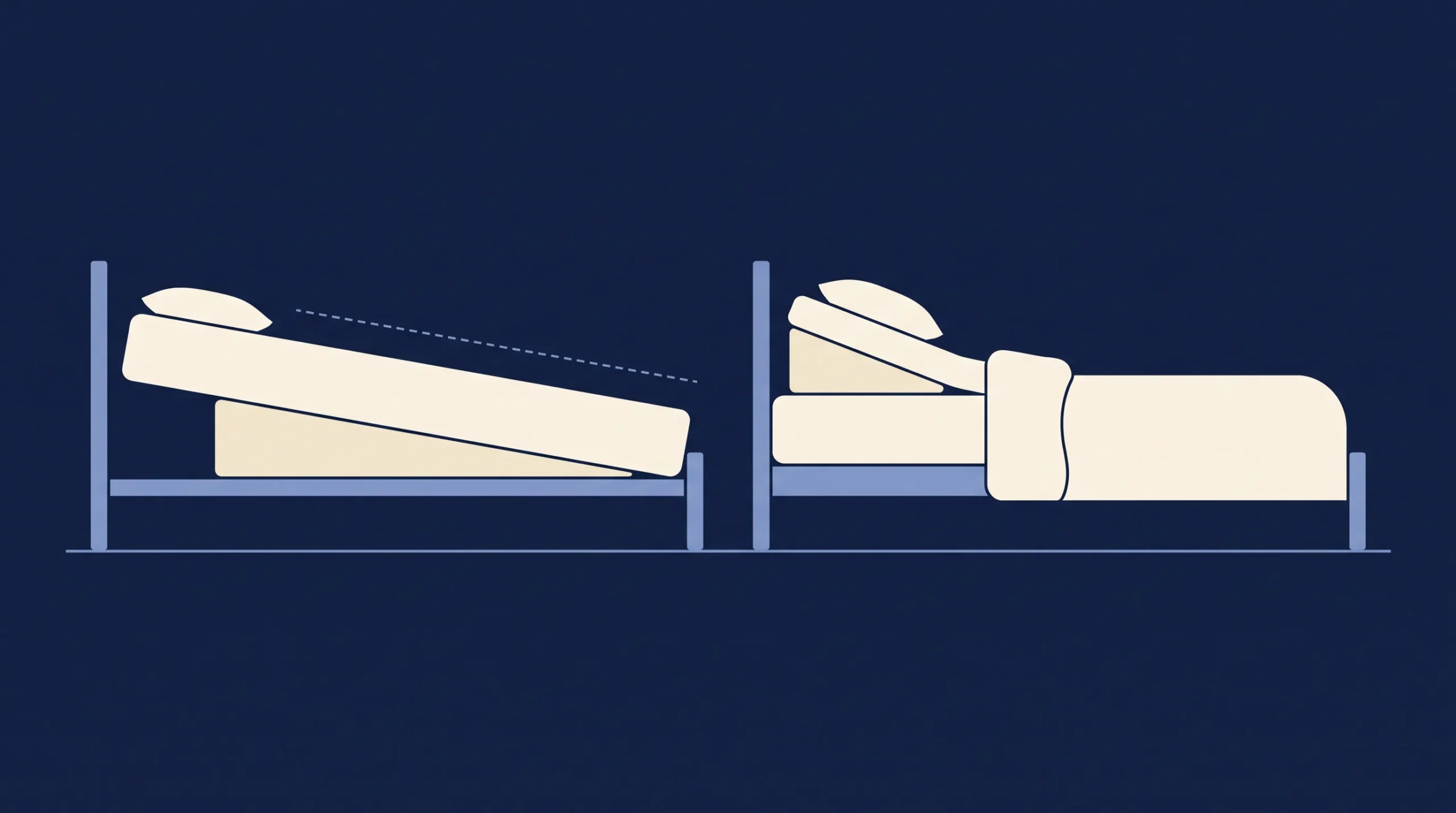
Last updated: September 2026
This guide is part of our full map of wedge pillows for acid reflux, GERD, and better sleep.
Searches for a wedge pillow with an arm hole are breaking out, and the number pulling people in is an 87% cut in acid exposure. That number is real. What it rests on matters more than the hole.
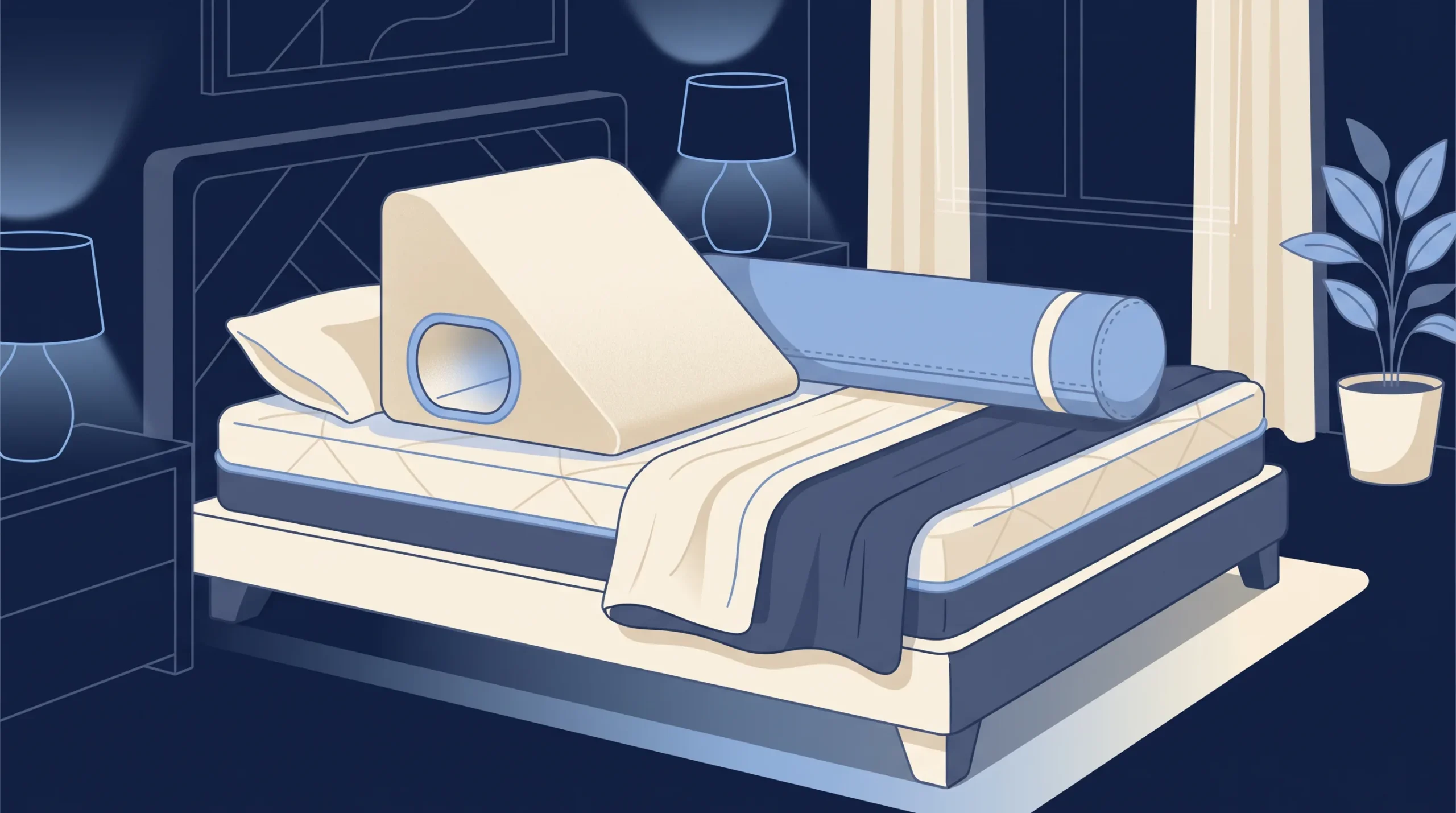
The product is a three-part system rather than a pillow: an inclined wedge with a tunnel for your downside arm, a body pillow, and an insert. The maker, MedCline, states a 15-20° torso angle and a patented arm pocket, and asks $249.99 for the standard set on its own site. Buyers are told the arm pocket takes pressure off the shoulder and that the system beats a plain foam wedge by 87% on acid exposure.
That 87% carries a footnote. Follow it into the citation list on the same page and you arrive at a 2015 randomised trial in the Journal of Clinical Gastroenterology: 20 healthy volunteers, four six-hour impedance-pH tests each, four assigned positions — device left-side down, device right-side down, a standard wedge in any position, and flat.
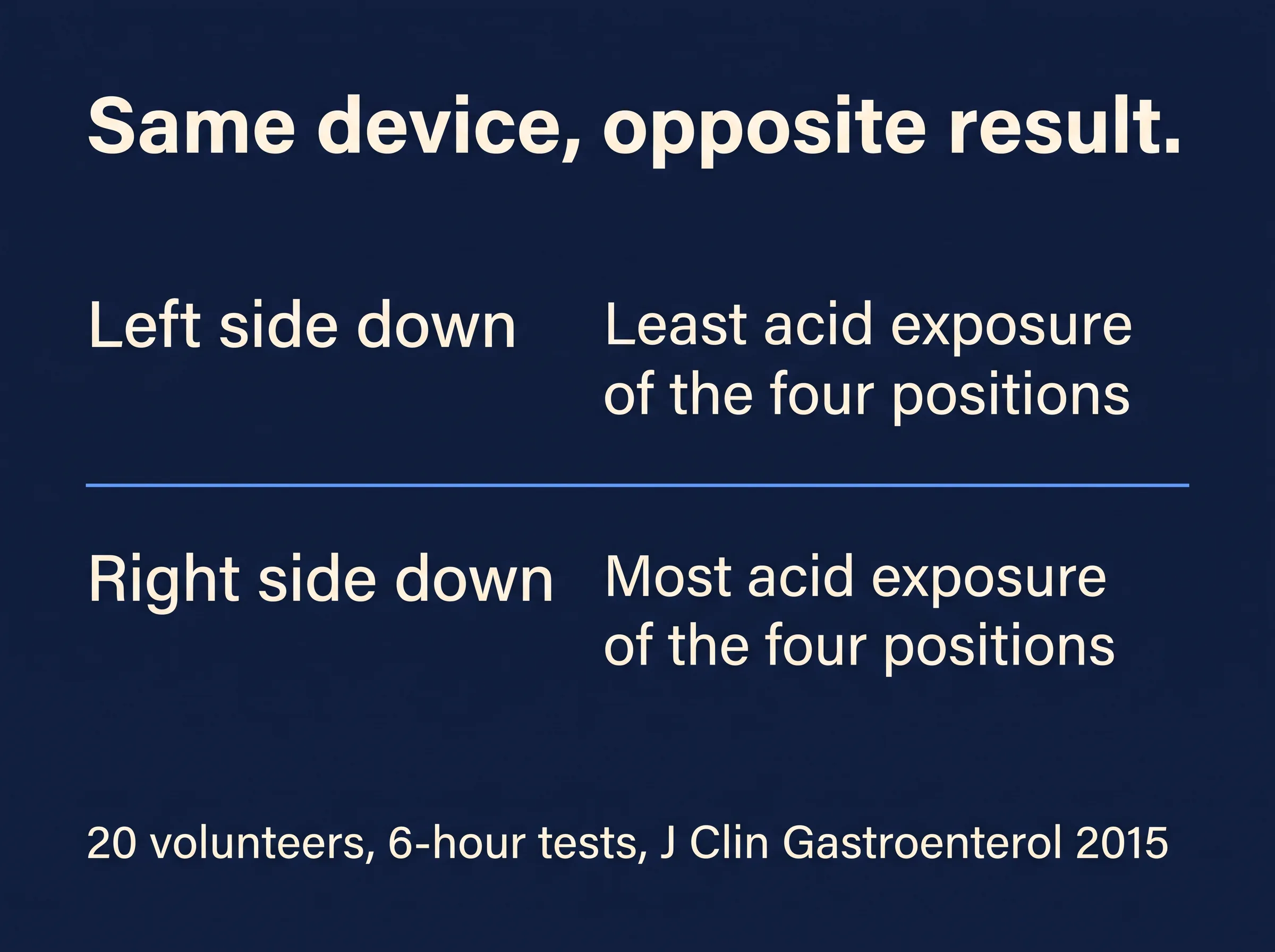
Here is the part the marketing leaves out. The researchers reported that the device on the left side produced significantly less acid exposure than the plain wedge — and that the most acid exposure of all four conditions came from the same device on the right side. One product, two opposite results, decided entirely by which way the sleeper faced.
So the thing being sold is not the hole. It is the left side. A 2023 systematic review puts a size on that effect on its own: left-side sleeping was associated with about 2 percentage points less acid exposure time than the right side, and about 2.7 points less than lying flat. The wedge supplies the elevation; the direction you face supplies the rest.
To be fair, the objection to my reading is strong and it sits inside the same trial. Volunteers on the plain wedge and on the flat bed spent more of the night on their backs than on either side. Telling someone to sleep left-side down is free advice that people cannot hold while unconscious. A body pillow with an arm tunnel is a machine for holding a position, and that is a genuine thing to pay for.
What it is not is a shortcut past the geometry. A wide, plain wedge and a knee pillow will hold a lot of people on their side for far less money, which is why the width of the ramp does more work than the hole does — our own Aeris Wedge Pillow is 65 cm across for exactly that reason. One hands-on write-up of a cheaper armhole foam pillow — by a reviewer who also sells competing buckwheat pillows, so read it with that in mind — ended with the thing on the floor by the middle of the night, too rigid to adjust.
The category is still being studied: a 2026 paper in the same journal tracked the device in lung-transplant patients with reflux. That is a narrow group and not a verdict on anyone’s bedroom. If you are shopping the arm hole trend, the useful questions are which side you sleep on, how wide the ramp is, and whether you will still be there at 3 a.m. — and if reflux is waking you regularly, that is a conversation for your doctor before it is a purchase.
Advertisement
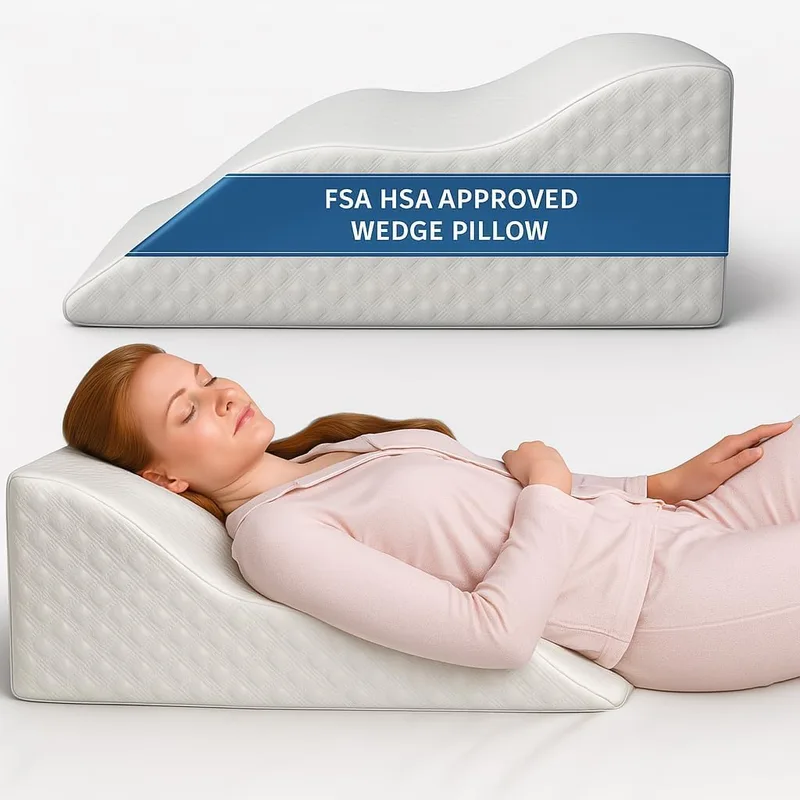
Aeris Wedge Pillow
65 × 65 cm base, 22 cm apex, 3.1 kg.
See the Aeris Wedge product details on Amazon