Last updated: October 2026
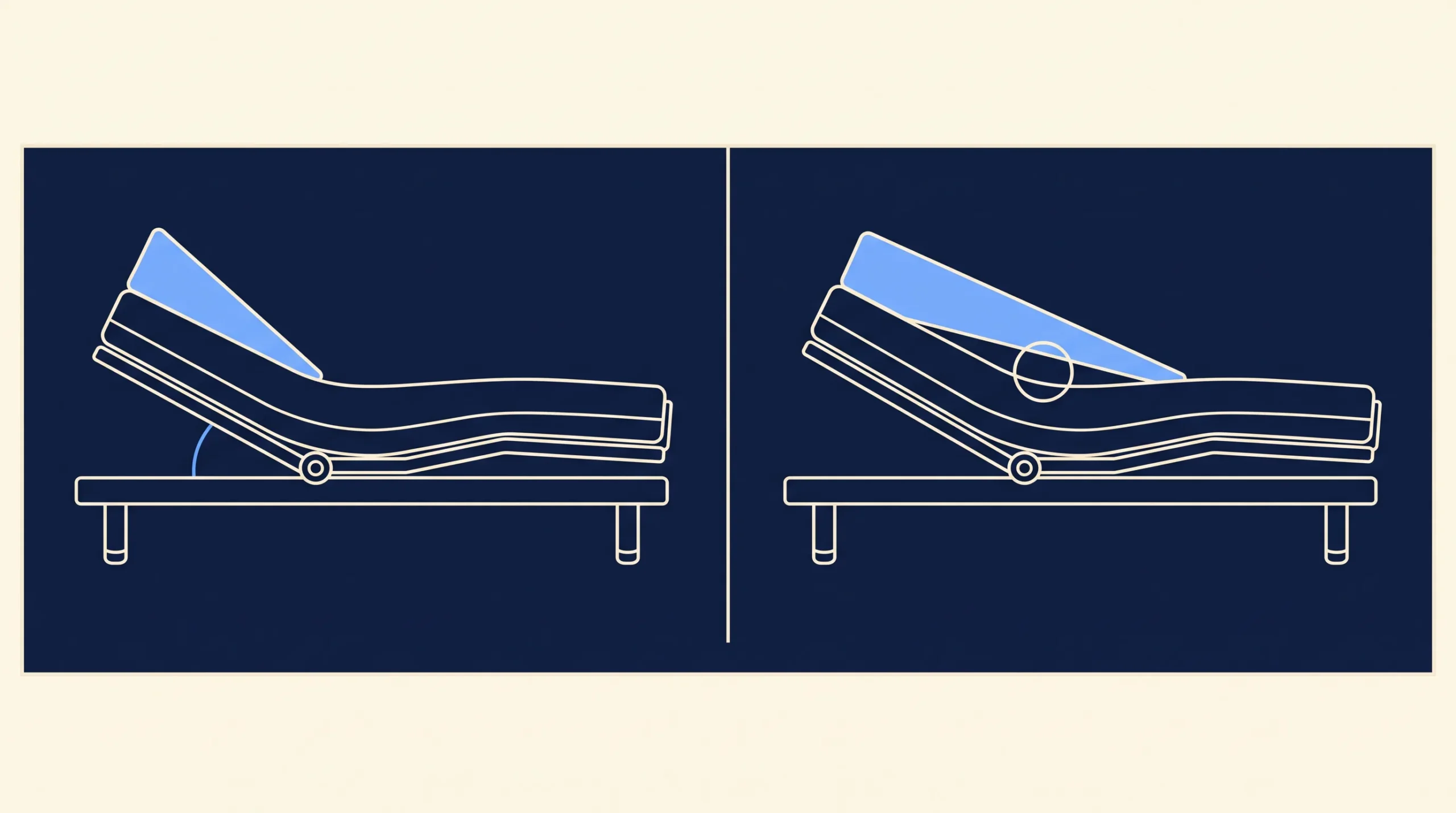
After surgery most people rest propped on the slope rather than lying flat, with their surgeon’s positioning instructions taking priority. A wedge pillow is a firm foam ramp that holds that angle, and the published guidance puts a ceiling near 30 degrees.
This guide covers what the positioning research measured, what angle a wedge pillow really creates, and why 30 degrees turns up as a limit from two different directions. It is comfort and positioning guidance, not medical advice, and it is part of our main wedge pillow guide.
Key takeaways
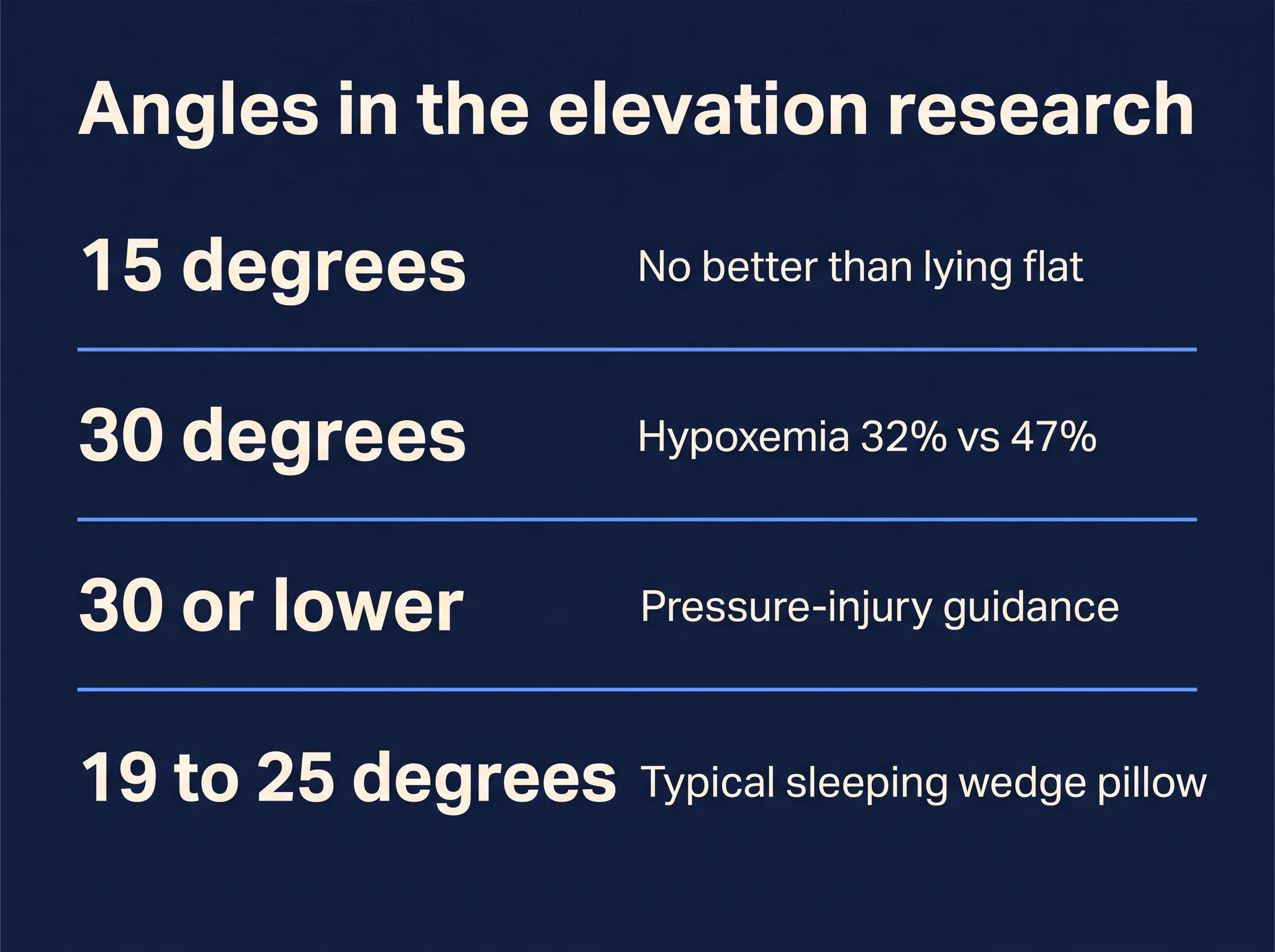
- The best evidence for propping up after an operation is about trunk angle, not pillows: in a randomized trial of 700 adults recovering from laparoscopic upper abdominal surgery, a 30° position cut hypoxemia from 46.8% to 32.5% against lying flat.
- In the same trial a 15° tilt did nothing measurable — 45.1% against 46.8% flat, risk ratio 0.96, P = .78. Shallow is not a smaller version of the benefit.
- A wedge pillow’s angle is its apex divided by its run, not its apex alone: our 22 cm apex over a 65 cm run is about 19°, closer to the trial’s 15° arm than its 30° arm.
- There is a ceiling, and it comes from skin rather than lungs: the 2019 international pressure injury guideline recommends keeping the head of the bed as flat as possible, and 30° or lower when it is raised.
- Measurements in 15 volunteers found peak sacral pressure significantly higher at 30° and above than lying flat — which matters when the propped position lasts weeks rather than an afternoon.
- Poor sleep after an operation is close to universal and mostly not about position: 89.5% of 143 surgical patients scored as poor sleepers on their first postoperative night, and 60% of surgical patients were already sleeping badly before the operation.
Why does sleeping propped up feel easier after surgery?
Because tilting the trunk changes two things at once: how the diaphragm and lungs sit, and how far you have to travel to get upright. Lying flat means lifting your whole torso off the mattress with a sore abdomen or chest; starting at an angle means starting part of the way there.
The breathing half of that has been measured directly. A 2024 randomized trial in JAMA Network Open put 700 adults recovering from laparoscopic upper abdominal surgery into one of three positions and counted low-oxygen episodes.
| Recovery position | Hypoxemia | Severe hypoxemia | Airway rescue needed |
|---|---|---|---|
| Flat (supine) | 46.8% | 26.2% | 6.9% |
| 15° semirecumbent | 45.1% | 22.7% | 6.0% |
| 30° semirecumbent | 32.5% | 15.4% | 1.7% |
The 30° group also coughed less (10.7% against 20.2%), no position-related adverse events were recorded in any arm, and the risk ratio for hypoxemia at 30° against flat was 0.69 (95% CI 0.55-0.87).
What the trial does not show is anything about a pillow. It ran in a recovery room within hours of anesthesia, with oxygen and continuous monitoring, and the angle was set by a hospital bed. It establishes that trunk angle moves breathing outcomes and roughly by how much; carrying the number to a bedroom three nights later would be reading more into it than it holds.
What angle does a wedge pillow actually give you?
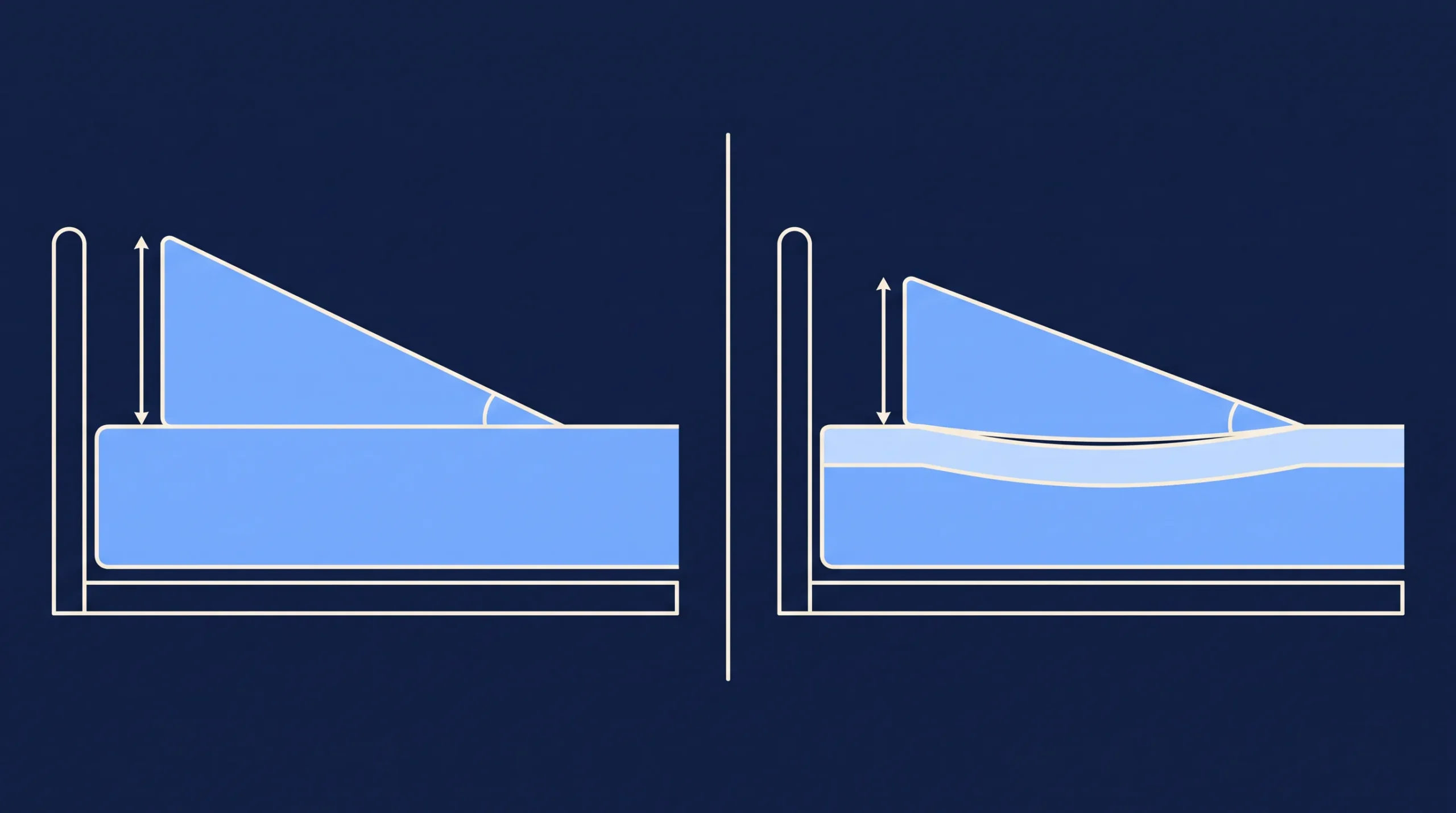
The slope of the foam, which is the apex height divided by the run — and most product pages quote only the apex. Two wedges with the same 10-inch apex can sit several degrees apart if one is longer than the other, because the same rise is spread over more length.
Here is the arithmetic on the three wedges we make, which is where the comparison with the trial arms becomes uncomfortable:
| Wedge | Apex | Run | Slope angle |
|---|---|---|---|
| Aeris Wedge Pillow | 22 cm (8.7 in) | 65 cm (25.6 in) | about 19° |
| Flexicomfort Wedge Pillow | 28 cm (11.0 in) | 56 cm (22.0 in) | about 27° |
| FirmNest Extra Firm Wedge | 19 cm (7.5 in) | 61 cm (24.0 in) | about 17° |
The Aeris Wedge Pillow measures 65 × 65 cm with a 22 cm apex, so it produces roughly 19° — between the two arms the trial tested, and nearer the one that changed nothing. A 7.5-inch apex over a typical 24-inch run lands around 17°, and a 12-inch apex over the same run around 27°, which is the real content of the choice laid out in our wedge pillow height guide.
So the steeper, shorter wedges sit closest to the angle the research favours, and gentler ones are chosen for comfort rather than for reproducing a trial result. Methodology: dimensions come from the makers’ production specs, angles are computed from them, and every clinical figure is from the studies linked here.
Is there a ceiling on how high you should prop up?
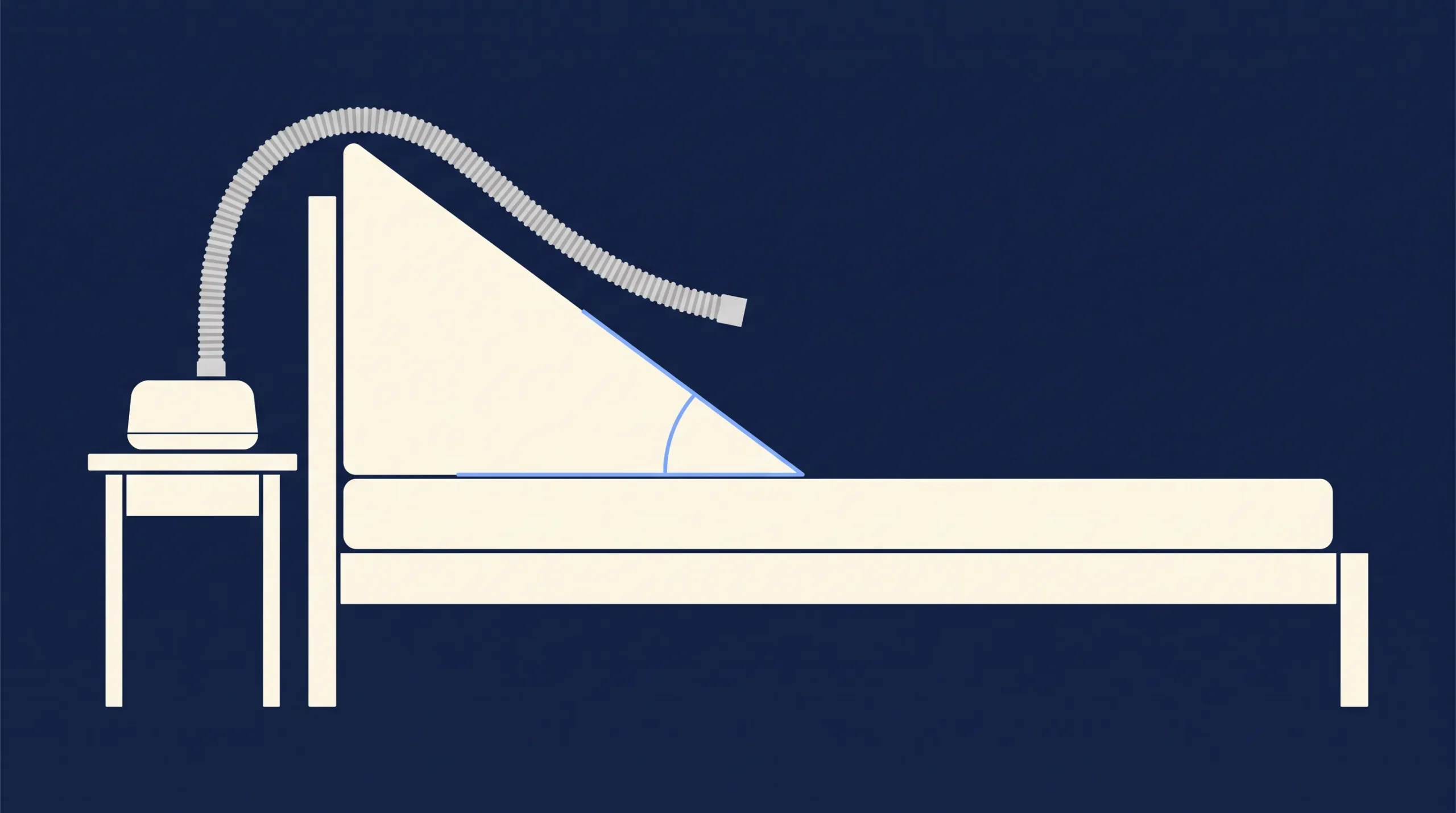
Yes, and it is set by skin rather than by lungs. The 2019 international pressure injury guideline from EPUAP, NPIAP and PPPIA states recommendation 5.9 as keeping the head of the bed as flat as possible, graded B1 on strength of evidence, and its implementation note adds that where the head of the bed is raised, elevations should stay at 30° or lower to limit soft tissue deformation.
The mechanism was measured in healthy volunteers in 2008 across seven angles from flat to 75°. Peak sacral interface pressure was significantly higher than lying flat at 30°, 45°, 60° and 75° (p < 0.02), and the area under pressure of at least 32 mmHg grew once elevation passed 45°. The authors were careful to say that whether this translates into more pressure injuries still needs study.
The guideline is equally careful: its own evidence summary reports contradictory results, with one study finding no sacral increase and another finding sacral pressure falling as the angle rose. The practical reading is not that 30° is dangerous but that it marks a boundary — above it the guideline withdraws its support, and below about 15° the breathing trial found nothing. Our pages on wedge pillow pressure relief and wedge pillow side effects go further into offloading and who should be careful.
4 checks before your first night on a wedge pillow after surgery
Four things are worth settling before you sleep on a slope for weeks, in the order they matter.
- Your surgeon’s positioning instruction. Some procedures specify a position or restrict trunk flexion, and that instruction overrides every general guide, this one included. Ask whether propped sleeping is suitable and whether any angle is off limits.
- The angle you are actually creating. Measure the apex and the run of your wedge and divide them, rather than trusting the marketing height. On our reading the two sources above leave a window of roughly 20° to 30°.
- Whether you will slide. A slope is held by friction, and sliding down it is the most common way propped sleeping fails. Support under the knees and a wedge long enough to start below the shoulder blades both reduce it; our guide to sleeping on your side on a wedge pillow covers the setup.
- Skin and laundry. Long hours in one position and a wound nearby make a removable, washable viscose cover more useful than usual, and make changing position through the day worth raising with your care team. The routine is in our cleaning guide.
How do you get in and out of bed with a wedge pillow after surgery?
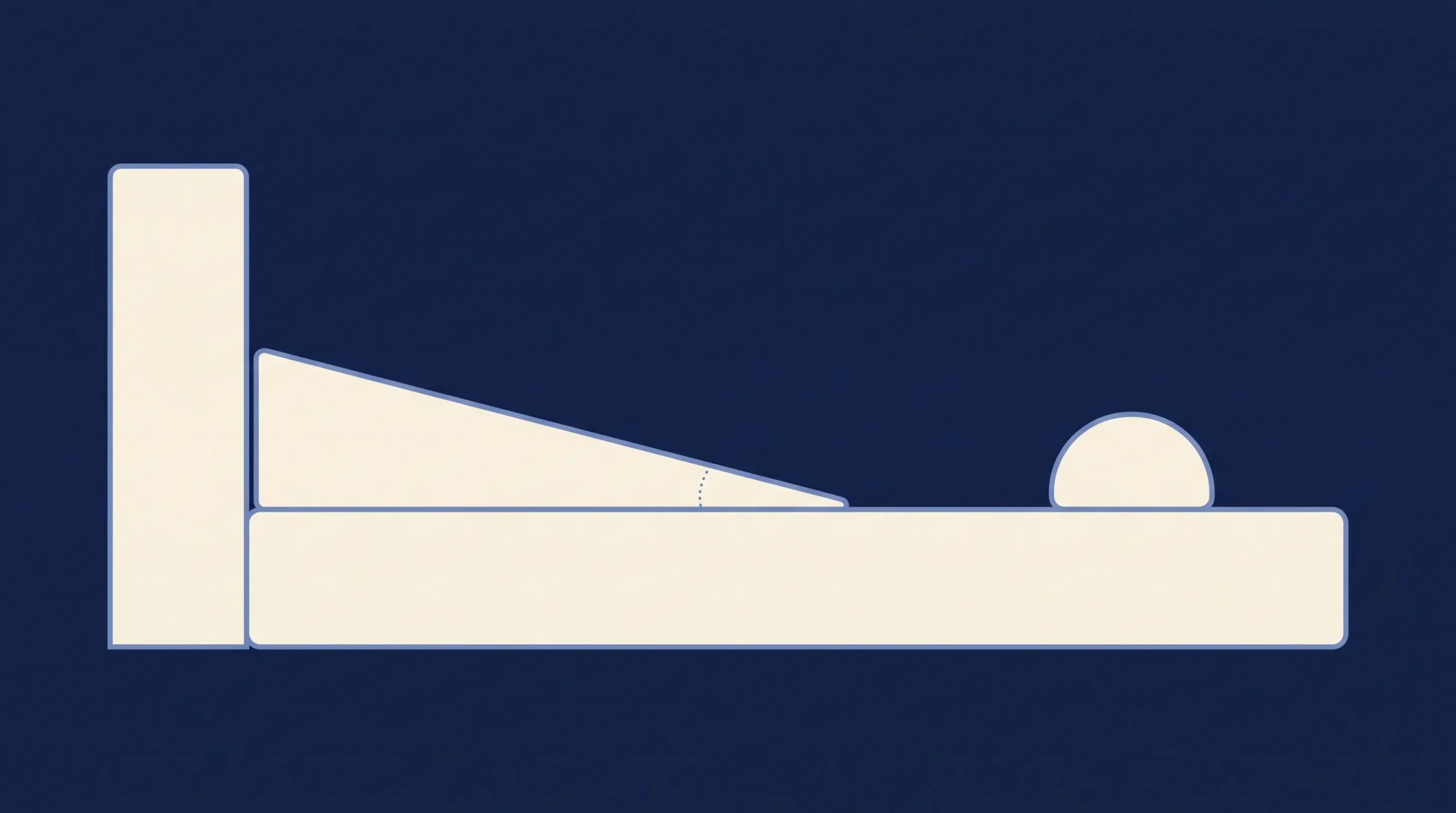
By using the slope as a brace: lower yourself back against it instead of dropping flat, and to rise, turn toward your side and push up off the foam. A wedge with a dense core gives you something solid to work against, which a soft one cannot.
This matters more than it sounds, because getting out of bed is what you will be asked to do repeatedly. Enhanced Recovery After Surgery pathways set a target of being out of bed for two hours on the day of surgery and six hours a day after that, where the patient’s condition allows. Every one of those transfers starts from whatever position you were resting in.
Keep the wedge from travelling as you move: on a slippery mattress protector a foam wedge walks toward the foot of the bed over a few nights, one of the differences from a stack of pillows set out in stacked pillows against a wedge pillow.
Will a wedge pillow make you sleep better after surgery?
It changes your position, which is one input among several, and the honest answer is that position is rarely the main problem. In a prospective cohort of 143 adults having elective surgery, 128 of them — 89.5% — scored above 5 on the Pittsburgh Sleep Quality Index on their first postoperative night, and the poor sleepers had a median stay of four days against three for the good sleepers.
That association runs in both directions and the study cannot untangle them. A 2023 systematic review of 12 cohorts and 1,497 surgical patients gives the sobering context: 60% already had disturbed sleep before their operation, and a high preoperative score was itself the main risk factor for sleeping badly afterwards.
Pain, medication, noise and anxiety are doing most of the work there, and no cushion addresses them. What a wedge pillow can do is remove one specific irritation — the flat-back position — and hold a steadier angle than a pile of pillows. Expect a settling-in period either way, which is the subject of how long it takes to get used to a wedge pillow.
Should you elevate your legs after surgery too?
Only if your surgeon says so, because the answer varies by procedure. Where leg elevation is part of your instructions, a separate knee or leg wedge is the usual pairing, and our leg elevation pillow review covers what those look like.
One detail from the pressure injury guideline carries over here: as the head of the bed goes up, the interface pressure reported at the heels rises along with the sacrum. If you are propped for long stretches, the heels are a place to keep weight off rather than a place to pack support under. Our round-up of wedge pillow positions and use cases shows how one cushion covers resting, sitting and leg support.
Frequently asked questions
How should you sleep after surgery with a wedge pillow?
Rest on the slope with your trunk raised rather than lying flat, after checking that propped sleeping suits your procedure. The angle range the published guidance leaves open is roughly 20° to 30°: the breathing trial found no benefit at 15°, and the pressure injury guideline asks for 30° or lower. Your surgeon’s instruction comes before both.
What angle is best for sleeping propped up after an operation?
No trial has tested wedge pillow angles after discharge, so there is no evidence-based single answer. The nearest data point is the 2024 randomized trial where 30° reduced low-oxygen episodes in recovery and 15° did not, bounded by a pressure injury guideline that treats 30° as a ceiling. That makes the window narrow rather than open-ended.
Does a wedge pillow help you get out of bed after surgery?
It gives you something to brace against, so you push up off the slope instead of rising from flat with a sore trunk. That is a mechanical convenience rather than a clinical finding.
Why do I slide down my wedge pillow at night?
Because the slope holds you by friction alone, and a soft core also compresses under your hips until the angle flattens. A denser core, a longer slope and support under the knees all reduce the drift. A slippery mattress protector makes it worse.
Can a wedge pillow speed up recovery?
No. It is a positioning and comfort aid, not a treatment, and nothing in the research above measures healing: those studies looked at oxygen levels, interface pressure and sleep quality.
Is it safe to sleep propped up for several weeks?
That is a question for your surgeon rather than a guide, partly because of the pressure point above: sustained elevation raises the pressure measured at the sacrum and heels, which is why the pressure injury guideline leans flatter where it can. Weeks of propped sleeping is a different situation from a night or two.
Choosing a wedge pillow for the weeks after surgery
If propped sleeping suits your procedure, two properties decide whether it works: the angle the wedge actually creates, and whether the core holds that angle under load. A gentler slope is easier to tolerate from the first night; a steeper one sits closer to the angle the positioning research favours. Our how to choose a wedge pillow guide covers firmness before you spend, and the best wedge pillows round-up sorts options by use case.
As the makers of these three we can state their geometry rather than estimate it: 19°, 27° and 17° of slope, each with a removable washable cover.
Advertisement
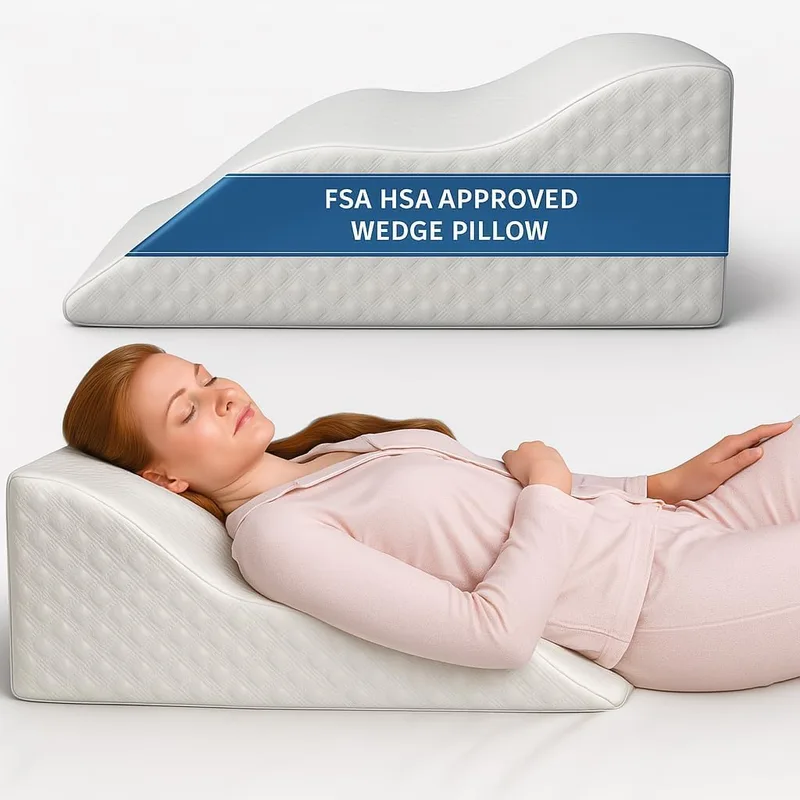
Aeris Wedge Pillow
65 × 65 cm base, 22 cm apex, 3.1 kg.
See the Aeris Wedge product details on AmazonProducts mentioned in this guide
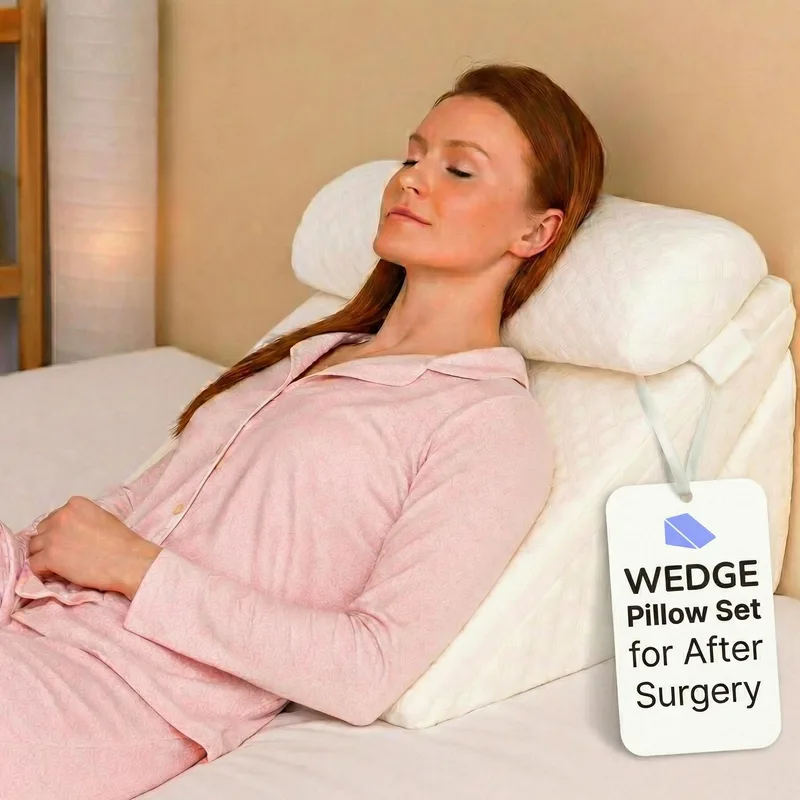 Flexicomfort Wedge Pillow — 60 × 56 cm base, 28 cm apex — about a 27° slope
- Flexicomfort Knee Pillow — 30 × 22 × 20 cm, for support under the knees