How to Clean a Wedge Pillow Without Ruining It: A Real Person’s Guide to Not Destroying Your $100 Sleep Investment
The Bottom Line (Because You’re Probably in a Hurry)
Your wedge pillow isn’t a regular pillow. Throw it in the washing machine like I did with my first one, and you’ll end up with an expensive, moldy brick. Here’s what actually works:
- Memory foam = spot clean only (water will literally destroy it)
- Enzyme cleaners are your best friend for sweat, drool, and other lovely sleep-related stains
- Air dry everything completely or you’ll be growing science experiments
- Clean the cover weekly, deep clean monthly (yes, it’s that simple)
- Different foam types need different approaches (and I’ll tell you exactly which is which)
Trust me, I learned this the hard way after ruining a perfectly good Tempur-Pedic wedge trying to “deep clean” it.

Why Your Wedge Pillow Laughs at Regular Pillow Cleaning
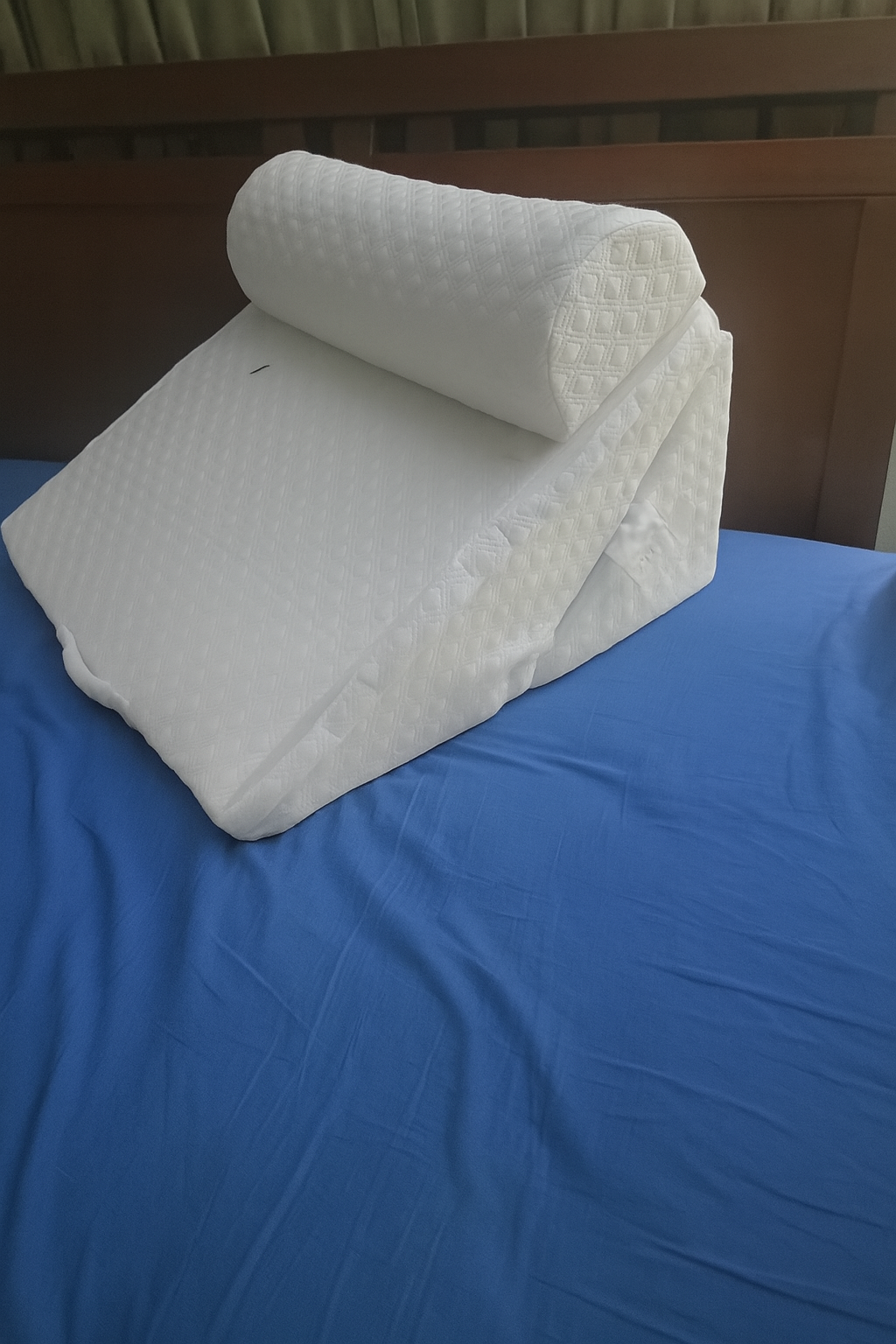
Here’s what nobody tells you: wedge pillows are basically foam icebergs. What you see on the surface is nothing compared to the dense, water-absorbing core underneath.
I found this out when my cat decided my wedge pillow was a great place to have an accident. My brilliant solution? Throw the whole thing in the wash. Three hours later, I had what looked like a foam graveyard – chunks breaking off, weird indentations, and a smell that can only be described as “wet basement meets chemical factory.”
The real problem: Standard memory foam absorbs water like a sponge but releases it like molasses. While your regular pillow might dry overnight, a soaked wedge pillow can stay damp for literally weeks. And damp foam doesn’t just smell bad – it becomes a five-star resort for mold and bacteria.
What makes it worse: The angled shape means water pools in the thick end, creating wet spots that never fully dry. I’ve seen people try to speed-dry these things with hair dryers (don’t – you’ll melt the foam) or stick them outside in direct sun (also don’t – UV breaks down the foam structure).
Figure Out What You’re Working With (It Actually Matters)
Before you start spraying anything, you need to know what type of wedge pillow you have. This isn’t just academic – the wrong cleaning method can literally dissolve certain foams.
Memory Foam: The High-Maintenance Option
How to tell: Press down on it and count. If it takes 3-5 seconds to bounce back, it’s memory foam. Also, it probably came with a hefty price tag and might have had a chemical smell when new.
What it is: Viscoelastic foam that’s designed to conform to your body. Great for support, terrible for getting wet.
Cleaning reality: This stuff is basically a sponge made of chemicals. Water breaks down the cell structure, harsh cleaners dissolve it entirely, and heat turns it into foam soup.
Latex: The Bouncy Alternative
How to tell: Push down and it bounces right back. Feels slightly tacky to the touch and might have small holes throughout.
What it is: Either natural (from rubber trees) or synthetic latex. More resilient than memory foam but still not machine-washable.
Heads up: Natural latex can trigger allergies in some people. If you’re one of them, you probably already know.
Polyester Fill: The Easy Mode Pillow
How to tell: Light, fluffy, bounces back immediately. Usually the cheapest option and often comes with a “machine washable” tag.
What it is: Synthetic fiber fill, basically like a giant stuffed animal inside.
The good news: These are the only wedge pillows you can actually throw in the washing machine without having a nervous breakdown.
How to Clean Memory Foam Without Creating a Disaster
After destroying one wedge pillow and successfully maintaining three others for over two years, here’s what actually works:
What You Need (Don’t Improvise)
- Enzyme-based cleaner (I use Biokleen, but any enzyme detergent works)
- Microfiber cloths (paper towels will leave lint everywhere)
- Spray bottle for precise application
- Baking soda (the real MVP for odors)
- A fan (trust me on this one)
The Method That Won’t Ruin Everything
Step 1: Strip off any removable covers. These go in the washing machine – they’re usually fine.
Step 2: Vacuum the entire pillow with an upholstery attachment. You’ll be amazed at how much stuff comes out.
Step 3: Mix your enzyme cleaner – 1 part cleaner to 3 parts cool water. Not warm, not hot. Cool.
Step 4: Here’s where most people mess up.
Mist, don’t soak. You want the surface damp, not wet. If you can squeeze water out of the foam, you’ve used too much.
Step 5: Blot with microfiber cloths. Don’t rub – you’ll just push the stain deeper.
Step 6: Sprinkle baking soda over any areas that smell funky. Let it sit for at least two hours, then vacuum it up.
Step 7: Set up a fan and let the pillow air dry for 24-48 hours. Yes, it takes forever. No, you can’t speed it up safely.
What Not to Do (Learn From My Mistakes)
- Don’t use bleach. It will literally eat holes in the foam.
- Don’t use a hair dryer. Heat destroys foam cells.
- Don’t put it in direct sunlight. UV breaks down the materials.
- Don’t use it while it’s even slightly damp. You’ll create a bacterial wonderland.
Removable Covers: The Easy Part
This is where you can actually use your washing machine like a normal person.
Weekly routine: Zip off the cover, throw it in with your regular laundry. Cool water, gentle cycle, mild detergent. I wash mine with my sheets.
Drying: Air dry if you can – it keeps the fabric from shrinking and the colors from fading. If you must use the dryer, use the lowest heat setting.
When to replace: If the zipper breaks, replace it immediately. A broken zipper lets all kinds of nastiness into the foam core, and you can’t really clean that out properly.
Stain Removal: A Field Guide to Common Disasters
Sweat and Body Oils (The Daily Grind)
This is the big one – everyone sweats, and it builds up over time.
Fresh stains: Blot immediately, then hit it with enzyme cleaner. The enzymes literally eat the organic compounds that cause odors.
Old stains: Make a paste with baking soda and just enough water to hold it together. Let it sit for 30 minutes, then clean as usual.
Blood (It Happens)
Cold water only. Hot water will set the protein and you’ll never get it out.
For memory foam, use 3% hydrogen peroxide on a cloth. It’ll foam up (that’s good – it means it’s working), then blot it clean.
Food and Drink Spills
Act fast. The longer it sits, the deeper it penetrates.
Scrape up solids with a spoon (don’t push them deeper), blot liquids with clean towels, then treat with appropriate cleaner based on what spilled.
Pro tip: Keep a small spray bottle of enzyme cleaner mixed and ready. When accidents happen, you don’t want to be measuring and mixing while the stain sets.
Your Maintenance Schedule (Keep It Simple)
Weekly (5 minutes max)
- Wash the removable cover
- Quick vacuum of the pillow surface
- Flip it around so it wears evenly
Monthly (30 minutes)
- Remove all covers
- Thorough vacuum of all surfaces
- Spot clean any stains you find
- Let it air out for a few hours while you wash the covers
Every 3 Months (Assessment time)
- Press test for firmness
- Sniff test for persistent odors
- Check for cracks or damage
- Decide if it’s time to replace
Honest talk: A good wedge pillow should last 2-3 years with proper care. If yours is losing shape, developing permanent odors, or making you wake up more sore than when you went to bed, it’s time to let it go.
Products That Work vs. Products That Destroy
The Good Guys
- Enzyme cleaners (Biokleen, Seventh Generation, Nature’s Miracle)
- White vinegar (diluted 1:1 with water for odor control)
- Baking soda (odor absorption champion)
- 3% hydrogen peroxide (for blood and disinfection)
- Castile soap (gentle and natural)
The Foam Killers
- Bleach (will literally dissolve foam)
- Ammonia-based cleaners (toxic reaction with foam materials)
- Oil-based products (permanent penetration and dirt attraction)
- Fabric softener (clogs the pores, ruins breathability)
- Anything with a pH below 6 (acid dissolves foam)
I learned about the bleach thing the hard way during a particularly ambitious cleaning session. What used to be a smooth foam surface turned into something that looked like Swiss cheese. Don’t be me.
The Real Talk About Replacement
Look, I get it. These things aren’t cheap, and nobody wants to admit their pillow is done. But here’s when you need to face reality:
Definitely replace if:
- It’s developed permanent indentations that don’t bounce back
- There’s visible mold (black or green spots) anywhere
- It smells funky even after thorough cleaning
- You’re waking up more uncomfortable than when you started using it
Consider replacing if:
- It’s over 3 years old and getting less supportive
- The cover is falling apart and you can’t find a replacement
- Your sleep quality has noticeably declined
Remember, you bought this thing to sleep better. If it’s not doing that job anymore, it’s not worth keeping just because it was expensive.
Bottom Line: Don’t Overthink It
Cleaning a wedge pillow isn’t rocket science, but it’s not regular pillow maintenance either. Stick to gentle methods, be patient with drying times, and replace it when it’s done.
Most importantly, don’t try to MacGyver solutions with products not meant for foam. I’ve been there – it doesn’t end well.
Take care of your wedge pillow, and it’ll take care of your sleep. Abuse it with harsh cleaners or impatience, and you’ll be shopping for a new one sooner than you’d like.
Ready to clean yours properly? Start with that enzyme cleaner and remember: when in doubt, less is more. Your back (and your wallet) will thank you.
JP
Written by James Park
Researches wedge pillows, mattresses and positional sleep aids; works from the makers’ production specs and published sleep-positioning research.